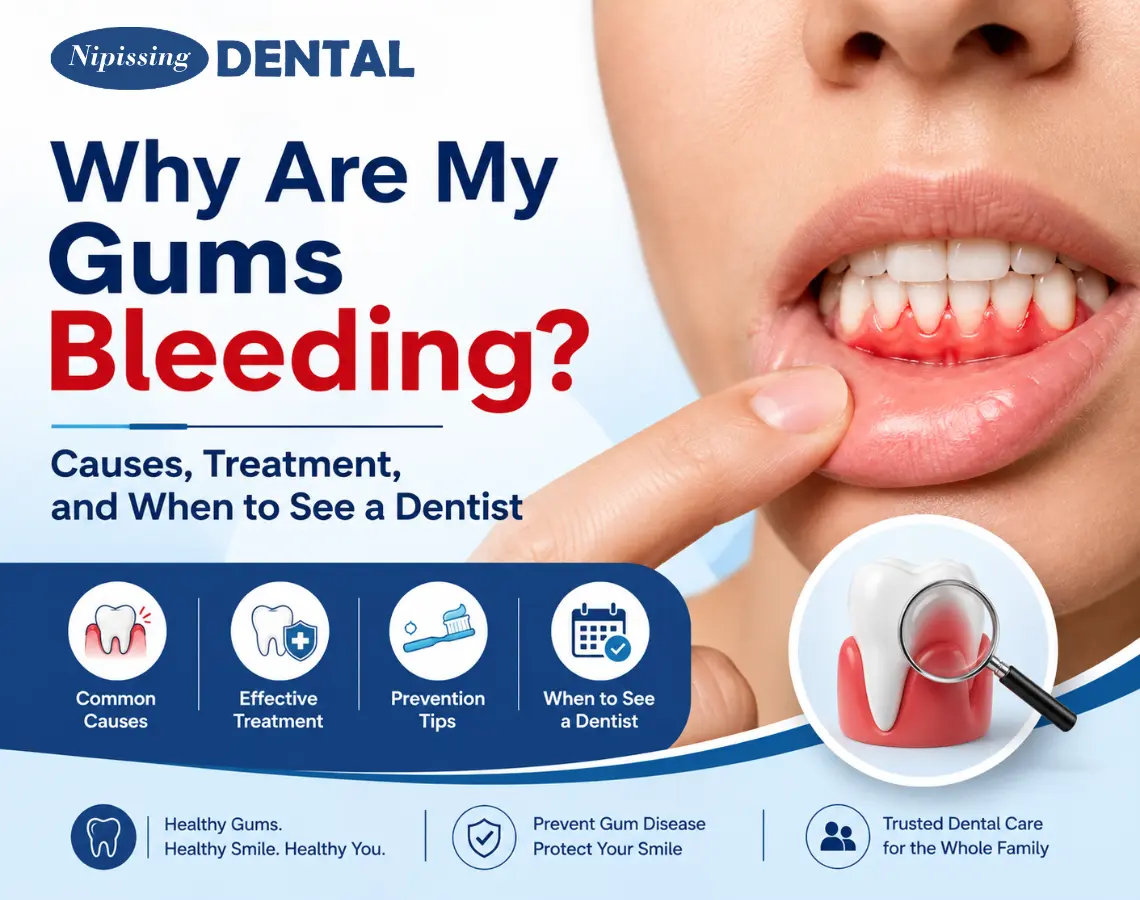
Bleeding gums are most commonly caused by plaque buildup leading to gingivitis, although pregnancy, medications, vitamin deficiencies, and certain health conditions may also contribute. In many cases, early treatment and improved oral hygiene can reverse the problem before it progresses into advanced gum disease and tooth loss.
Key Takeaways
- Bleeding gums are often an early warning sign of gingivitis, the first stage of gum disease.
- Plaque and tartar buildup are the most common causes, but hormonal changes, medications, vitamin deficiencies, and certain medical conditions can also contribute.
- Consistent brushing, flossing, professional dental cleanings, and early treatment can usually reverse gingivitis before permanent damage occurs.
- If your gums bleed regularly, are swollen, or bleed without brushing, schedule a dental examination promptly.
- Preventive dental care is the most effective way to protect your gums, teeth, and overall health.
Why Bleeding Gums Should Never Be Ignored
The Public Health Agency of Canada explains that healthy gums should be firm, pink, and resistant to bleeding during brushing and flossing. Bleeding gums are often an early sign of gingivitis, which develops when plaque accumulates along the gumline. Without treatment, gingivitis can progress to periodontitis, a more advanced form of gum disease that may result in bone loss and tooth loss.
At Nipissing Dental, we’ve helped countless patients across Ontario improve their gum health simply by identifying problems early and creating personalized prevention plans. In many cases, patients who sought treatment within the first few weeks of noticing bleeding avoided more invasive periodontal procedures later.
Bleeding gums are usually treatable—but only when addressed early.
According to the Canadian Dental Association (CDA), 7 out of 10 Canadians will develop gum disease at some point in their lives, making it one of the most common oral health conditions in the country. Fortunately, when detected early, gingivitis is usually reversible with professional care and consistent oral hygiene.
What Causes Bleeding Gums?
Bleeding gums usually occur because the gum tissue becomes inflamed. In most cases, this inflammation develops after plaque bacteria accumulate around the teeth and beneath the gumline.
Many people assume bleeding happens because they’re brushing too hard. While aggressive brushing can irritate the gums, the underlying issue is often existing inflammation rather than the toothbrush itself.
Below are the most common reasons your gums may bleed.
Plaque Buildup: The Leading Cause
Plaque is a sticky film made up of bacteria, food particles, and saliva that naturally forms on your teeth throughout the day.
If plaque isn’t removed through proper brushing and flossing, bacteria begin producing toxins that irritate the gums.
This irritation causes:
- redness
- swelling
- tenderness
- bleeding during brushing or flossing
Because plaque develops continuously, even missing oral hygiene for a few days can trigger inflammation in susceptible individuals.
Fortunately, plaque can be removed at home through consistent daily oral care.
Gingivitis: The Earliest Stage of Gum Disease
The most common diagnosis associated with bleeding gums is gingivitis.
Gingivitis occurs when bacterial plaque causes inflammation of the gum tissue without affecting the supporting bone around the teeth.
Common signs of gingivitis include:
- gums bleeding when brushing
- bleeding while flossing
- swollen gums
- bright red gum tissue
- persistent bad breath
- mild tenderness
One encouraging fact about gingivitis is that it is completely reversible in most patients.
With improved home care and professional cleaning, healthy gum tissue often returns within a few weeks.
Ignoring gingivitis, however, allows bacteria to spread deeper beneath the gums, increasing the risk of periodontitis—a more advanced form of gum disease that can lead to irreversible bone loss and tooth loss.
Did You Know?
According to the Ontario Dental Association (ODA), gingivitis is the earliest and mildest stage of gum disease. When diagnosed early, it is reversible through professional dental care and improved brushing and flossing habits. Left untreated, however, it can progress into periodontitis, causing irreversible damage to the tissues and bone supporting the teeth.
Bleeding Gums When Brushing: Is It Normal?
If your gums bleed every time you brush or floss, it’s generally a sign that your gums need attention—not that you should stop cleaning them.
Many patients avoid flossing once bleeding starts because they assume they’re causing damage.
In reality, the opposite is often true.
When plaque accumulates between teeth, the gums become inflamed and bleed more easily.
Regular brushing with a soft-bristled toothbrush and gentle daily flossing remove the bacteria responsible for inflammation. While bleeding may continue for a few days after improving your routine, it often decreases significantly within one to two weeks as the gums begin to heal.
However, if bleeding persists despite good oral hygiene, a professional dental examination is essential to determine whether gum disease or another underlying condition is present.
What Causes Bleeding Gums Besides Gingivitis?
Although gingivitis is the most common reason for bleeding gums, it is not the only one. Certain life stages, medications, medical conditions, and lifestyle habits can make gum tissue more vulnerable to inflammation and bleeding.
Understanding these contributing factors helps ensure you receive the right treatment rather than simply masking the symptoms.
Bleeding Gums During Pregnancy
Hormonal changes during pregnancy can increase blood flow to the gums, making them more sensitive to plaque and bacteria.
This condition, commonly called pregnancy gingivitis, affects many expectant mothers, particularly during the second and third trimesters.
Even a small amount of plaque may trigger noticeable inflammation because elevated hormone levels amplify the body’s response to bacteria.
Symptoms may include:
- Swollen gums
- Tender gum tissue
- Bleeding during brushing or flossing
- Increased gum sensitivity
- Persistent bad breath
The good news is that pregnancy gingivitis is usually temporary and manageable with excellent oral hygiene and regular dental care.
At Nipissing Dental, we encourage pregnant patients to continue routine dental checkups and professional cleanings. Preventive care during pregnancy is considered safe and helps reduce the risk of gum disease progressing.
Medical Conditions That Can Cause Bleeding Gums
Sometimes bleeding gums are a symptom of an underlying health condition rather than a dental problem alone.
Diabetes
People with diabetes often experience:
- Increased inflammation
- Slower healing
- Higher susceptibility to infections
Poorly controlled blood sugar creates an environment where bacteria thrive, increasing the likelihood of gum disease.
Conversely, untreated gum disease can make blood sugar management more difficult, creating a two-way relationship between oral and overall health.
Vitamin Deficiencies
Although less common in Canada, deficiencies in certain nutrients may contribute to bleeding gums.
Examples include:
- Vitamin C deficiency
- Vitamin K deficiency
A balanced diet rich in fruits, vegetables, lean proteins, and whole grains supports healthy gum tissue alongside good oral hygiene.
Blood Disorders
Conditions that affect blood clotting or platelet function may also lead to excessive gum bleeding.
While these disorders are relatively uncommon, persistent or spontaneous bleeding should always be evaluated by both your dentist and physician if no obvious dental cause is found.
Lifestyle Habits That Affect Gum Health
Daily habits play a significant role in keeping your gums healthy.
Smoking
Smoking reduces blood flow to the gums and weakens the body’s immune response.
Ironically, smokers sometimes experience less visible bleeding, even while advanced gum disease is progressing beneath the surface.
Smoking is one of the strongest risk factors for periodontal disease and tooth loss.
Stress
Chronic stress can weaken immune function and make it harder for your body to fight bacterial infections.
People experiencing prolonged stress may also neglect daily brushing, flossing, healthy eating, or regular dental visits—all of which increase the risk of gum disease.
Poor Oral Hygiene
Skipping brushing or flossing allows plaque buildup to accumulate around the gumline.
Within a relatively short period, this bacterial biofilm begins irritating the gums, leading to inflammation and bleeding.
Fortunately, this is also one of the easiest causes to address through consistent home care and routine professional cleanings.
What to Do for a Bleeding Gum
If your gums bleed occasionally, don’t panic—but don’t ignore it either.
The best approach is to identify and treat the underlying cause rather than simply trying to stop the bleeding.
Continue Brushing Gently
Many people stop brushing areas that bleed.
This actually allows more plaque to accumulate, worsening inflammation.
Instead:
- Use a soft-bristled toothbrush.
- Brush gently twice daily.
- Spend at least two minutes cleaning all tooth surfaces.
Floss Every Day
If flossing causes bleeding, it’s often because the gums are already inflamed.
Consistent flossing removes bacteria between teeth where toothbrushes cannot reach.
Many patients notice significant improvement after maintaining daily flossing for one to two weeks.
Rinse with Warm Salt Water
A warm salt-water rinse may temporarily soothe irritated gum tissue.
While this is not a substitute for professional treatment, it can help reduce discomfort while your gums heal.
Schedule a Professional Dental Cleaning
If plaque has hardened into tartar, brushing alone will not solve the problem.
Professional scaling removes bacterial deposits beneath and above the gumline, allowing inflamed tissue to heal.
At Nipissing Dental, every hygiene appointment includes an assessment of gum health to detect early signs of periodontal disease before they become more serious.
Treatment for Bleeding Gums
Treatment depends on the underlying diagnosis.
For most patients, therapy begins with conservative, preventive care.
Professional Dental Cleaning
If gingivitis is present, a thorough professional dental cleaning often removes the bacterial deposits responsible for inflammation.
Combined with improved home care, many patients experience noticeable improvement within several weeks.
Scaling and Root Planing
If gum disease has progressed below the gumline, a deeper cleaning known as scaling and root planing may be recommended.
This procedure removes bacteria and tartar from below the gums while smoothing root surfaces to promote healing.
Periodontal Maintenance
Patients with a history of gum disease often benefit from more frequent hygiene visits than the traditional six-month schedule.
Individualized maintenance plans help prevent disease recurrence and protect long-term oral health.
How to Avoid Bleeding Gums
The best treatment for bleeding gums is prevention.
Simple daily habits can dramatically reduce your risk of gum disease.
Build a Consistent Oral Care Routine
Healthy gums start with consistent habits:
- Brush twice daily using fluoride toothpaste.
- Floss once every day.
- Replace your toothbrush every three to four months.
- Clean your tongue regularly.
- Drink plenty of water throughout the day.
Visit Your Dentist Regularly
Even patients with excellent home care develop tartar in areas that are difficult to clean.
Routine examinations allow your dentist to:
- Detect gingivitis early
- Remove tartar buildup
- Monitor gum pockets
- Identify early signs of bone loss
- Recommend preventive treatments before serious problems develop
Eat a Balanced Diet
A nutrient-rich diet supports healthy gum tissue.
Focus on:
- Fresh vegetables
- Citrus fruits
- Dairy products
- Lean proteins
- Whole grains
Limiting sugary snacks and beverages also helps reduce bacterial growth.
Avoid Tobacco Products
Quitting smoking is one of the most important steps you can take to improve both your oral and overall health.
Many former smokers notice healthier gums, improved healing, and fresher breath after quitting.
When Should You See a Dentist?
Occasional minor bleeding after vigorous brushing may not always indicate serious disease.
However, you should schedule a dental appointment if you experience:
- Bleeding that continues for more than one week
- Bleeding every time you brush or floss
- Swollen or painful gums
- Persistent bad breath
- Gum recession
- Loose teeth
- Pus around the gums — consider our emergency dentist in Milton if this occurs
- Bleeding without brushing or flossing
Early diagnosis often allows treatment before permanent damage occurs.
Ignoring symptoms can allow gingivitis to progress into periodontitis, which may require more complex and costly treatment.
Conclusion
Bleeding gums are your body’s way of signaling that something isn’t right. While the most common cause is gingivitis resulting from plaque buildup and tartar buildup, hormonal changes during pregnancy, certain medications, diabetes, nutritional deficiencies, and lifestyle factors can also contribute.
At Nipissing Dental, our team believes prevention is the foundation of lifelong oral health. Whether you’ve noticed occasional bleeding while brushing or persistent gum inflammation, we’re committed to helping you identify the cause, restore healthy gums, and maintain a confident smile for years to come.
If your gums are bleeding regularly, don’t wait for symptoms to worsen. Schedule a comprehensive dental examination with Nipissing Dental and take the first step toward healthier gums and a healthier smile.
Ready to Stop Worrying About Bleeding Gums? Nipissing Dental, Milton ON
Don’t wait for gingivitis to progress. Schedule a comprehensive dental examination and take the first step toward healthier gums today.
Frequently Asked Questions
Explore Our Related Services
- Family Dentistry in Milton — Preventive gum and dental care for every age
- Explore Our Full Range of Dental Services — See how we support healthy gums and smiles
References & Trusted Sources
This article was developed using expert dental knowledge and validated against the following trusted health and dental authorities:
- American Dental Association (ADA) — Clinical guidance on gum health and periodontal disease
- Canadian Dental Association (CDA) — Oral health resources on gum disease
- Health Canada — Oral health and preventive dental care guidance
Additional sources referenced: Public Health Agency of Canada, oral health guidance; Ontario Dental Association (ODA), gum disease staging and treatment guidance.