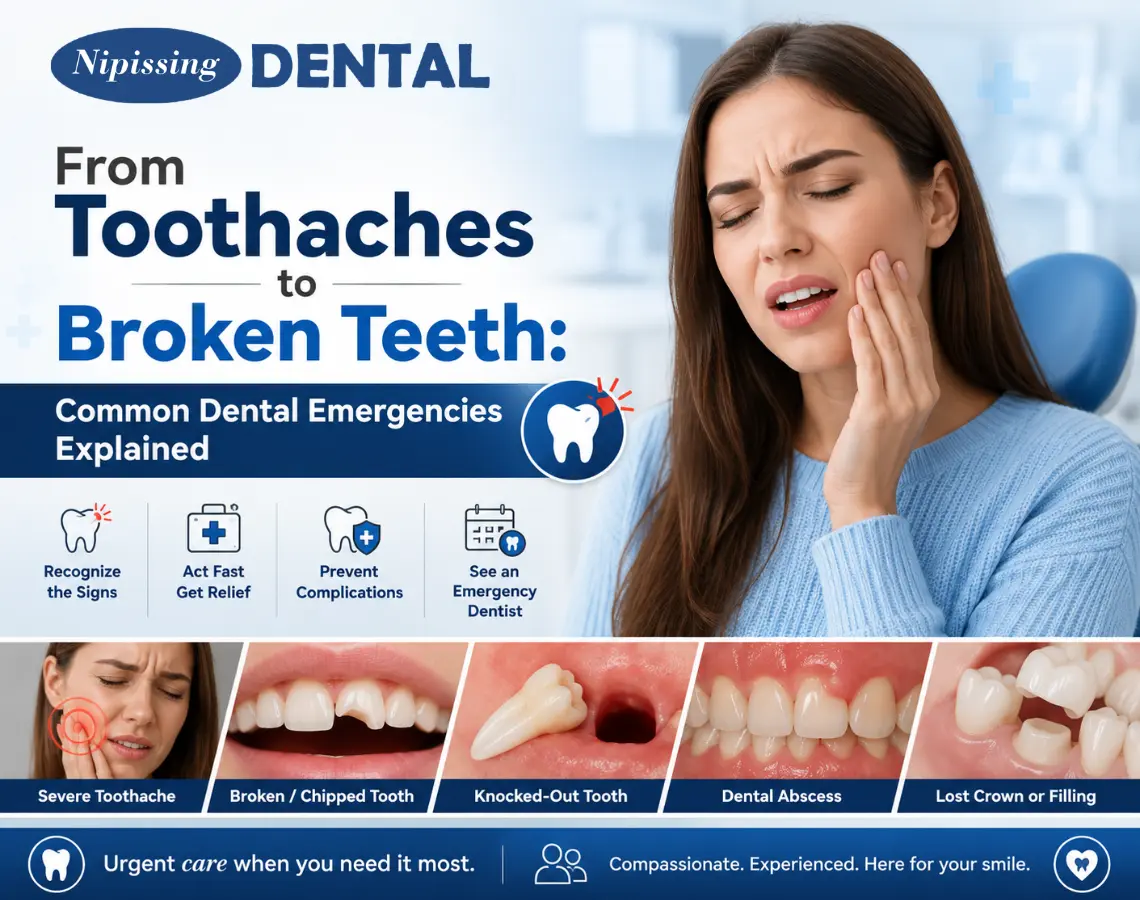
A dental emergency is any urgent oral condition—typically characterized by severe pain, uncontrollable bleeding, or physical trauma like a knocked-out tooth—that requires immediate professional intervention to save a tooth or prevent long-term health complications. At Nipissing Dental in Milton, we prioritize same-day appointments to manage your pain and restore oral health.
Key Takeaways
- Not every toothache is a dental emergency, but persistent pain, swelling, trauma, or uncontrolled bleeding require prompt professional care.
- Acting within the first hour after certain dental injuries—such as a knocked-out tooth—can significantly improve the chances of saving the tooth.
- Knowing simple first-aid steps before visiting an emergency dentist can reduce complications and improve treatment outcomes.
- Many dental emergencies are preventable through regular dental checkups, protective mouthguards, and good oral hygiene habits.
- Nipissing Dental provides compassionate emergency dental care focused on relieving pain, preserving natural teeth, and restoring long-term oral health.
What Is a Dental Emergency?
A dental emergency is any condition affecting the teeth, gums, jaw, or surrounding oral tissues that requires urgent dental care to relieve pain, stop active bleeding, prevent infection, or preserve natural teeth.
While some dental problems can safely wait a day or two for a routine appointment, others require immediate attention because delaying treatment may result in permanent tooth loss, worsening infection, or complications affecting your general health.
According to the Canadian Dental Association, prompt intervention significantly improves outcomes for traumatic dental injuries and severe oral infections. Likewise, the American Association of Endodontists reports that immediate care following dental trauma greatly increases the likelihood of preserving natural teeth. [Source: Canadian Dental Association, 2024; American Association of Endodontists, 2024]
Signs You Should Contact an Emergency Dentist Immediately
Seek urgent dental care if you experience:
- Severe, persistent tooth pain
- Knocked-out permanent tooth
- Broken or fractured tooth causing pain
- Uncontrolled oral bleeding
- Swelling around the face or jaw
- Pus or drainage near the gums
- Difficulty swallowing or breathing due to swelling
- Dental trauma after a fall, sports injury, or accident
- Lost dental crown exposing painful tooth structure
- Broken filling causing severe sensitivity
When in doubt, it’s always safer to contact an emergency dentist for guidance rather than waiting for symptoms to worsen.
What Are Dental Emergencies? Common Conditions Explained
Many patients assume every dental problem is an emergency, while others underestimate serious symptoms that require immediate treatment. Understanding the difference helps you seek care at the right time.
1. Severe Toothache
A sore toothache is among the most common reasons patients seek dental emergency services.
Although occasional sensitivity to cold or sweets may not require urgent treatment, persistent or worsening pain often signals an underlying problem such as:
- Deep tooth decay
- Inflamed dental pulp
- Cracked tooth
- Gum infection
- Dental abscess
- Advanced periodontal disease
Pain that keeps you awake at night or prevents eating should never be ignored.
What You Can Do Before Your Appointment
- Rinse gently with warm salt water.
- Brush and floss carefully to remove trapped food.
- Take over-the-counter pain medication as directed.
- Avoid placing aspirin directly on the gums, as this can cause chemical burns.
- Avoid very hot or cold foods if they increase sensitivity.
- If swelling accompanies the toothache, contact your dentist immediately.
2. Knocked-Out Tooth
A knocked-out permanent tooth is one of the few true dental emergencies where time directly affects the outcome.
Research shows that teeth replanted within 30 to 60 minutes have the highest likelihood of successful healing. [Source: International Association of Dental Traumatology, 2024]
Immediate First Aid
- Pick up the tooth by the crown only.
- Never touch the root.
- If dirty, rinse gently with milk or saline for a few seconds.
- If possible, place the tooth back into its socket.
- If reinsertion isn’t possible, keep it moist in cold milk or a tooth preservation kit.
- Visit an emergency dentist immediately.
- Avoid wrapping the tooth in tissue or allowing it to dry out.
3. Broken or Chipped Tooth
A chipped tooth may appear minor, but deeper fractures can expose sensitive inner layers of the tooth and increase the risk of infection.
Depending on the extent of damage, treatment may involve:
- Dental bonding
- Composite restoration
- Crown placement
- Root canal therapy
- Tooth extraction in severe cases
Until You See the Dentist
- Rinse your mouth with warm water.
- Apply a cold compress to reduce swelling.
- Save any broken fragments.
- Avoid chewing on the affected side.
4. Dental Abscess
One of the most serious dental emergency is a dental abscess, a bacterial infection that forms around the tooth root or gum tissues.
Unlike a simple cavity, an abscess will not heal on its own.
Warning Signs
- Severe throbbing pain
- Swollen gums
- Facial swelling
- Bad taste in the mouth
- Fever
- Swollen lymph nodes
- Difficulty opening the mouth
If untreated, dental infections can spread beyond the mouth into surrounding tissues and, in rare cases, become life-threatening.
This is why facial swelling should always be evaluated by a dentist as soon as possible.
5. Lost Filling or Crown
Many people don’t realize that losing a crown or filling can quickly become an emergency—especially if the underlying tooth is exposed.
Without protection, the tooth becomes vulnerable to:
- Temperature sensitivity
- Fracture
- Bacterial infection
- Further decay
If your crown falls off:
- Keep the crown if possible.
- Avoid chewing sticky or hard foods.
- Brush gently around the area.
- Contact your dental office promptly.
Temporary dental cement from a pharmacy may help protect the tooth until your appointment, but it should never replace professional treatment.
6. Broken Dentures or Dental Appliances
Although broken dentures don’t usually threaten your health, they can interfere with eating, speaking, and comfort.
Never attempt to repair dentures using household glue, as many adhesives contain chemicals that are unsafe for oral tissues. Instead, schedule professional repair or replacement to prevent further damage.
7. Soft Tissue Injuries
Cuts involving the lips, cheeks, gums, or tongue often occur after sports injuries, falls, or accidental bites.
Most minor injuries heal well with home care, but professional evaluation is recommended if:
- Bleeding continues for more than 10–15 minutes despite firm pressure.
- The wound is deep or gaping.
- There is significant swelling or signs of infection.
- The injury resulted from a major impact that may have also damaged the teeth or jaw.
Rinse gently with clean water, apply pressure with sterile gauze, and use a cold compress to reduce swelling while arranging prompt dental care.
Managing Common Dental Trauma and Pain
When you are in the middle of a dental crisis, the initial steps you take at home are vital. The “golden hour”—the first 60 minutes following a dental trauma—is the most critical window for successful treatment.
Knocked-Out Permanent Tooth
Time is critical. Ideally, a knocked-out permanent tooth should be replanted within 30–60 minutes for the best chance of success.
Steps to follow:
- Pick up the tooth by the crown (the chewing surface), never the root.
- If dirty, rinse gently with milk or saline solution for a few seconds.
- If possible, place the tooth back into its socket without forcing it.
- If reinsertion isn’t possible, store it in cold milk or a tooth preservation solution.
- Contact an emergency dentist immediately.
Do not: Scrub the tooth or allow it to dry out.
Broken or Cracked Tooth
A fractured tooth may expose the sensitive inner layers, increasing the risk of infection and pain.
Until you’re seen:
- Rinse with warm water.
- Save any broken fragments.
- Apply a cold compress to minimize swelling.
- Avoid chewing on the affected side.
- Cover sharp edges with dental wax if available to protect your tongue or cheek.
Dental Abscess
A dental abscess is a serious bacterial infection that requires prompt treatment.
While waiting for care:
- Rinse several times daily with warm salt water.
- Stay hydrated.
- Keep your head elevated to reduce pressure.
- Take pain medication as directed if needed.
Do not: Attempt to pop or drain the abscess yourself. This can spread the infection and worsen the condition.
Emergency Dental Services in Milton
At Nipissing Dental, we understand that dental pain rarely follows a 9-to-5 schedule. Serving the Milton community, we have structured our clinic to handle high-priority cases with speed and precision.
Whether you are a long-term patient or someone seeking urgent relief for the first time, our facility is equipped with modern diagnostics, including low-radiation digital X-rays, to identify the source of the emergency instantly. We focus on providing:
- Rapid Pain Management: Utilizing local anesthesia and, when necessary, immediate therapeutic intervention.
- Diagnostic Clarity: Using intraoral cameras so you can see exactly what the problem is—transparency reduces anxiety during emergencies.
- Compassionate Care: We know you are in pain. Our team is trained to handle high-stress situations with the calm, patient-focused approach.
Preventing Future Dental Urgencies
While some accidents are unavoidable, many dental emergencies are preventable. Routine preventive care acts as a “safety net.” During your bi-annual check-ups, we often identify small fractures or early-stage decay that have not yet caused pain. Treating these issues early is the single most effective way to avoid an emergency.
- Wear Mouthguards: If you play contact sports, a custom-fitted mouthguard is non-negotiable.
- Mind Your Habits: Avoid using your teeth as tools to open packages, chew ice, or bite down on hard candies.
- Stay Consistent: Regular exams and digital X-rays allow us to track the health of existing fillings and crowns, ensuring they are replaced before they fail suddenly.
When Should You Go to the Emergency Room Instead of the Dentist?
Some situations require immediate medical care rather than waiting for a dental appointment.
Visit your nearest emergency department if you experience:
- Difficulty breathing due to facial swelling.
- Difficulty swallowing.
- Uncontrolled bleeding after trauma.
- Suspected broken jaw.
- Significant facial injuries following an accident.
- High fever accompanied by severe facial swelling.
These symptoms may indicate a serious dental emergency requiring hospital treatment in addition to dental care.
Conclusion
A dental emergency is stressful, but you don’t have to navigate it alone. Whether it’s a sudden, sharp toothache or a traumatic injury, prompt action is the key to preserving your smile. If you are in Milton or the surrounding areas, contact Nipissing Dental immediately. Our team is ready to provide the professional, compassionate care you need to get out of pain and back to your life.
Experiencing a Dental Emergency? Book at Nipissing Dental, Milton ON
Don’t wait for pain, swelling, or a broken tooth to get worse. Our team offers same-day emergency appointments to get you out of pain quickly.
Frequently Asked Questions (FAQ)
Explore Our Related Services
- Emergency Dentist in Milton — Our full range of same-day urgent dental care services
- Children’s Dentist in Milton — Gentle emergency and preventive care for young patients
- Dental Implants in Milton — A long-term solution when a tooth cannot be saved
- Cosmetic Dentistry in Milton — Restore your smile’s appearance after a dental injury
- Teeth Whitening in Milton — Brighten your smile once emergency treatment is complete
References & Trusted Sources
This article was developed using expert dental knowledge and validated against the following trusted health and dental authorities:
- American Dental Association (ADA) — Clinical guidance on dental trauma, urgent care, and preventive dentistry
- Canadian Dental Association (CDA) — Canadian standards on dental emergencies and traumatic tooth injuries
- Health Canada — Oral health guidance for Canadians including emergency and preventive dental care