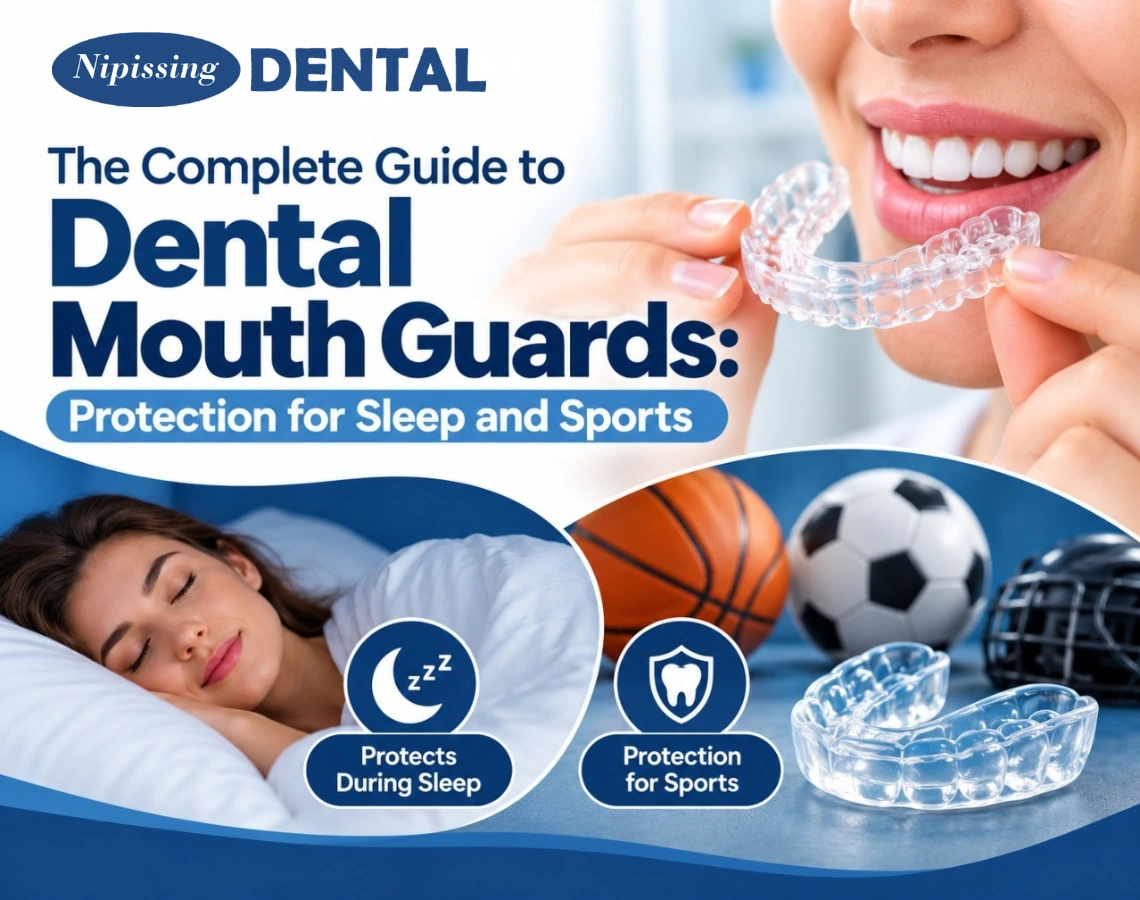
A Mouth Guards is not a one-size-fits-all product. A guard that protects teeth in a collision on the ice is built to absorb impact, while a guard worn in bed is built to sit between the teeth if you grind or clench while you sleep. Using the wrong type can leave you under-protected or uncomfortable, so it helps to know the difference first.
Key Takeaways
- Night guards are designed for grinding or clenching during sleep; sports guards protect against impact during physical activity.
- A mouth guard should fit comfortably and securely for its intended use.
- Grinding and clenching may contribute to tooth wear, cracks, sensitivity, and jaw discomfort.
- The best option depends on your needs, oral health, and how the guard will be used.
- Clean, dry, store, and regularly check your guard for damage or changes in fit.
What Is a Mouth Guard?
A mouth guard is a removable plastic appliance that fits over some or all of the teeth. Depending on its design, it can cushion the teeth, lips and jaw against a blow, or create a barrier that limits direct tooth-to-tooth contact during grinding and clenching.
Designs differ because the jobs differ. A sports guard needs thickness, coverage and grip to stay in place during fast movement. A night guard is worn for hours during sleep, so comfort and a stable fit matter just as much as protection. Choosing the right type matters for that reason.
What Are Mouth Guards Used For?
There are two main purposes, and it helps to keep them separate from the start:
- Protection during sports and recreation: helping protect the teeth and soft tissues of the mouth from impact.
- Protection related to nighttime grinding or clenching: a night guard, sometimes called a bite guard, is worn during sleep to help protect teeth from excessive contact.
What Is a Night Guard for Sleeping?
A night guard is an appliance worn while you sleep. It is most often discussed in relation to bruxism, the term for grinding, clenching or gnashing the teeth. The Ontario Dental Association (ODA) notes that bruxism most often happens at night, that many people are unaware they are doing it, and that stress and anxiety are among its most common causes.
Grinding and clenching put repeated force on the teeth and jaw joints. A night guard places a barrier between the upper and lower teeth so that force is not applied directly to tooth surfaces. The ODA notes that unaddressed bruxism can lead to cracked, chipped or loose teeth.
Worn teeth or a sore jaw can have several possible causes, so these signs are best assessed by a dental professional rather than self-diagnosed. A guard is intended to protect teeth; it does not explain why grinding is happening.
Who May Benefit From a Night Guard?
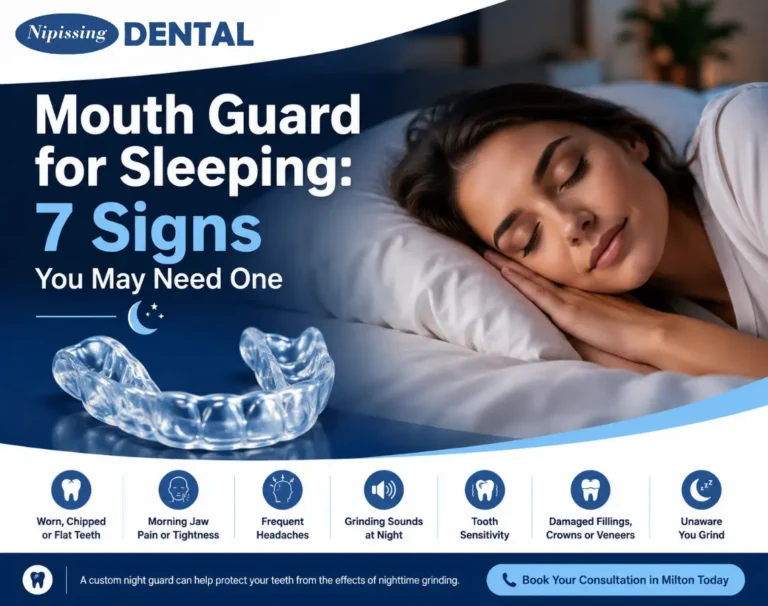
A dental professional may discuss a night guard with people who experience:
- Teeth grinding during sleep, sometimes noticed by a partner
- Teeth clenching
- Signs of tooth wear, such as flattened or chipped edges
- Jaw discomfort associated with clenching or grinding
- Jaw or facial soreness, or headaches, on waking
These signs can be associated with bruxism, but a dental professional can determine the underlying cause.
What Is a Sports Mouth Guard?
A sports mouth guard is designed to help protect the teeth and surrounding structures from impact. The ODA explains that a mouth guard protects the soft tissues around the mouth as well as the teeth, and that in more serious blows it can reduce the risk of jaw fracture by absorbing some of the force. The Canadian Dental Association (CDA) recommends appropriate face and head protection for people who play contact sports.
Fit and retention are central. The CDA states that a properly fitted guard, preferably custom fitted by a dentist, decreases the risk of orofacial injury because it is more comfortable and therefore more likely to be positioned correctly at the moment of impact.
When Should You Wear a Sports Mouth Guard?
Wear one for any activity where you might make contact with other players or hard surfaces. The ODA lists sports such as football, hockey, basketball, soccer, rugby and martial arts, and also suggests mouth guards for skateboarding, in-line skating and cycling. They are not only for children.
A broken, loose or knocked-out tooth should be assessed promptly; our guide to emergency dental care explains common situations.
Night Guard vs. Sports Mouth Guard: What’s the Difference?
The two share a name but not a purpose. This comparison shows where they differ:
| Feature | Night Guard | Sports Mouth Guard |
|---|---|---|
| Main purpose | Used during sleep when grinding or clenching is a concern | Protection during sports |
| Primary concern | Tooth contact from grinding or clenching | Impact and dental injury |
| Typical use | Sleeping | Physical activity |
| Design considerations | Comfort, fit and intended nighttime use | Retention, coverage and impact protection |
| Interchangeable? | Not automatically | Not automatically |
Key takeaway: A night guard and a sports mouth guard are designed for different situations. One should not automatically be substituted for the other.
What Is Bruxism and How Can Teeth Grinding Affect Your Teeth?
Bruxism is the habit of clenching, grinding or gnashing the teeth, often without realizing it. It usually happens during sleep, but some people also clench while awake. Over time, repeated grinding can wear tooth surfaces and strain teeth, existing dental work and the jaw joints. The ODA describes bruxism as a major cause of temporomandibular disorder (TMD), which affects the jaw joints and chewing muscles.
Signs That May Be Associated With Teeth Grinding
- Worn, flattened, chipped or cracked teeth
- Jaw discomfort or tightness
- Soreness in the jaw on waking
- Increased tooth sensitivity
- Head or facial discomfort
None of these proves that someone grinds their teeth. Each can have other explanations, which is why an examination matters.
Why Addressing Teeth Grinding Matters
When grinding or clenching is persistent, or comes with symptoms, a professional assessment can help identify what is going on and what options suit you. Regular visits also let your dentist monitor irregular tooth wear, as the ODA points out.
A night guard is intended to help protect teeth from further damage. It does not reverse wear that has already happened, and it does not necessarily stop the habit itself. The ODA also mentions stress reduction and relaxation techniques as practical steps alongside a guard.
What Types of Mouth Guards Are Available?
There are three broad categories. The ODA describes each in its mouth guard guidance.
Custom-Fitted Mouth Guards
A dentist takes an impression of your mouth, and the guard is made from a model of your teeth. The ODA describes this as the option with the best fit, protection and comfort, and notes it is the most durable and can be modified for specific sports and needs. A professional can also account for your bite and any braces or appliances you wear. You can learn more about custom night guards and sports guards in Milton.
Over-the-Counter Mouth Guards
Ready-made guards are widely available in stores. The ODA notes that they have a generic fit and limited comfort, protection and durability, and that they can be bulky, loose and may interfere with breathing and speech.
Boil-and-Bite Mouth Guards
These are softened in warm water, following the product instructions, and then shaped by biting into the plastic. The ODA notes that because they are not formed on a model of your teeth, the fit is less precise, and that the heating process can shorten the guard’s lifespan.
No single category is best for everyone.
How Do You Choose the Right Mouth Guard?
Start with the purpose:
- If you need protection while playing sports → consider a sports mouth guard designed for that purpose.
- If you grind or clench while sleeping → discuss a night guard with a dental professional.
- If you have tooth or jaw symptoms → do not choose a guard based on symptoms alone; seek a dental assessment first.
- If you are unsure which type you need → a dental professional can help work out the appropriate option based on your oral health and how you plan to use it.
How Should You Clean and Care for a Mouth Guard?
Based on ODA guidance and general good practice:
- Rinse it under cold water after each use and let it air-dry.
- Clean it occasionally with mild soap and water or mouthwash, or as the manufacturer or your dental team directs.
- Store it in a clean, rigid, ventilated case once it is dry.
- Keep it away from excessive heat and cold.
- Do not cut, alter or chew it.
- Check it regularly for tears, cracks, thinning or other wear, and let your dentist know if you see any.
When Should You Replace a Mouth Guard?
There is no single replacement date that suits everyone. Consider a replacement or a check when there is:
- Visible wear, damage or thinning
- A change in fit or comfort
- Growth in children and adolescents
- A change in oral health or dental work
- Manufacturer guidance or a recommendation from your dental professional
The ODA notes that if your bite has changed and the guard no longer fits well, a dentist can sometimes adjust it.
Common Mistakes People Make With Mouth Guards
- Using a sports mouth guard as a night guard without professional guidance
- Choosing a guard that fits poorly
- Continuing to use a damaged guard
- Storing a guard while it is still wet
- Cleaning it with unsuitable products
- Leaving it in a hot car or near other heat sources
- Ignoring changes in fit or comfort
- Assuming tooth or jaw pain is automatically caused by grinding
Can a Mouth Guard Protect Dental Work?
People with fillings, crowns, bridges, dental implants or orthodontic appliances may have specific considerations when choosing oral protection.
A guard may help reduce stress on dental work in some situations, but no guard can guarantee protection. If you have crowns, bridges or implants, ask your dental team which type of guard suits your situation.
When Should You Talk to a Dental Professional About a Mouth Guard?
Consider booking an appointment if:
- Your guard causes discomfort or does not fit properly
- It becomes cracked, torn or otherwise damaged
- Teeth or jaw symptoms develop
- You suspect nighttime grinding or clenching
- You have existing dental work and are unsure which guard is appropriate
- Your child needs a sports mouth guard and fit is a concern; our children’s dental care page explains how we support younger patients
A mouth guard supports everyday oral care but does not replace it. Health Canada recommends brushing at least twice a day, flossing daily and seeing a dental professional regularly. Routine visits are also when changes in tooth wear or fit tend to be noticed; see our preventive and family dental care guide.
Conclusion
Mouth guards serve different purposes. Night guards are associated with nighttime grinding and clenching, while sports mouth guards are designed to protect against impact during physical activity. Fit, intended use, comfort and your oral health all matter.
If you are unsure which option is right for you or your child, book an appointment with the team at Nipissing Dental in Milton — we can assess your teeth, your bite and how you’ll use the guard, and recommend the right fit.
Need a Mouth Guard? Nipissing Dental, Milton ON
Book an appointment with a team that looks at your teeth, your bite and how you’ll use the guard before recommending the right fit for sleep or sports.
Frequently Asked Questions About Mouth Guards
Explore Our Related Services
These services work well alongside a mouth guard consultation to support your overall dental care.
- Dental Fillings in Milton — Repair for teeth affected by wear, chips or decay
- Root Canals in Milton — Treatment for teeth with deep damage or infection
- Cosmetic Dentistry in Milton — Smile-enhancing options for worn or chipped teeth
- Meet Our Dental Team — Learn more about the team assessing your bite and recommending a guard
References & Trusted Sources
This article was developed using expert dental knowledge and validated against the following trusted health and dental authorities:
- FDI World Dental Federation — Global oral health and sports dentistry resources
- Ontario Dental Association (ODA) — Mouth guard and bruxism guidance
- Canadian Dental Association (CDA) — Oral health resources on sports protection
- Health Canada — Oral health guidance for consumers
These trusted sources also inform how Nipissing Dental approaches mouth guard consultations for patients in Milton.