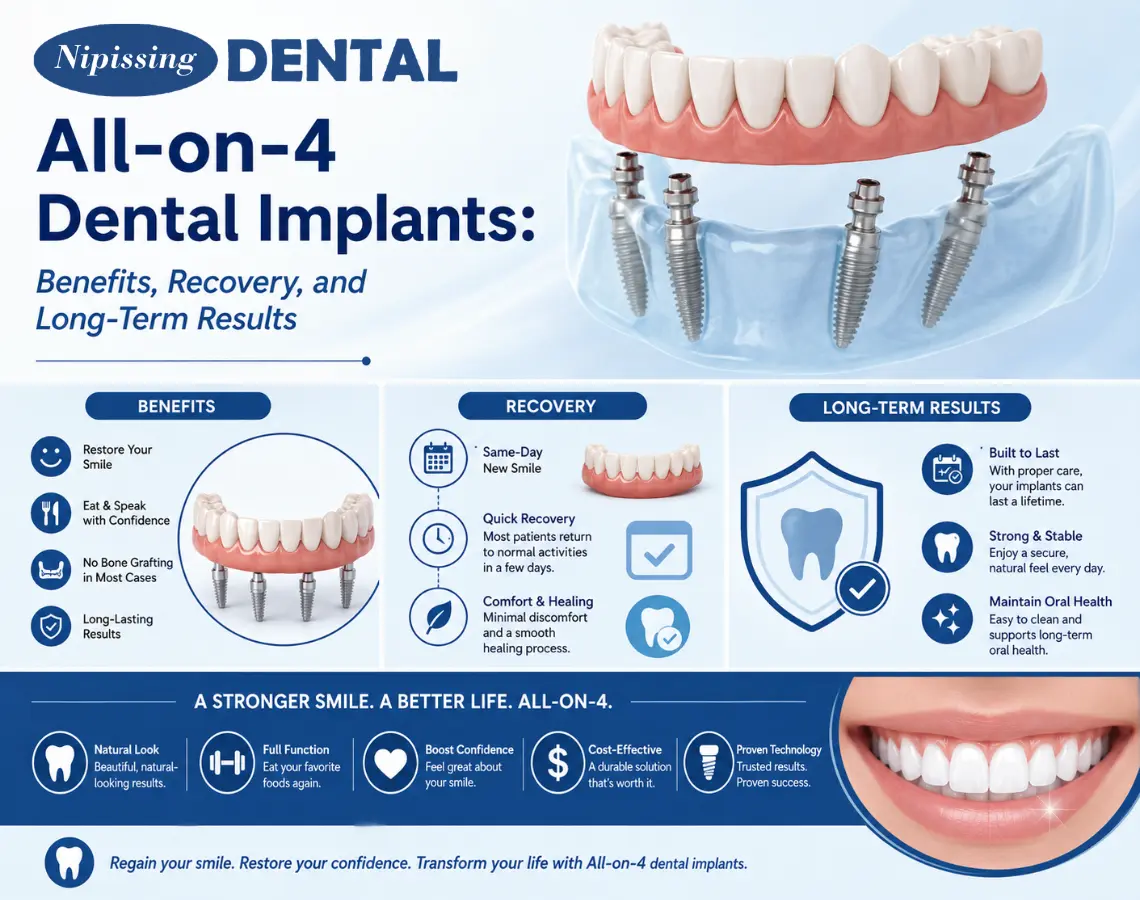
All on 4 dental implants are an advanced full-mouth tooth replacement solution that uses four strategically placed dental implants to support a complete arch of fixed replacement teeth. They provide greater stability than traditional dentures, help preserve jawbone health, and restore confidence in eating, speaking, and smiling, making them an excellent long-term option for many adults with significant tooth loss. At Nipissing Dental in Milton, every all on 4 dental implants treatment plan begins with a thorough, personalized evaluation.
Key Takeaways
- What it is: A full-arch restoration using only four titanium implants per jaw to support a fixed prosthetic bridge
- Who it’s for: Adults with multiple failing teeth, advanced gum disease, or unstable dentures
- Success rate: Frequently exceeds 95% under appropriate treatment conditions
- Recovery: Initial healing in 1–2 weeks; full bone integration over 3–6 months
- Longevity: Titanium implants can last 20+ years or a lifetime with proper care
What Are All on 4 Dental Implants?
All on 4 dental implants are a full-arch restoration technique that replaces all missing teeth in either the upper or lower jaw using only four titanium implants.
Unlike traditional implant treatment that may require six to eight implants per arch (see our full dental implants in Milton options), this technique strategically positions:
- Two implants vertically in the front
- Two implants angled in the back
The angled placement increases contact with available bone while avoiding important anatomical structures such as the maxillary sinus or major nerves.
Once the implants are placed, they support a fixed prosthetic bridge that looks, feels, and functions much like natural teeth.
This innovative concept was popularized by Portuguese implantologist Dr. Paulo Malo and has become one of the most predictable treatment options in modern restorative dentistry.
Why the Four-Implant Design Works
Many patients wonder whether only four implants are truly enough.
The answer lies in engineering.
Rather than relying on the number of implants alone, the all on 4 dental implants technique distributes biting forces across the entire prosthetic arch all on 4 dental implants.
By angling the posterior implants approximately 30–45 degrees, dentists can:
- Maximize existing bone volume
- Reduce the need for bone grafting
- Improve implant stability
- Support immediate temporary teeth in many cases
Clinical research has consistently demonstrated excellent survival rates when treatment planning is performed correctly.
According to the American Academy of Implant Dentistry (AAID), dental implants have become one of the most successful long-term tooth replacement solutions available, with success rates frequently exceeding 95% under appropriate conditions.
Source: American Academy of Implant Dentistry (AAID), 2024.
Who Is a Good Candidate for All on 4 Dental Implants?
Not every patient requires full-arch implants, but they are often an ideal solution for adults who have:
- Multiple failing teeth
- Extensive decay
- Advanced gum disease
- Loose or uncomfortable dentures
- Severe tooth wear
- Multiple missing teeth throughout one jaw
- Difficulty chewing because of unstable dentures
Many patients are surprised to learn they may qualify even after years of tooth loss.
Because the rear implants are placed at an angle, many individuals with moderate bone loss can avoid extensive grafting procedures that traditional implants sometimes require.
Your Initial Assessment
Before recommending treatment, dentists evaluate several important factors.
Oral Health
Healthy gums reduce the risk of implant complications. If active periodontal disease exists, it usually requires treatment before implant placement.
Bone Quality
Three-dimensional CBCT imaging helps assess:
- Bone density
- Bone width
- Bone height
- Sinus anatomy
- Nerve location
This digital planning improves both precision and safety.
Medical History
Certain medical conditions may influence healing, including:
- Uncontrolled diabetes
- Immune disorders
- Recent radiation therapy
- Heavy smoking
These factors don’t automatically prevent treatment but may require additional planning.
One of the biggest misconceptions we hear is that every patient with missing teeth needs extensive bone grafting before implants. In reality, careful digital planning often allows us to use existing bone efficiently through the all on 4 dental implants approach. While every case is unique, many patients who believed implants were impossible are pleasantly surprised to learn they may still be candidates after a comprehensive evaluation.
Benefits of All on 4 Dental Implants
Patients often compare all on 4 dental implants with removable dentures or traditional implant-supported bridges. The benefits extend well beyond appearance.
1. A Stable Smile That Doesn’t Move
Unlike removable dentures, fixed implant-supported teeth remain securely attached. Patients can typically:
- Speak confidently
- Laugh naturally
- Eat without denture adhesives
- Avoid slipping during conversations
This stability often creates an immediate improvement in self-confidence.
2. Better Chewing Performance
Many denture wearers avoid foods such as:
- Apples
- Steak
- Corn on the cob
- Nuts
- Crusty bread
Implant-supported restorations significantly improve bite efficiency, allowing many patients to enjoy a wider variety of nutritious foods. Improved chewing also contributes to better digestion and overall health.
3. Preserves Jawbone Health
One of the lesser-known consequences of tooth loss is ongoing bone resorption. Without tooth roots stimulating the jawbone, the body gradually begins breaking down unused bone tissue.
Dental implants function like artificial roots by transferring chewing forces into the jaw. This stimulation helps preserve bone volume and facial structure over time.
According to the Canadian Dental Association (CDA), maintaining healthy bone supports both oral function and facial appearance.
4. Natural Appearance
Today’s implant restorations are carefully designed to complement each patient’s facial features. Digital smile planning considers:
- Tooth size
- Gum contours
- Facial symmetry
- Smile line
- Lip support
The result is a smile that looks natural rather than artificial. Friends and family often notice renewed confidence before they notice the dental work itself. Patients interested in refining their overall smile design may also explore our cosmetic dentistry in Milton services.
5. Long-Term Value
Although the dental implant cost is higher initially than traditional dentures, many patients find implants offer better long-term value. Removable dentures often require:
- Relining
- Replacement
- Repeated adjustments
- Adhesives
- Ongoing maintenance
Implant-supported restorations generally require fewer major replacements when properly maintained. For many patients, this translates into greater comfort and fewer ongoing expenses over time.
How All-on-4 Compares with Other Types of Dental Implants
Choosing among the different types of dental implants depends on your oral health, bone structure, and treatment goals. While single implants remain the preferred solution for replacing one missing tooth, full-arch rehabilitation requires a different approach.
| Treatment Option | Best For | Number of Implants | Removable? |
|---|---|---|---|
| Single Dental Implant | One missing tooth | 1 | No |
| Implant-Supported Bridge | Several missing teeth | 2–4 | No |
| Implant-Retained Denture | Full arch | 2–4 | Yes |
| All-on-4 Dental Implants | Full arch replacement | 4 | No |
| Traditional Full-Arch Implants | Complex full-mouth cases | 6–8 | No |
At Nipissing Dental, treatment recommendations are never one-size-fits-all. We evaluate each patient’s needs, lifestyle, and long-term expectations before recommending the most appropriate option.
Before and After All on 4 Dental Implants: What Changes Can You Expect?
Patients often search for before and after all on 4 dental implants because they want to understand the real-life transformation — not just aesthetically, but functionally as well.
While every case is unique, improvements commonly include:
- A fuller, more youthful facial appearance due to improved lip and cheek support
- Greater confidence when smiling, speaking, and socializing
- Improved chewing efficiency, allowing patients to enjoy a broader range of foods
- Clearer speech compared to unstable or ill-fitting dentures
- Better overall oral comfort without the need for denture adhesives
The most rewarding transformation, however, is often emotional. Many patients tell us they feel like themselves again after years of hiding their smile or struggling with removable dentures.
Recovery After All-on-4 Dental Implants
Recovery varies from person to person, but most patients are pleasantly surprised by how manageable it is.
The First 48 Hours
You may experience:
- Mild swelling
- Minor bruising
- Tenderness around the implant sites
- Slight difficulty chewing
These symptoms usually improve within a few days. Your dentist may recommend:
- Cold compresses
- Prescribed or over-the-counter pain medication
- Soft foods
- Plenty of rest
The First Week
During the first week, it’s important to:
- Avoid smoking
- Limit strenuous exercise
- Keep the surgical sites clean
- Attend follow-up appointments
- Follow dietary instructions carefully
Patients typically return to desk jobs within two or three days, depending on individual comfort levels.
Long-Term Healing
Although the gums heal relatively quickly, the underlying bone continues integrating with the implants for several months. Maintaining good oral hygiene during this period is essential for long-term success. Health Canada recommends consistent daily oral hygiene as a foundation for long-term healing and overall dental health.
Foods to Eat During Recovery
Soft foods make healing more comfortable. Recommended choices include:
- Yogurt
- Smoothies
- Scrambled eggs
- Mashed potatoes
- Soup
- Oatmeal
- Cottage cheese
- Soft fish
- Pasta
- Well-cooked vegetables
Avoid:
- Hard nuts
- Ice
- Sticky candy
- Popcorn
- Crunchy chips
- Tough meats
Dental Implant Cost: What Should Patients Expect?
One of the most common questions we hear concerns dental implant cost. The total investment depends on several factors, including:
- Number of teeth being replaced
- Need for extractions
- Bone grafting (if required)
- Type of final restoration
- Materials used
- Complexity of the case
Because every smile is different, there isn’t a universal price for All-on-4 treatment.
At Nipissing Dental, we believe patients deserve complete transparency. During your consultation, we provide a personalized treatment plan outlining all expected costs before treatment begins.
We also discuss available financing options to help make treatment more accessible. Rather than focusing only on the upfront cost, many patients consider the long-term value of a fixed, durable solution that may reduce future expenses associated with removable dentures.
How Long Do Dental Implants Last?
One of the greatest strengths of implant dentistry is longevity. So, how long do dental implants last?
With proper care:
- The titanium implants themselves can last 20 years or more, and in many cases, a lifetime
- The prosthetic bridge may require maintenance or replacement after 10–20 years, depending on the material used and normal wear
A systematic review published in the International Journal of Oral & Maxillofacial Implants found long-term implant survival rates above 95% over ten years when patients maintained good oral hygiene and regular professional care.
Factors That Influence Implant Longevity
Several habits directly affect long-term success:
- Daily brushing
- Cleaning around implants
- Regular dental examinations
- Professional hygiene visits
- Avoiding tobacco products
- Managing diabetes effectively
- Wearing a nightguard if you grind your teeth
Think of implants like a luxury vehicle — they’re built to last, but routine maintenance keeps them performing at their best.
A common misconception is that dental implants are “maintenance-free.” While implants cannot develop cavities, the surrounding gum tissue can become inflamed if plaque builds up. We’ve found that patients who attend regular hygiene appointments and follow personalized home-care instructions consistently enjoy the best long-term outcomes. Preventive care remains just as important after implant treatment as it was with natural teeth.
Potential Risks and Considerations
Like any surgical procedure, All-on-4 treatment carries some risks. Fortunately, complications are relatively uncommon when performed by experienced dental professionals.
Potential risks include:
- Infection
- Implant failure
- Delayed healing
- Temporary swelling
- Minor bleeding
- Sinus complications (upper jaw cases)
- Nerve irritation (rare)
Careful planning, advanced imaging, and adherence to post-operative instructions significantly reduce these risks. If you experience signs of infection or unexpected pain after treatment, contact our emergency dentist in Milton right away.
Caring for Your All-on-4 Dental Implants
Maintaining your new smile is straightforward but essential. We recommend:
- Brushing twice daily with a soft-bristled toothbrush
- Cleaning beneath the bridge using floss threaders, water flossers, or implant-specific cleaning aids
- Attending professional cleanings every 3–6 months, as recommended
- Avoiding smoking and limiting excessive alcohol consumption
- Wearing a custom nightguard if you clench or grind your teeth
Routine maintenance helps protect both the implants and the surrounding gum tissue.
Why Choose Nipissing Dental for Implant Care?
Choosing the right dental team is just as important as choosing the treatment itself.
At Nipissing Dental, we focus on more than replacing missing teeth — we help patients regain confidence, comfort, and long-term oral health. Our patient-centered approach includes:
- Comprehensive examinations and digital diagnostics
- Personalized treatment planning
- Modern implant technology
- Emphasis on preventive care
- Clear communication at every stage of treatment
- Long-term follow-up to support lasting results
We believe informed patients make confident decisions, and we’re committed to providing education alongside exceptional clinical care.
Conclusion
All on 4 dental implants have transformed the way modern dentistry restores full smiles. By combining advanced implant placement techniques with durable, natural-looking restorations, this treatment offers a stable and long-lasting alternative to traditional dentures.
While every patient’s needs are different, the right treatment begins with a thorough evaluation, honest discussion, and a personalized plan tailored to your oral health goals.
If you’re considering replacing multiple missing teeth and want to explore whether All-on-4 is right for you, schedule a consultation with Nipissing Dental. Together, we can determine the most appropriate solution to restore your smile, improve function, and support your long-term oral health.
Ready to Explore All on 4 Dental Implants? Book at Nipissing Dental, Milton ON
Whether you’re struggling with unstable dentures or multiple failing teeth, our team can help you determine if all on 4 dental implants are the right long-term solution for your smile. Dr. Disha Hans and our team at Nipissing Dental provide personalized implant care in English, Hindi, Urdu, and Punjabi.
Frequently Asked Questions
Explore Our Related Services
- Family Dentistry in Milton — Comprehensive preventive and general dental care alongside your implant treatment
- Root Canals in Milton — Save a failing tooth when treatment may still be possible before extraction
- Dental Fillings in Milton — Conservative restoration for teeth affected by decay
- Extractions and Wisdom Teeth Removal in Milton — Safe removal of failing teeth prior to implant placement
- Teeth Whitening in Milton — Brighten your natural teeth alongside your new smile
- Invisalign Clear Aligners in Milton — Straighten remaining natural teeth for a balanced bite
- Children’s Dentist in Milton — Gentle preventive care to help the whole family avoid future tooth loss
References & Trusted Sources
This article was developed using expert dental knowledge and validated against the following trusted health and dental authorities:
- American Dental Association (ADA) — Clinical guidance on implant hygiene, oral care, and preventive dentistry
- Canadian Dental Association (CDA) — Canadian standards on jawbone health and restorative dental care
- Health Canada — Oral health guidance for Canadians including post-surgical hygiene recommendations