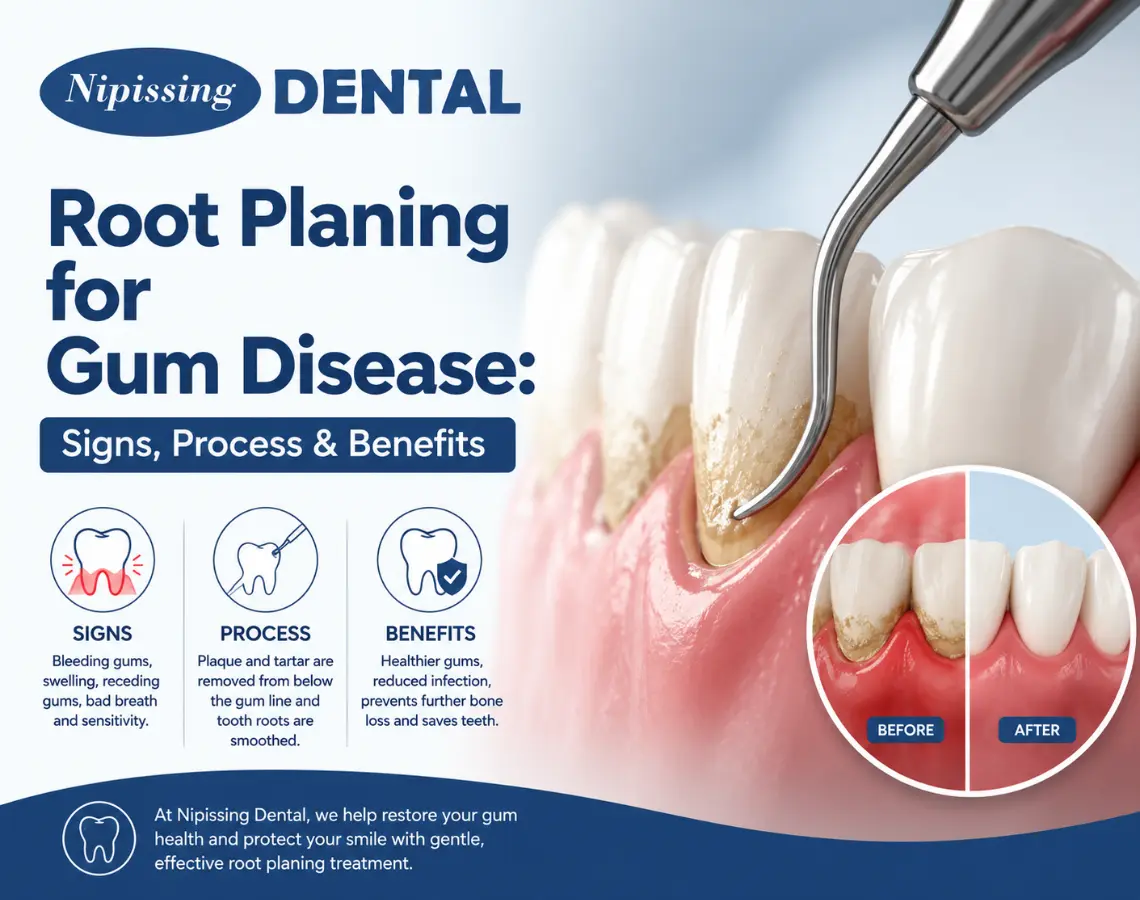
Most people think a routine trip to the dental office involves a quick polish, a rinse, a friendly reminder to floss more, and a complimentary toothbrush. But if your gums bleed when you brush or feel consistently tender, a standard cleaning might not cut it anymore. When bacterial plaque and hardened tartar sneak past your visible smile and move below the gumline, your oral health faces a serious threat. That is when your dental team introduces a specific, highly effective non surgical gum treatment: scaling and root planing. Often called a deep teeth cleaning or a periodontal deep cleaning, this targeted therapy stops chronic gum disease in its tracks. At Nipissing Dental in Milton, we focus on protecting your smile before simple inflammation turns into permanent bone loss.
What Is Root Planing in Dentistry?
To understand root planing, we first have to understand the sneaky progression of gum disease.
Your mouth contains a dynamic ecosystem of oral bacteria. When you eat, these bacteria create a sticky, invisible film on your teeth called bacterial plaque. Regular brushing and flossing remove it easily. But if plaque sits undisturbed for more than 24 to 48 hours, it mixes with the minerals in your saliva and hardens into a substance called tartar (or calculus).
You cannot brush tartar away. Only a dental professional using specialized instruments can remove it.
If tartar remains on your teeth, it starts spreading downward — creeping under your gum tissue and triggering your body’s immune system. This early stage is known as gingivitis. Leave it untreated, and it advances into periodontitis. During this stage, your gums begin to pull away from your teeth, creating deep spaces known as periodontal pockets.
The Critical Difference: Regular Cleaning vs. Deep Cleaning
A standard dental cleaning (prophylaxis) focuses entirely on the crown of the tooth — the part visible above your gums. Your hygienist removes surface plaque and tartar, polishes your enamel, and sends you on your way.
A periodontal deep cleaning is an entirely different process. It splits into two distinct clinical steps:
- Teeth Scaling: The precise physical removal of plaque, tartar, and toxic bacterial byproducts from the visible surfaces of your teeth and from the deep pockets beneath your gums.
- Root Planing: The meticulous smoothing of your tooth root surfaces.
Why smooth the roots? Think of a rough wood deck versus a sanded one. Bacteria love rough surfaces — they provide thousands of tiny microscopic crevices to cling to. By smoothing out the cementum (the outer layer of the tooth root), your dentist eliminates these hiding spots. This makes it incredibly difficult for plaque to reform below the gums and allows your gum tissue to heal and reattach firmly to the clean root.
7 Clear Signs You Need Root Planing
How do you know if you need a deep gum cleaning procedure instead of a basic cleaning? Your mouth provides explicit warning signs when bacteria invade the spaces below your gums.
If you experience any of the following symptoms, it is time to schedule an evaluation at Nipissing Dental Clinic:
1. Persistent Bleeding Gums
Healthy gums do not bleed when you brush, floss, or bite into an apple. If you notice a pink tinge in the sink regularly, your gums are actively fighting an infection. This makes them fragile, swollen, and highly prone to bleeding. This is one of the earliest and most common signs that gum disease treatment is needed.
2. Chronic Bad Breath (Halitosis)
We all experience occasional morning breath. However, if bad breath stays put even after brushing and using mouthwash, you likely have millions of volatile sulfur-producing bacteria throwing a permanent party inside deep periodontal pockets. No amount of mints will fix that.
3. Red, Swollen, or Tender Gums
Healthy gum tissue is firm, pale pink, and fits snugly around your teeth. Infected gums appear bright red, puffy, or purple, and they often throb or feel remarkably tender. This is classic swollen gums treatment territory — and it points directly to a bacterial infection below the surface.
4. Receding Gums and “Long” Teeth
Do your teeth look longer than they used to? As chronic gum disease damages the underlying bone and soft tissue, your gums begin to recede, exposing the vulnerable yellow roots underneath. Receding gums treatment through scaling and root planing can slow or stop this process significantly.
5. Periodontal Pockets Deeper Than 3mm
During your routine checkup, your provider uses a tiny instrument called a periodontal probe to measure the space between your tooth and gum line.
- 1 to 3 millimeters: Completely normal and healthy.
- 4 millimeters or greater: Indicates an active pocket where plaque and tartar are trapped, requiring a specialized gum pocket cleaning.
6. Pus Between Your Teeth and Gums
When your body sends white blood cells to fight off dense bacterial plaque below the gums, pus can form. If you press on your gums and notice a milky discharge, you have an active gum infection treatment situation that requires urgent care. Do not wait — contact our emergency dentist in Milton if you’re experiencing this.
7. Loose or Shifting Teeth
This is a late-stage warning sign. When periodontitis destroys the structural bone holding your teeth in place, your teeth may begin to shift, creating new gaps or feeling unstable when you bite down. At this stage, even dental implants in Milton may become a consideration if teeth cannot be saved.
The Scaling and Root Planing Procedure: Step-by-Step
Hearing that you need a “deep cleaning” can sound intimidating, but the actual dental scaling procedure is straightforward, highly organized, and designed with patient comfort as a top priority.
Because this treatment goes deep beneath your gum line, your dental team usually splits the process across two separate appointments — treating the left side of your mouth during your first visit and the right side during your second. This prevents your entire mouth from being numb at once and keeps your appointments shorter and more manageable.
Step 1: Comprehensive Clinical Evaluation
Your dentist takes detailed digital X-rays to assess any underlying bone loss around your teeth. They measure your pocket depths with a periodontal probe to create a map of the areas requiring intensive plaque and tartar removal treatment. According to the American Dental Association (ADA), thorough diagnostic imaging before periodontal therapy significantly improves clinical outcomes.
Step 2: Local Anesthesia Delivery
To ensure a completely painless scaling and root planing experience, your provider applies a topical numbing gel followed by a local anesthetic. This completely numbs your gums, roots, and surrounding tissues so you will not feel the instruments working below the gum line. No drama, no pain.
Step 3: Advanced Ultrasonic Teeth Scaling
The hygienist uses an ultrasonic scaler — a device that vibrates at a very high frequency to instantly shatter large chunks of hardened tartar. Simultaneously, it sprays a micro-mist of water to flush away loose bacterial debris and clear out the infected pockets.
Step 4: Manual Hand Scaling
Next, your provider uses specialized hand instruments called curettes and scalers. These allow the clinician to manually feel for and scrape away any tiny, lingering fragments of tartar hidden deep beneath your gum tissue. It is as precise as it sounds — and precision is everything here.
Step 5: Detailed Tooth Root Planing
Using specialized planing tools, the clinician gently smooths out the rough areas along the surface of your tooth roots. This eliminates embedded bacterial toxins and leaves a pristine, slick surface that encourages optimal gum tissue healing. This step is the defining difference between a standard clean and true dental root planing.
Step 6: Antimicrobial Pocket Irrigation
Finally, the treated periodontal pockets are thoroughly flushed with a warm, liquid antimicrobial rinse. This medication sterilizes the space, kills remaining oral bacteria, and jumpstarts your body’s natural healing processes.
How Long Does Root Planing Take?
On average, a scaling and root planing procedure takes about 1 to 2 hours per quadrant or half of the mouth. If your gum disease is mild, your provider might complete your entire mouth in a single, longer session. If you have deep pockets across all your teeth, scheduling two separate appointments ensures the highest level of precision and comfort.
The Canadian Dental Association (CDA) recommends that patients with stage II or III periodontitis always receive this treatment in properly phased sessions to maximize healing and tissue response.
Does Root Planing Hurt? What to Honestly Expect
The most common question patients ask is simple: Does root planing hurt?
Thanks to modern dental techniques and highly effective local anesthetics, the procedure itself is virtually painless. You will feel some mild pressure as the clinician works, and you will hear the high-pitched humming of the ultrasonic tool — but you will not experience sharp pain. The American Dental Association (ADA) confirms that with proper anesthesia, patients report minimal discomfort during periodontal deep cleaning procedures.
Root Planing Recovery Time and Post-Op Sensations
Once the local numbing wears off over the next few hours, you will feel some mild tenderness. This is completely normal — your gums just underwent a thorough clinical intervention.
You can expect the following sensations over the next few days:
- Mild Gum Sensitivity: Your gums might look slightly swollen or bleed very slightly when you brush for the first 24 to 48 hours.
- Temperature Sensitivity: Because the root surfaces are now clean and exposed to the oral environment, hot or cold liquids might cause a brief zap of sensitivity. This typically fades within 1 to 2 weeks.
Essential Scaling and Root Planing Aftercare Tips
To protect your investment and ensure quick healing, follow these simple guidelines:
- Be Gentle: Brush with a soft-bristled toothbrush using circular motions. Do not scrub your gums aggressively.
- Floss Carefully: Continue flossing daily, but slide the tape in gently to avoid traumatizing the healing tissue.
- Watch Your Diet: Avoid eating hard, crunchy, sharp, or highly spicy foods for the first 48 hours. These can lodge themselves inside your healing gum pockets. Stick to soft foods like yogurt, pasta, eggs, and smoothies instead.
- Use a Saltwater Rinse: Dissolve half a teaspoon of salt in a glass of warm water and rinse your mouth gently 2 to 3 times a day to soothe the tissue and eliminate bacteria.
- Avoid Tobacco: Smoking drastically slows down blood flow to your gums, delaying or completely preventing proper healing. Try to abstain for at least 72 hours post-procedure.
The Major Benefits of Scaling and Root Planing
Is root planing necessary? Absolutely. Think of periodontitis like a house with a damaged foundation. You can paint the walls and clean the windows all you want — but if the soil underneath is washing away, the house will eventually collapse.
Investing in a deep teeth cleaning provides massive, scientifically proven benefits for your smile and your overall health. According to clinical guidelines from the American Dental Association (ADA), scaling and root planing is universally recognized as the gold-standard initial treatment for chronic periodontitis, proven to effectively reduce pocket depths and preserve natural teeth.
| Benefit | Clinical Outcome | Why It Matters |
|---|---|---|
| Stops Active Bone Loss | Halts the destruction of the alveolar bone supporting your teeth. | Prevents your teeth from loosening, shifting, or falling out. |
| Shrinks Periodontal Pockets | Allows gums to heal and reattach tightly to clean root surfaces. | Closes open spaces where food particles and dangerous bacteria hide. |
| Eliminates Chronic Bad Breath | Eradicates deep-seated anaerobic bacteria below the gum line. | Restores clean, fresh breath that brushing alone cannot fix. |
| Protects Systemic Health | Lowers overall systemic inflammation by clearing oral infections. | Reduces risks associated with heart disease, diabetes, and stroke. |
| Enhances Aesthetic Appearance | Reverses severe gum swelling, bleeding, and dark tartar stains. | Restores a healthy, pale-pink, confident smile. |
The Oral-Systemic Connection: Why Healthy Gums Matter
Many people treat their mouth as an isolated part of their body. In reality, your mouth is the main gateway to your entire systemic health.
When you have advanced periodontitis, your gum tissues are essentially an open, bleeding wound. The dangerous oral bacteria trapped in your periodontal pockets do not just stay in your mouth — they can slip directly into your bloodstream every single time you chew, brush, or floss.
Medical research from institutions like the Mayo Clinic and Harvard Medical School has repeatedly proven that chronic gum disease correlates with several serious full-body health conditions:
Cardiovascular Disease
Oral bacteria entering the blood can attach to fatty plaques in your arteries, contributing to inflammation, blood clots, and an increased risk of heart attacks and strokes. This is not a scare tactic — it is documented science.
Diabetes Management
The relationship between diabetes and gum disease is a two-way street. Chronic gum infection raises systemic inflammation, making it significantly harder to control your blood sugar levels. Conversely, poorly managed diabetes reduces your body’s ability to fight off gum infections. Health Canada acknowledges the strong bidirectional link between periodontal health and systemic conditions including diabetes.
Respiratory Infections
If you have high volumes of bacterial plaque below your gums, you can accidentally inhale these microscopic droplets into your lungs, potentially leading to conditions like aspiration pneumonia or worsening chronic obstructive pulmonary disease (COPD).
By scheduling a periodontal cleaning, you are not just cleaning your teeth — you are reducing systemic inflammation and protecting your entire body. Your dentist and your cardiologist might end up thanking each other one day.
What Happens After Root Planing? The Maintenance Phase
A common misconception is that once you finish your root planing sessions, your gum disease is completely cured forever.
Unfortunately, chronic periodontitis cannot be entirely cured — it can only be successfully managed and put into remission. Think of it like managing high blood pressure. It requires consistent, ongoing care.
Once your deep cleaning is complete, your dentist will bring you back in about 4 to 6 weeks for a follow-up evaluation. Your provider will remeasure your pocket depths. In the vast majority of cases, a 6mm pocket will shrink down to a healthy, maintainable 3mm or 4mm pocket because the inflammation is gone and the tissues have tightened back up.
Transitioning to Periodontal Maintenance Cleaning
Because your mouth has a documented history of bone loss and deep pockets, you will graduate from standard cleanings to a schedule known as periodontal maintenance cleaning.
Instead of visiting the dentist every six months, patients managing periodontitis typically come in every 3 to 4 months. Why this specific timeline? Scientific studies show that aggressive, bone-destroying periodontal bacteria take roughly 90 days to fully mature, reorganize, and begin damaging tissue again. By receiving a professional dental cleaning every 3 months, your hygienist disrupts these bacterial colonies before they can cause new damage.
Our dental cleanings in Milton team at Nipissing Dental tailors every maintenance schedule to your individual gum health history and risk factors.
Root Planing Costs and Insurance Coverage
A practical question every patient faces is the financial aspect of treatment. The cost of scaling and root planing in Milton varies depending on several factors:
- How many quadrants of your mouth require treatment.
- The severity of the bacterial accumulation.
- Your geographic location and the specific dental fee guide.
Because root planing is an essential, therapeutic procedure required to treat an active medical infection, most dental insurance policies cover a significant portion of the cost — often between 50% to 80%. This is quite different from purely cosmetic procedures, which are rarely covered.
Our administrative team at Nipissing Dental Milton works directly with your insurance provider, submitting pre-determinations beforehand so you know exactly what your out-of-pocket costs will be before your appointment begins.
Remember: investing in a deep cleaning now is vastly more affordable than waiting until your teeth fall out — which may then require expensive dental implants in Milton, bone grafts, or full dentures down the road. Penny wise, pound foolish is the last thing you want to be with your teeth.
Frequently Asked Questions: Root Planing and Gum Disease
Protect Your Smile at Nipissing Dental Milton
Gum disease is a quiet, painless infection that can easily go unnoticed until significant structural damage has already occurred. If your gums are bleeding, tender, or pulling away from your teeth, ignoring the problem will only allow the bacteria to travel deeper.
At Nipissing Dental, our dedicated team — led by Dr. Disha Hans (DMD, Boston University) offers comprehensive, gentle, and highly effective periodontal therapy for gum disease right here in Milton. We combine advanced dental technologies with a patient-first approach to make sure your treatment is thoroughly comfortable and highly successful. We proudly serve patients in English, Hindi, Urdu, and Punjabi.
Do not let hidden plaque put your smile or your systemic health at risk. Contact Nipissing Dental Clinic today to schedule your comprehensive periodontal evaluation and take the first step toward lifelong oral health.
Explore our related services:
- Dental Cleanings in Milton — Preventive care and periodontal maintenance to keep gum disease at bay
- Family Dentistry in Milton — Comprehensive oral health care for every member of your household
- Emergency Dentist in Milton — Fast care for sudden gum pain, swelling, or dental infections
- Dental Implants in Milton — Restorative solutions when advanced gum disease has caused tooth loss
- Crowns and Bridges in Milton — Rebuilding and protecting teeth affected by advanced decay or gum recession
- Extractions and Wisdom Teeth Removal in Milton — When a tooth cannot be saved despite periodontal therapy
- Cosmetic Dentistry in Milton — Restoring the appearance of your smile after gum disease treatment
- Root Canals in Milton — Advanced care when infection has reached deep inside the tooth
Book Your Periodontal Evaluation at Nipissing Dental, Milton ON
Don’t let silent gum disease steal your smile. At Nipissing Dental, our friendly team provides fast, comfortable, and effective scaling and root planing in Milton — with no surprises and no unnecessary waiting.
References & Trusted Sources
This article was developed using expert dental knowledge and validated against the following trusted health and dental authorities:
- American Dental Association (ADA) — Clinical guidelines on scaling and root planing, periodontal therapy, and patient comfort protocols
- Canadian Dental Association (CDA) — Canadian clinical standards for periodontal care, gum disease staging, and treatment sequencing
- Health Canada — Oral health guidance, systemic connections to periodontal disease, and dental care recommendations for Canadians