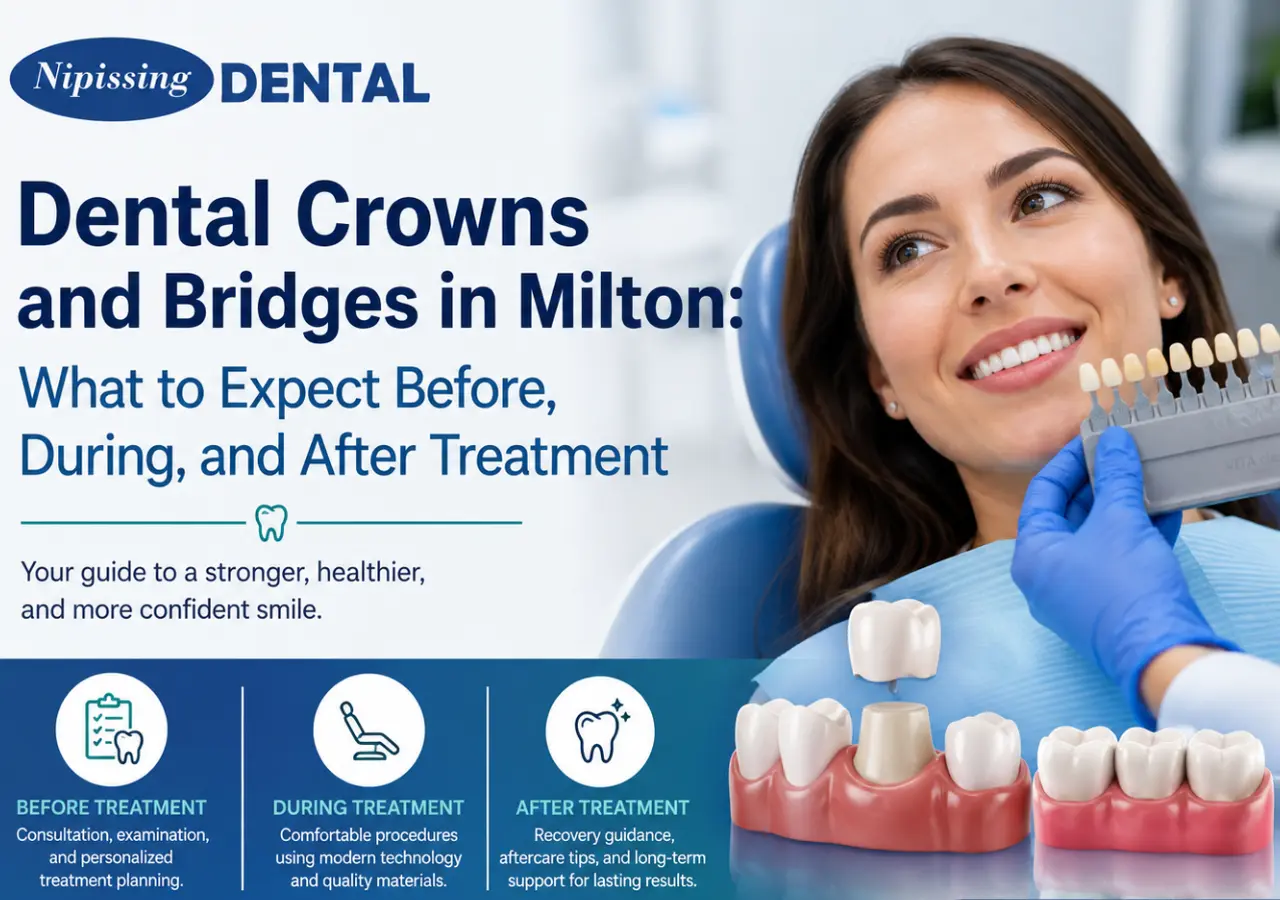
Dental crowns and bridges can restore damaged or missing teeth while helping you maintain comfortable chewing, proper tooth function, and a natural-looking smile. Treatment typically begins with a comprehensive examination, followed by personalized planning, preparation or tooth replacement, final placement, and guidance for long-term care.
If you are researching dental crowns and bridges in Milton, understanding what happens before, during, and after treatment can make the process easier to understand and help you have more productive conversations with your dentist.
Key Takeaways
- Dental crowns protect and restore individual teeth that are weakened, damaged, cracked, heavily restored, or otherwise unable to function normally.
- Dental bridges replace one or more missing teeth by using natural teeth or dental implants for support, depending on the treatment plan.
- Treatment usually starts with a dental examination and personalized planning before preparation, impressions or digital scanning, and final placement.
- Proper brushing, flossing, professional cleanings, and regular dental examinations help protect crowns, bridges, supporting teeth, and gums.
- The right restoration depends on your tooth structure, gum health, bite, location of the missing or damaged tooth, and long-term oral-health goals.
Together, these points show that dental crowns and bridges are closely related but not interchangeable restorations, and each is planned differently.
What Are Dental Crowns and Bridges?
A dental crown restores an existing tooth, while a dental bridge replaces one or more missing teeth. Although both are fixed dental restorations, they address different problems and require different treatment planning.
A dental crown is a custom restoration placed over a prepared tooth. It can help restore the tooth’s shape, function, strength, and appearance when significant tooth structure has been compromised.
A dental bridge replaces a missing tooth or several adjacent missing teeth. The artificial tooth, known as a pontic, is supported by natural teeth, dental implants, or another appropriate design.
The Canadian Dental Association recognizes several bridge designs, including traditional, implant-supported, resin-bonded, and cantilever bridges. The appropriate design depends on factors such as the location of the missing tooth and the condition of the surrounding teeth.
In simple terms, dental crowns and bridges both restore a healthy, functional smile, but each is used in a different clinical situation.
Crown vs. Bridge at a Glance
The table below compares common situations where dental crowns and bridges are typically considered.
| Dental concern | Restoration that may be considered |
|---|---|
| Weak or extensively damaged tooth | Dental crown |
| Tooth requiring substantial protection after treatment | Dental crown may be recommended |
| One missing tooth | Bridge or dental implant may be considered |
| Several adjacent missing teeth | Bridge or implant-supported restoration may be considered |
| Missing tooth with healthy supporting teeth | Certain bridge designs may be appropriate |
| Missing teeth with inadequate natural support | Implant-supported options may be considered |
This is why a bridge vs. crown decision should not be made based only on appearance. A dental examination is needed to determine what treatment is appropriate for the individual situation.
When Might You Need a Dental Crown?
A dental crown may be recommended when a tooth has lost enough structure that a conventional filling or smaller restoration may not provide the necessary protection.
Common situations can include:
- A cracked or fractured tooth
- Extensive tooth decay
- A tooth with a large filling
- Significant tooth wear
- A weakened tooth following root canal treatment
- A tooth requiring substantial structural restoration
- Certain cosmetic or developmental concerns
- A tooth being used to support a dental bridge
The objective is not simply to cover the tooth. The restoration should be planned to work with your surrounding teeth and bite while preserving healthy tooth structure wherever possible.
Dental crowns and bridges are often discussed together because a crown can also serve as the anchor for a future bridge.
A Crown Does Not Replace Preventive Dental Care
One of the most important things patients should understand about a dental tooth crown is that the restoration does not make the underlying tooth immune to future problems.
The gumline still needs to be cleaned. The surrounding teeth can still develop cavities. Gum disease can still affect the tissues around the restoration.
That means a crown should be considered part of a long-term dental care in Milton plan—not the end of dental care.
When Might a Dental Bridge Be Recommended?
A dental bridge may be used to replace one or more missing teeth and restore continuity within the dental arch.
Missing teeth can affect more than appearance. Depending on the location of the missing tooth, tooth loss can influence chewing, speech, bite relationships, and the position of surrounding teeth.
A bridge can fill the space while restoring a more complete dental arch. As with dental crowns and bridges generally, the goal is to restore function without compromising the health of surrounding teeth.
Types of Dental Bridges
The type selected during treatment planning for dental crowns and bridges depends on which teeth are missing and the condition of nearby teeth.
Traditional Bridge
A traditional bridge uses crowns on supporting teeth next to the missing tooth, with the artificial tooth attached between them.
Implant-Supported Bridge
An implant-supported bridge uses dental implants rather than relying entirely on natural teeth for support. This may be an option when several teeth are missing or when natural teeth are not suitable supports.
Resin-Bonded Bridge
Also called a Maryland bridge, this design uses a framework bonded to supporting teeth. It may be considered in selected situations, particularly for some front-tooth replacements.
Cantilever Bridge
A cantilever bridge is supported from one side rather than both. Its suitability depends strongly on the location of the missing tooth and the forces placed on the restoration.
The Canadian Dental Association provides additional information about these bridge designs and emphasizes the importance of professional assessment and ongoing maintenance.
What to Expect Before Dental Crown or Bridge Treatment
Before treatment begins, your dentist evaluates the affected tooth or missing-tooth area, surrounding teeth, gums, bite, and overall oral health to determine the most appropriate restoration.
This consultation is one of the most important parts of the process. Because dental crowns and bridges are custom-made restorations, this planning stage directly affects the final fit and longevity of your treatment.
Your dentist may assess:
- Remaining tooth structure
- Existing fillings or restorations
- Signs of decay
- Gum health
- Tooth alignment
- Bite and chewing forces
- Adjacent teeth
- The area surrounding a missing tooth
- Signs of infection or inflammation
- Your treatment preferences and long-term goals
X-rays or other diagnostic imaging may be recommended when clinically appropriate.
Nipissing Dental also identifies digital X-rays and intraoral cameras among the technology used in its practice. These tools can help the dental team evaluate oral structures and explain findings to patients.
Why Diagnosis Comes First
A crown or bridge should not simply be placed over an unresolved dental problem.
For example, a tooth with infection may require appropriate treatment before a definitive restoration is placed. Similarly, active gum disease or untreated decay may need to be addressed before restorative treatment.
This is where preventive dentistry and restorative dentistry work together.
The goal is not only to complete the restoration but also to create a healthier foundation for it. This diagnostic-first approach applies equally to dental crowns and bridges.
What Happens During a Dental Crown Procedure?
A dental crown procedure generally involves preparing the tooth, recording its shape for a custom restoration, protecting it temporarily when necessary, and checking the final crown before placement.
The steps below outline how dental crowns and bridges are typically prepared and placed.
- Examination and Planning
Your dentist confirms that a crown is an appropriate option and explains the treatment process. - Local Anesthesia
Local anesthesia may be used to keep the procedure comfortable during tooth preparation. - Tooth Preparation
The tooth is carefully prepared to create the space required for the crown while preserving as much healthy structure as clinically possible. - Digital Impression or Scan
A detailed digital impression or other impression method records the prepared tooth and surrounding structures. Digital impressions are part of the crown-and-bridge workflow described by Nipissing Dental. - Temporary Restoration
When appropriate, a temporary crown can protect the prepared tooth while the permanent restoration is being made. - Final Crown Placement
At the final stage, your dentist evaluates the restoration’s fit, appearance, contacts, and bite before securing it.
The exact number and timing of appointments can vary depending on the tooth, restoration, laboratory process, and individual treatment needs.
What Happens During Dental Bridge Treatment?
Dental bridge treatment involves planning the replacement tooth and determining how it will be supported before the final restoration is fitted and adjusted.
For a conventional bridge, neighbouring teeth may be prepared to support crowns.
For an implant-supported bridge, dental implants may first be placed as part of a separate treatment process before the final restoration is completed.
Whether your plan involves dental crowns and bridges together or a bridge alone, your dentist will confirm the approach before any preparation begins.
Depending on the treatment plan, your dentist may use:
- Examination and diagnostic imaging
- Treatment planning
- Preparation of supporting teeth when required
- Digital impressions or conventional impressions
- A temporary restoration when appropriate
- Custom fabrication of the bridge
- Final fitting and bite adjustment
- Instructions for cleaning and maintenance
The Canadian Dental Association describes traditional bridge treatment as involving preparation of supporting teeth, temporary protection, custom fabrication, and final placement.
What to Expect After Crown or Bridge Treatment
After treatment, your dentist will provide restoration-specific instructions, while ongoing oral hygiene and regular dental examinations remain essential for protecting the restoration and the teeth and gums around it.
Some temporary sensitivity or awareness of a new restoration may occur.
However, contact your dental office if you experience persistent or significant pain, a restoration that feels loose, a noticeable change in your bite, swelling, or other symptoms that concern you.
Aftercare instructions for dental crowns and bridges are similar but not identical, so it’s worth reviewing both if your treatment plan includes each.
Caring for a Dental Crown
Continue to:
- Brush twice daily with fluoride toothpaste
- Clean carefully around the gumline
- Floss between teeth
- Attend recommended dental examinations
- Maintain professional dental hygiene appointments
- Avoid chewing extremely hard objects
- Avoid using teeth as tools to open packages
Caring for Dental Bridges
Bridge care requires additional attention because food and plaque can accumulate around and underneath the artificial tooth.
Your dentist or hygienist may recommend specific interdental cleaning tools depending on the bridge design. This is one of the main differences in maintaining dental crowns and bridges over the long term.
The Canadian Dental Association recommends daily brushing and flossing and states that a well-maintained bridge should generally last around 10 years or longer, although individual longevity varies.
How Long Do Crowns and Bridges Last?
The lifespan of a crown or bridge varies from patient to patient and depends on oral hygiene, gum health, bite forces, restoration design, supporting teeth, materials, and maintenance. On average, well-maintained dental crowns and bridges can last a decade or longer with consistent home care and professional checkups.
Factors that can influence longevity include:
- Plaque control
- Gum health
- Risk of tooth decay
- Teeth grinding or clenching
- Bite forces
- Quality and amount of supporting tooth structure
- Restoration design
- Regular professional care
A restoration should therefore be viewed as part of a continuing oral-health plan.
Regular examinations allow your dentist to evaluate not only the crown or bridge but also the teeth and tissues supporting it. This is true for dental crowns and bridges alike.
Crown or Bridge: Which One Is Right for You?
A crown generally restores a tooth that is still present, while a bridge generally replaces a missing tooth or teeth.
But the decision can be more complex than that simple distinction. Choosing between dental crowns and bridges often comes down to how much natural tooth structure remains and what your dentist finds during examination.
For a missing tooth, possible approaches may include:
- Traditional bridge
- Implant-supported restoration
- Dental implant
- Removable partial denture
- Other restorative options
For a damaged tooth, options could include a filling, onlay, crown, root canal treatment followed by restoration, or another approach depending on the amount of remaining tooth structure.
The best treatment is the one that addresses the underlying dental problem while considering your oral health and long-term goals.
That is why patients searching for a dental crown Milton provider or dental bridges Milton clinic should start with an examination rather than choosing a treatment based solely on an online comparison.
Why Regular Dental Care Still Matters After a Crown or Bridge
Restorative dentistry repairs or replaces damaged structures, while preventive dental care helps protect your remaining natural teeth and the tissues that support your restorations. Patients who have received dental crowns and bridges still need the same preventive attention as those with only natural teeth.
Did You Know?
According to the Canadian Oral Health Survey, approximately 72% of Canadians aged 12 and older reported visiting an oral-health professional during the previous year in 2023–2024. Statistics Canada also notes that recommended dental-visit frequency depends on an individual’s needs and risk of oral disease.
This statistic underscores why patients with dental crowns and bridges should not skip routine visits.
Regular dental visits can help your dentist monitor:
- New cavities
- Gum inflammation
- Tooth wear
- Cracks
- Changes in your bite
- Problems around existing restorations
- Changes affecting supporting teeth
For someone with crowns or bridges, these appointments are an opportunity to assess the entire oral environment—not just the restoration itself.
This is why Milton dental care should be approached as an ongoing relationship rather than a single procedure.
What If Your Crown or Bridge Becomes Loose?
A loose, damaged, or displaced crown or bridge should be assessed by a dentist rather than repaired with household adhesive. Loose or damaged dental crowns and bridges should always be evaluated promptly rather than left unaddressed.
If a restoration becomes loose or comes out:
- Keep the restoration if it has completely detached.
- Avoid chewing on that side.
- Do not use household glue.
- Contact your dental office.
Seek prompt dental attention if you have significant pain, swelling, or other concerning symptoms.
Nipissing Dental lists lost crowns, broken teeth, loose teeth, and other urgent dental concerns among situations for which emergency dental assessment may be appropriate.
Choosing a Dentist for Dental Crowns and Bridges in Milton
When comparing dentists in Milton, consider more than whether a practice lists crowns and bridges as a service. The right provider for dental crowns and bridges will walk you through every stage of treatment, not just the final placement.
Look for a dental team that:
- Provides comprehensive examinations
- Explains treatment options clearly
- Considers preventive and restorative needs together
- Evaluates your bite and supporting tissues
- Uses appropriate diagnostic technology
- Provides personalized treatment planning
- Explains aftercare
- Offers continuity of care
For patients looking for dental care in Milton, having multiple aspects of oral health addressed within an ongoing dental relationship can make it easier to monitor both natural teeth and existing restorations. This continuity matters most for patients with dental crowns and bridges.
Dental Crowns and Bridges in Milton: A Practical Checklist
Use this checklist to stay organized whether your treatment involves dental crowns and bridges together or just one of the two.
Before treatment:
- Schedule a comprehensive dental examination.
- Ask why the restoration is being recommended.
- Discuss alternatives.
- Tell your dentist about grinding, clenching, or previous dental treatment.
- Ask how the restoration will be maintained.
During treatment:
- Follow your dentist’s instructions.
- Tell the dental team if you experience discomfort.
- Ask questions if you are unsure about any stage.
- Ensure you understand temporary-restoration care when applicable.
After treatment:
- Brush and floss consistently.
- Follow bridge-specific cleaning instructions.
- Attend recommended examinations.
- Maintain professional dental hygiene appointments.
- Contact your dentist about persistent discomfort or a loose restoration.
Conclusion
Dental crowns and bridges can be valuable restorative solutions for patients dealing with damaged, weakened, or missing teeth. A crown can protect and rebuild an existing tooth, while a bridge can replace missing teeth and help restore everyday dental function.
However, successful restorative care involves more than placing a restoration. Your dentist needs to consider the health of the tooth or supporting teeth, gums, bite, surrounding structures, and your long-term oral-health needs.
If you are considering dental crowns and bridges in Milton, a personalized consultation is the best place to start.
Nipissing Dental provides comprehensive dental care for adults and families in Milton, with an emphasis on patient education, preventive care, and individualized treatment planning.
Ready to discuss your options? Contact Nipissing Dental to schedule a consultation and learn which restorative treatment may be appropriate for your smile.
Ready for Your Dental Crown or Bridge Consultation? Nipissing Dental, Milton ON
Get a personalized treatment plan for your damaged or missing teeth from a dental team that puts diagnosis and long-term care first. Our team is experienced in every stage of dental crowns and bridges treatment, from consultation to aftercare.
Frequently Asked Questions About Dental Crowns and Bridges
Below are common questions Milton patients ask about dental crowns and bridges before starting treatment.
Explore Our Related Services
These services work well alongside dental crowns and bridges to support long-term oral health.
- Family Dentistry in Milton — Preventive and restorative dental care for every age
- Cosmetic Dentistry in Milton — Smile-enhancing treatments alongside your restorative care
References & Trusted Sources
This article was developed using expert dental knowledge and validated against the following trusted health and dental authorities:
- American Dental Association (ADA) — Clinical guidance on dental crowns, bridges, and restorative treatment
- Canadian Dental Association (CDA) — Oral health resources on bridge designs and restorative care
- Health Canada — Oral health and preventive dental care guidance
Additional sources referenced: Statistics Canada, Canadian Oral Health Survey (2023–2024) visitation data. These trusted sources also inform how Nipissing Dental approaches dental crowns and bridges for patients in Milton.