Parenthood brings an endless series of milestones. One minute you are celebrating a tiny tooth breaking through a gum line, and the next, your child is wiggling that very same tooth at the dinner table. Watching your child navigate these changes is exciting, but it naturally brings up practical questions. How long does teething last anyway? When do kids start losing teeth, and what does a healthy milk teeth schedule actually look like? This complete baby teeth falling out guide answers every parent’s key questions about baby teeth falling out — and breaks down the biological steps of childhood tooth development. We will explore the timeline from the very first primary teeth eruption to the arrival of adult teeth — helping you confidently manage your family’s pediatric dental care. At Nipissing Dental, our dedicated children’s dentist in Milton supports families through every stage of dental development.
Part 1: The Beginning — Eruption and the Reality of Teething
Before baby teeth falling out can begin, those teeth must first arrive. Understanding the eruption sequence is essential context for the entire baby teeth falling out process. This foundational phase is known as primary teeth eruption.
A common question parents ask our team at Nipissing Dental during early infancy checkups is: how long does teething last?
The Lifespan of Teething
The teething process is a multi-year journey rather than a single event. For most infants, the first tooth emerges around 6 months of age. The entire primary dentition stages conclude around age 3, when the final set of second molars surfaces.
If you are wondering exactly how long does teething last, the entire baby teeth eruption and shedding schedule spans roughly two and a half years. However, individual active teething windows last only a few days per tooth.
Knowing how long does teething last helps parents pace themselves through the fussy nights. While it feels like an eternity, the active discomfort of how long does teething last is highly intermittent rather than a constant, multi-year ache.
Understanding Natal Teeth
Can a newborn be born with teeth? Yes, though it is quite rare.
Answering how long does teething last becomes unique when a baby is born with teeth, known as natal teeth. Approximately 1 in every 2,000 to 3,000 infants arrives with what pediatricians call natal teeth. When natal teeth in newborns are explained clinically, they are usually found to be prematurely erupted primary central incisors — not extra teeth.
Important Safety Note: If your newborn has natal teeth, an early pediatric dental exam is highly recommended. Hypermobile or loose natal teeth can pose a mild choking risk or cause discomfort during nursing, requiring evaluation by a family dentist for children in Milton. According to the Canadian Dental Association (CDA), early pediatric dental evaluations help identify developmental concerns before they become structural problems.
Part 2: The Baby Teeth Age Chart Explained — Eruption Before Baby Teeth Falling Out
Exactly how many baby teeth do children have? Healthy toddlers develop a total of 20 deciduous teeth (often called milk teeth or primary teeth). This stands in contrast to adult biology — so, how many teeth do adults have? A full permanent set includes 32 teeth, which accounts for the larger size of the adult jaw.
Understanding the difference between these sets helps clarify the overall tooth replacement process. The primary teeth serve as essential placeholders, preserving structural space for the eventual permanent teeth eruption. If primary teeth are lost prematurely due to decay or injury, neighboring teeth can drift — creating alignment issues that may later require Invisalign clear aligners in Milton or other orthodontic intervention.
The data below outlines the standard primary teeth eruption timeline and shedding schedule, supported by clinical studies from the American Dental Association (ADA).
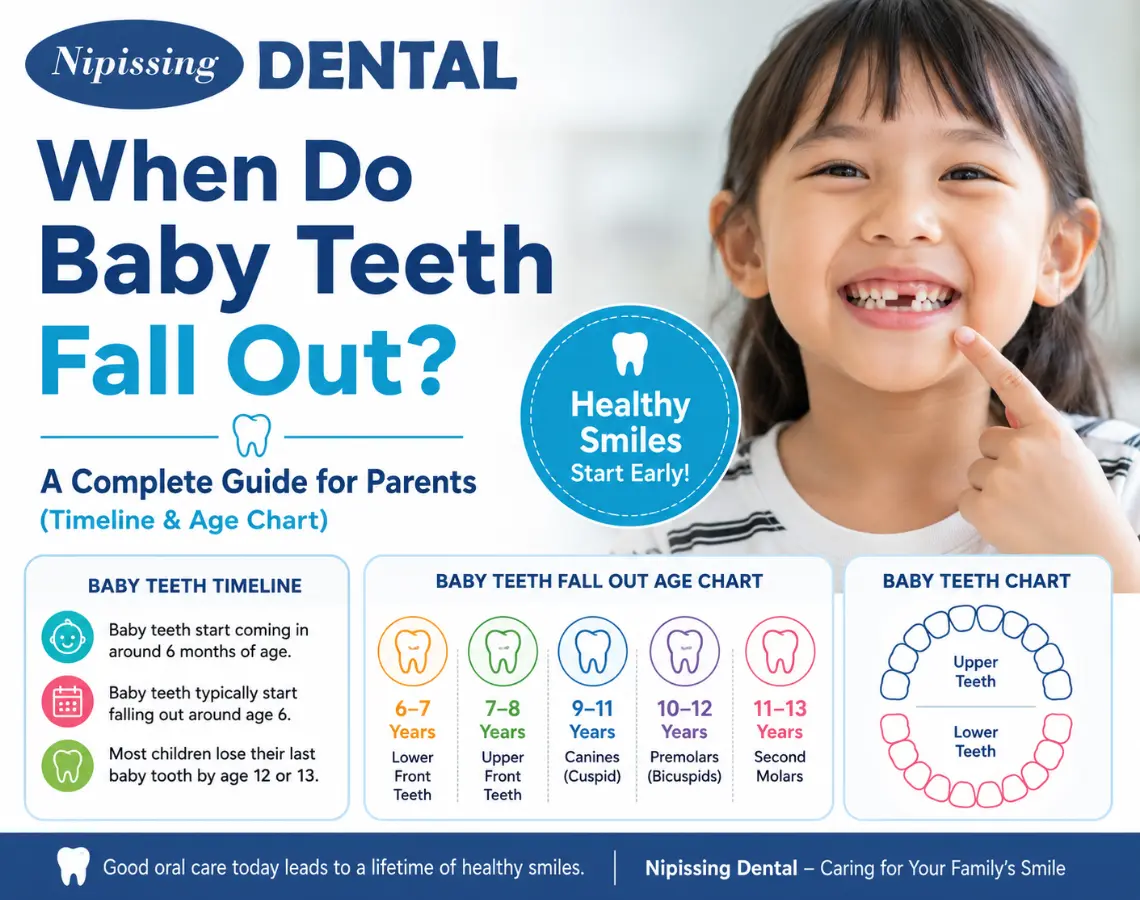
Milk Teeth Shedding and Eruption Guide
| Tooth Type / Position | Eruption Window (Months) | Shedding Window (Years) | Permanent Replacement |
|---|---|---|---|
| Lower Central Incisors (Bottom Front) | 6 to 10 months | 6 to 7 years | Central Incisors |
| Upper Central Incisors (Top Front) | 8 to 12 months | 6 to 7 years | Central Incisors |
| Upper Lateral Incisors (Side Front) | 9 to 13 months | 7 to 8 years | Lateral Incisors |
| Lower Lateral Incisors (Side Front) | 10 to 16 months | 7 to 8 years | Lateral Incisors |
| Upper First Molars (Back Teeth) | 13 to 19 months | 9 to 11 years | First Premolars (Bicuspids) |
| Lower First Molars (Back Teeth) | 14 to 18 months | 9 to 11 years | First Premolars (Bicuspids) |
| Upper Canines (Cuspids) | 16 to 22 months | 10 to 12 years | Canines |
| Lower Canines (Cuspids) | 17 to 23 months | 9 to 12 years | Canines |
| Lower Second Molars (Far Back) | 23 to 31 months | 10 to 12 years | Second Premolars |
| Upper Second Molars (Far Back) | 25 to 33 months | 10 to 12 years | Second Premolars |
Part 3: The Phase-by-Phase Tooth Shedding Age Timeline
Losing baby teeth occurs in a predictable sequence. This order mirrors the original path of baby teeth chart by age developments from infancy.
Phase 1: The Early Elementary Years (Ages 6 to 8)
When do kids start losing teeth? The transition generally begins around kindergarten or first grade.
When do kids lose their front teeth? The lower central incisors usually loosen first, followed closely by the upper central incisors. By age 7 or 8, the lateral incisors on both arches follow suit, leaving many children with a classic wide-gapped smile. Our children’s dentist in Milton can monitor this transition closely and ensure incoming adult teeth are erupting correctly.
Phase 2: The Middle Childhood Plateau (Ages 8 to 10)
After the front teeth exit, the active primary teeth loss process often pauses for a year or two. During this transitional plateau, permanent adult teeth continue growing quietly beneath the surface, slowly dissolving the roots of the remaining milk teeth. Scheduling regular dental cleanings in Milton during this phase ensures developing teeth stay healthy and cavity-free.
Phase 3: The Preteen Transition (Ages 10 to 12)
Activity resumes rapidly as children approach double digits. Which teeth fall out at age 10? Around this time, primary first molars loosen and shed — a key phase of baby teeth falling out that many parents don’t anticipate.
Parents frequently ask us at our Milton family practice: do molar teeth fall out? Yes, primary molars absolutely fall out. They are replaced by permanent adult premolars (also called bicuspids).
The Arrival of Adult Molars
A distinction must be made regarding children’s molar eruption patterns. Around age 6, children grow their “6-year molars.” Then, around age 12, they develop “12-year molars.”
These specific permanent molars emerge all the way in the back of the mouth. They do not replace existing baby teeth. Instead, they slide into new space created as the child’s jaw expands. Health Canada recommends routine dental checkups throughout childhood to track molar development and catch any emerging alignment issues early.
Part 4: Managing Pediatric Dental Care & Common Questions
As your child transitions through these dental growth milestones, maintaining consistent children’s oral health practices is crucial. New adult teeth have softer, maturing enamel that is highly susceptible to early decay if neglected.
Preventing and Treating Early Cavities
Tooth decay in milk teeth treatment should never be ignored under the assumption that “those teeth will fall out anyway.” Untreated decay in primary teeth can lead to localized infections, cause pain, and cause premature tooth loss. This premature loss can disrupt the alignment of incoming permanent teeth — sometimes requiring future orthodontic care through Invisalign clear aligners in Milton.
Identifying the signs of early tooth decay in children — such as persistent chalky white spots or dark discoloration along the gum line — allows for simple, non-invasive treatments like localized fluoride varnishes. Our team offers dental fillings in Milton to restore decayed primary teeth and protect space for permanent successors. For parents managing younger households, reviewing an authoritative tooth decay in preschoolers guide can offer excellent strategies to address early risks.
Essential Hygiene Practices for Growing Smiles
Establishing regular cleaning habits early helps safeguard your child’s developing adult smile.
When should children start brushing their teeth? Oral hygiene begins before the first tooth appears. Clean your infant’s gums daily using a soft, damp cloth. As soon as the first primary tooth erupts, introduce a dedicated infant toothbrush.
- How to brush your child’s teeth properly: Use a soft-bristled brush twice a day. For children under 3 years old, use a tiny smear of fluoride toothpaste (the size of a grain of rice). For children ages 3 to 6, increase this to a pea-sized amount. Brush gently in small, circular motions for two full minutes, ensuring all surfaces are reached.
- Brushing Timing: Should you brush your teeth before or after breakfast? Clinical consensus leans toward brushing before breakfast. This applies a protective layer of fluoride to the enamel and clears away overnight bacterial buildup before introducing morning sugars and acids. If you prefer brushing afterward, wait at least 30 minutes to protect acid-softened enamel.
The American Dental Association (ADA) recommends that parents supervise brushing until children are around age 7 or 8 to ensure thorough technique. Consistent hygiene combined with routine dental cleanings in Milton gives your child the strongest foundation for lifelong oral health.
Part 5: Looking Ahead — Adolescent Transitions
As children move past the pediatric dentition stages, the final milestones of adult teeth development occur in late adolescence.
Navigating Wisdom Teeth
The third molars, commonly called wisdom teeth, typically emerge between the ages of 17 and 21. Because modern jaws often lack the space to accommodate these final four molars, they frequently become impacted or misaligned, leading to localized discomfort. Our team provides professional extractions and wisdom teeth removal in Milton for adolescents and adults experiencing eruption discomfort.
Understanding why do wisdom teeth hurt when growing helps reduce anxiety. Pain usually signals that the tooth is pressing against adjacent molars or trying to break through dense gum tissue.
If your teenager experiences discomfort, a family dentist can offer professional guidance. Temporary home management, such as warm salt water rinses or targeted over-the-counter pain relievers, provides useful wisdom tooth pain relief while you await a formal evaluation. For sudden or severe pain, our emergency dentist in Milton is available to provide fast relief and clinical assessment.
Complete Dental Age Chart & Milestones Summary
To help you monitor your child’s progress at a glance, this milestone sequence summarizes the full baby teeth falling out journey from infancy through adolescence.
- Infancy (6 to 12 Months): First Eruptions. The lower central incisors appear. Schedule your kid’s first dental visit or a basic baby teeth consultation around their first birthday to track early progress. Our children’s dentist in Milton welcomes infants from their very first tooth.
- Toddlerhood (12 to 36 Months): Completing Primary Set. Primary molars and canines emerge, completing the full set of 20 deciduous teeth. Focus on toddler dental care and early decay prevention through routine dental cleanings in Milton.
- Early Childhood (Ages 6 to 8): The First Loose Teeth. The primary front teeth begin shedding naturally, and the first permanent adult molars emerge in the back of the mouth. This is an ideal time to discuss dental fillings in Milton if any decay is present in remaining baby teeth.
- Preteen Years (Ages 9 to 12): Final Primary Shedding. The primary canine and second molar teeth fall out naturally, replaced fully by adult premolars and permanent canines. Children who experience crowding during this phase may benefit from early assessment for Invisalign clear aligners in Milton.
- Adolescence (Ages 17 to 21): Wisdom Teeth. The third molars emerge, completing the long structural journey of human dentition development. Our team provides comprehensive extractions and wisdom teeth removal in Milton for cases where space is insufficient.
The Connection Between Baby Teeth Health and Long-Term Oral Wellbeing
Many parents assume that because baby teeth are temporary, their health is less important. In reality, primary teeth health sets the foundation for permanent tooth alignment, jaw development, speech clarity, and self-confidence throughout childhood.
Untreated decay in primary teeth raises systemic inflammation and oral bacterial load — which can affect the emerging permanent teeth directly beneath. Research recognized by the Canadian Dental Association (CDA) consistently highlights that children with healthy primary dentitions experience significantly fewer orthodontic complications and restorative needs as adults.
Keeping primary teeth intact and healthy also protects against issues like bite misalignment. Children who experience early tooth loss due to untreated decay may later require crowns and bridges in Milton or even dental implants in Milton as adults to address the long-term consequences of premature tooth loss.
When to See a Dentist During the Tooth Loss Phase
Most children experience baby teeth falling out naturally without any complications. However, there are situations where a prompt visit to our family dentistry team in Milton is strongly recommended:
- A baby tooth is lost significantly earlier than the typical age range (before age 4 or 5), which can cause neighboring teeth to drift and block permanent teeth below.
- A permanent tooth begins erupting but the baby tooth has not yet loosened or fallen out naturally.
- Your child experiences pain, swelling, or visible discoloration around a loose or recently shed tooth.
- A tooth is knocked out or damaged suddenly during play or sports. In these cases, contact our emergency dentist in Milton immediately for rapid assessment and care.
- You notice crowding, overlapping, or misalignment developing as permanent teeth come in, which may benefit from early interceptive orthodontic review.
Timely professional assessment through our advanced dental technology in Milton — including digital X-rays and intraoral cameras — allows our team to evaluate root development and emerging permanent teeth in real time, ensuring nothing is missed. Health Canada recommends that children receive a dental examination within six months of their first tooth erupting and continue with regular checkups throughout childhood and adolescence.
Protecting Your Child’s Smile at Every Stage
Whether your child is just cutting their first tooth or heading into the preteen years with a mixed dentition, Nipissing Dental is here to support healthy smiles at every stage of development. Our experienced team offers comprehensive children’s dentistry in Milton in a warm, welcoming environment where young patients feel comfortable and confident.
We also offer custom sports guards in Milton for active children and teenagers to protect their developing teeth during recreational and competitive sports. Protecting teeth now avoids costly restorative work later.
Our clinic proudly serves patients in English, Hindi, Urdu, and Punjabi — ensuring every family feels understood and cared for. Led by Dr. Disha Hans (DMD, Boston University), our team brings clinical precision and compassionate care to every appointment.
Benefits of Early Pediatric Dental Care: A Quick Overview
| Benefit | Clinical Outcome | Why It Matters |
|---|---|---|
| Early Decay Detection | Identifies white spot lesions and early cavities before they worsen. | Prevents painful infections and premature tooth loss in primary teeth. |
| Space Preservation | Maintains proper space for incoming permanent teeth. | Reduces risk of crowding, misalignment, and future orthodontic treatment. |
| Habit Counseling | Identifies and addresses thumb-sucking or pacifier use past age 3. | Prevents open bites, overjets, and palate deformation in developing jaws. |
| Fluoride Treatments | Strengthens maturing enamel on newly erupted permanent teeth. | Significantly lowers long-term cavity risk during the vulnerable transition phase. |
| Growth Monitoring | Tracks jaw and bite development across multiple checkups. | Enables early interceptive orthodontics when needed, reducing treatment complexity later. |
Ready to Support Your Child’s Dental Journey? Connect with Nipissing Dental Milton
Every child develops along their own distinct timeline. While tracking milestones using a deciduous dentition chart is highly useful, regular professional assessments provide the best foundation for a lifetime of healthy smiles.
If your child is approaching their first dental milestone, or if you are looking for localized care in the Ontario region, scheduling a dedicated tooth eruption checkup with a team like Nipissing Dental Milton ensures their oral health stays on the right path. Our local children’s dentist in Milton can closely monitor alignment, offer customized pediatric dental care tips, and ensure your child’s transition to adult teeth stays perfectly on track.
Explore our related services:
- Children’s Dentist in Milton — Dedicated pediatric dental care for infants, toddlers, and school-age children
- Family Dentistry in Milton — Comprehensive oral health care for every member of your household
- Dental Cleanings in Milton — Preventive care to keep growing smiles healthy and cavity-free
- Dental Fillings in Milton — Gentle restorations to treat decay in primary and permanent teeth
- Invisalign Clear Aligners in Milton — Discreet orthodontic correction for teens and adults post-primary dentition
- Extractions and Wisdom Teeth Removal in Milton — Professional removal of retained baby teeth and emerging wisdom teeth
- Emergency Dentist in Milton — Fast care for knocked-out teeth, dental injuries, and sudden oral pain
- Night Guards and Sports Guards in Milton — Custom protection for active children and teenagers
- Crowns and Bridges in Milton — Restoring severely decayed or damaged primary and permanent teeth
- Root Canals in Milton — Advanced care when infection reaches the inner tooth structure
- Cosmetic Dentistry in Milton — Smile enhancement once permanent teeth have fully erupted
- Teeth Whitening in Milton — Brightening and refreshing adult smiles after the transition from primary teeth
- Advanced Dental Technology in Milton — Digital X-rays and intraoral cameras for precise tooth development tracking
Frequently Asked Questions (FAQ)
Book Your Child’s Dental Visit at Nipissing Dental, Milton ON
Don’t leave your child’s dental development to chance. At Nipissing Dental, our friendly team provides gentle, thorough, and age-appropriate pediatric dental care in Milton — from the very first tooth all the way through adolescence.
References & Trusted Sources
This article was developed using expert dental knowledge and validated against the following trusted health and dental authorities:
- American Dental Association (ADA) — Clinical guidelines on pediatric dentition, eruption timelines, brushing recommendations, and preventive care protocols
- Canadian Dental Association (CDA) — Canadian clinical standards for children’s dental exams, early intervention, and primary teeth care
- Health Canada — Oral health guidance for children, fluoride recommendations, and systemic connections to pediatric dental care