If you wake up with a sore jaw, headaches, or tender teeth, chances are something is happening while you sleep that you’re completely unaware of. I’ve worked alongside patients who spent months dismissing these signs, only to find out later that unconscious teeth grinding had caused real, lasting damage.
You’re not alone — and the good news is that a mouth guard for sleeping may be exactly what you need to protect your smile. In this guide, I’ll walk you through everything: what these devices are, who needs them, which type is right for your situation, and how to make the most informed choice for your long-term oral health.
At Nipissing Dental in Milton, ON, our team provides personalized dental care — including custom night guards and sports guards in Milton — designed around your specific needs and sleep concerns.
What Is a Mouth Guard for Sleeping — and Why Do You Need One?
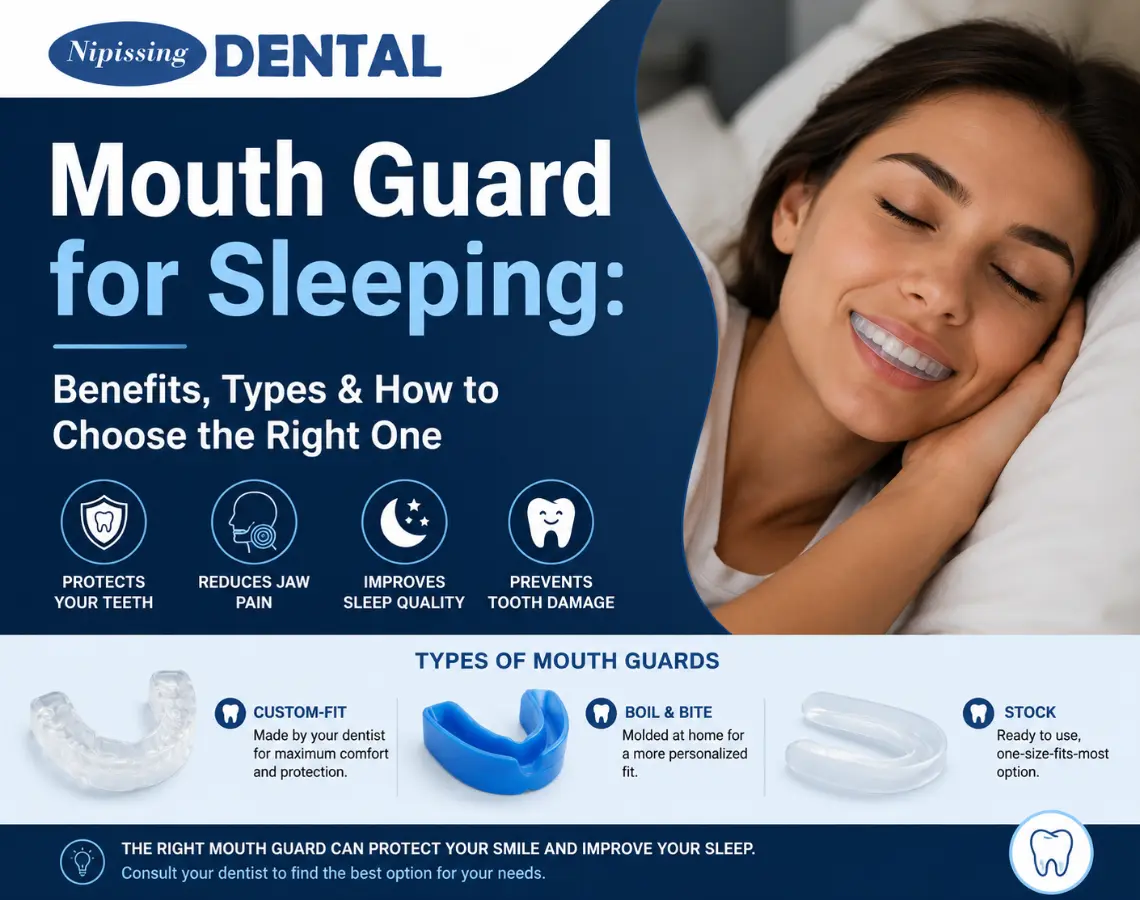
A mouth guard for sleeping, often called a night guard or dental guard mouth guard, is a custom-fitted or over-the-counter oral appliance worn over your teeth while you sleep. Its primary purpose is to protect your teeth, gums, and jaw from the harmful effects of bruxism (teeth grinding and clenching) or sleep apnea. Think of it as a protective cushion that absorbs the force your jaw generates at night — force that would otherwise land entirely on your enamel.
Bruxism is more common than most people realize. The American Dental Association (ADA) recognizes bruxism as a significant contributor to tooth wear, jaw pain, and TMJ disorders. The Canadian Dental Association (CDA) also confirms that untreated teeth clenching and grinding affects adults and children across all age groups — and that early intervention is far more effective than restorative treatment after the fact.
Sleep apnea mouth guards serve a slightly different function. These oral appliances for sleep — also known as mandibular advancement devices — gently reposition the lower jaw to keep the airway open during sleep, reducing snoring and interruptions in breathing. Because the two conditions can overlap, it’s important to get a proper diagnosis before choosing a device.
If you suspect you’re grinding your teeth at night, our comprehensive dental exams in Milton are a great starting point. We can identify signs of wear and recommend the right appliance before the damage progresses further.
Common Symptoms That Signal You Need a Night Guard
Sometimes the signs are subtle. Other times, they’re impossible to ignore. Here’s what to watch for — and why acting sooner makes a meaningful difference:
Bruxism-Related Symptoms
- Waking up with jaw pain or facial soreness
- Frequent morning headaches or earaches
- Teeth that feel sensitive, flattened, or chipped — classic signs of grinding teeth during sleep
- Tight jaw muscles or clicking sounds when you open your mouth (possible TMJ mouth guard territory)
- Disrupted sleep (your partner may even hear the grinding)
Sleep Apnea-Related Symptoms
- Loud snoring
- Waking up gasping or feeling completely unrested
- Dry mouth or sore throat in the mornings
- Difficulty concentrating during the day
If you’re experiencing any combination of these symptoms, it’s worth discussing a sleeping mouth guard for grinding teeth — or a sleep apnea mouth guard — with your dental professional. Furthermore, chipped or cracked teeth caused by bruxism may need attention from our dental fillings team in Milton or our crowns and bridges service if the damage is already significant.
Types of Mouth Guards for Sleeping: Which One Is Right for You?
Choosing the right mouth guard mouthpiece comes down to understanding what’s available and what each type offers. Here’s a clear side-by-side comparison:
| Type | Best For | Fit | Durability |
|---|---|---|---|
| Custom Night Guard | Bruxism, TMJ, heavy grinders | Dentist-made, precise fit | 3–5 years |
| Boil-and-Bite Guard | Mild grinding, budget-conscious | Semi-custom, decent fit | 6–12 months |
| Over-the-Counter Guard | Occasional / temporary use | Generic, bulk sizing | 3–6 months |
| Sleep Apnea Mouth Guard | Mild to moderate sleep apnea | Dentist or specialist-fitted | 2–3 years |
Custom dental night guard: This is the gold standard for a reason. Made from impressions of your teeth, a custom mouth guard for bruxism fits precisely, feels comfortable, and provides the best overnight mouth protection. It’s dentist recommended and appropriate for most adults with chronic grinding or jaw clenching. Our custom night guards in Milton are fabricated specifically for your bite — no generic sizing involved.
Boil-and-bite mouth guard: A step up from off-the-shelf options, these soften in hot water and mold to your teeth. They work reasonably well for mild grinding but don’t offer the same durability or precision as a custom night guard mouth guard.
Over-the-counter guard: While accessible, generic guards often feel bulky and can actually worsen jaw tension if they don’t fit correctly. In most cases, I advise patients to use these only as a short-term bridge, not a long-term solution.
Sleep apnea mouth guard: These are specifically designed as oral appliances for sleep apnea and should always be fitted and prescribed by a qualified dental or sleep specialist. They are not interchangeable with standard anti-grinding mouth guards.
Can Kids Use a Mouth Guard for Sleeping?
Yes — and this surprises many parents. Bruxism is actually quite common in children, particularly during developmental stages. A kids mouth guard designed for nighttime use can help provide essential teeth grinding protection for young, growing teeth that are especially vulnerable to wear and fractures.
That said, children’s mouths change rapidly, which means frequent adjustments or replacements may be needed. Health Canada supports early dental intervention for bruxism in children when supervised by a dental professional. A pediatric dental professional can evaluate whether a night guard is appropriate, especially in cases where permanent teeth are still emerging.
Our children’s dentist in Milton team is experienced in assessing young patients for bruxism and recommending the safest, most age-appropriate protective options — because catching it early always leads to a simpler outcome.
What Makes a Good Mouth Guard? Key Features to Look For
Not all dental night guards for sleep are created equal. When evaluating your options, consider these factors — they make a real difference in long-term comfort and protection:
- Material: A soft night guard is comfortable but wears faster; a hard dental guard offers more protection for aggressive grinders; dual-laminate options offer a blend of both
- Fit: A well-fitted custom fitted mouth guard stays in place without discomfort or excessive saliva production
- Thickness: Thicker guards protect better but may feel awkward at first — your dentist will guide you to the right balance
- Coverage: Some guards cover only the upper teeth night guard area; others the lower teeth mouth guard area; your dentist recommends based on your specific bite
- Ease of cleaning: Look for something you can rinse and brush clean in under two minutes each morning
How to Wear and Care for Your Sleeping Mouth Guard
Getting the most from your night mouth guards for teeth grinding means using it consistently and caring for it properly. Here’s a simple routine to follow:
Before Bed
- Brush and floss thoroughly before inserting your guard
- Rinse the guard with cool water before placing it
- Soak it in a denture cleaning solution a few times per week (not required nightly)
In the Morning
- Rinse with cool water immediately after removing it
- Brush gently with a soft toothbrush — avoid toothpaste, which can scratch the surface
- Allow it to air-dry before storing in its case
- Never expose it to heat, direct sunlight, or hot water
How long to soak a mouth guard before use: For new boil-and-bite guards, soaking in warm (not boiling) water for 30 to 60 seconds softens the material for molding. For a custom fitted mouth guard, a brief rinse in cool water is all that’s needed before first use.
How Long Does a Mouth Guard Last?
This is one of the most common questions I hear — and the answer depends on the type of guard and how aggressively you grind:
- Custom night guards: Typically 3–5 years with proper care
- Boil-and-bite guards: Around 6–12 months
- Over-the-counter guards: As little as 3–6 months, especially for heavy grinders
Signs it’s time to replace your sleep guard for teeth grinding include visible cracks or holes, a poor fit, discomfort during use, or noticeable thinning where your teeth contact the guard. As a result, worn-down guards offer less nighttime teeth protection and may even shift your bite. If your bite has already been affected, our crowns and bridges team in Milton can help restore proper alignment.
Is Sleeping with a Mouth Guard Dangerous?
For most people, sleeping with a mouth guard every night is completely safe — and in fact actively encouraged. A well-fitted guard does not restrict breathing, cause choking hazards, or negatively impact oral tissues when cared for properly.
However, there are a few important caveats worth knowing:
- Poorly fitted or overly thick guards can cause jaw discomfort or worsen TMJ mouth guard-related issues
- Some people experience increased saliva production initially — this typically resolves within a few nights
- If you have moderate to severe sleep apnea, a standard anti-grinding mouth guard may not be sufficient on its own; a CPAP device may also be needed
- Are night guards safe for sleep apnea? Oral appliances are appropriate for mild to moderate sleep apnea but should always be prescribed and monitored by a specialist
When to See a Dentist About Teeth Grinding
I understand that dental visits can feel daunting, especially when you’re not in acute pain. However, bruxism is one of those conditions where waiting often leads to bigger problems — and more involved treatment down the road. Early action, on the other hand, typically means a simple, comfortable fix.
Book an appointment at Nipissing Dental if you:
- Notice worn, flattened, or chipped teeth — a direct sign of sleep mouthpiece for bruxism need
- Experience chronic jaw pain, headaches, or ear pain upon waking
- Have a partner who mentions you grind your teeth at night
- Feel that your bite has shifted or your teeth no longer meet properly
- Have been told you snore heavily or stop breathing during sleep
Moreover, severe cases of enamel wear may require our dental fillings in Milton, crowns, or even root canal treatment if nerve involvement has occurred. Therefore, don’t let it reach that point — a custom night guard from Nipissing Dental is a simple, affordable first line of defence.
References & Trusted Sources
This article was developed using expert dental knowledge and validated against the following trusted health and dental authorities:
- American Dental Association (ADA) — Guidelines on bruxism, night guards, and oral appliances
- Canadian Dental Association (CDA) — Canadian clinical standards for dental sleep medicine
- Health Canada — Guidance on oral health devices and sleep health
- Mayo Clinic — Patient education on bruxism and sleep apnea
- National Institutes of Health (NIH) — Research on sleep disorders and oral appliance therapy
Frequently Asked Questions About Mouth Guards for Sleeping
What is the best mouth guard for sleeping?
The best mouth guard for sleeping for most adults is a custom-fitted dental night guard made by your dentist. It provides a precise fit, maximum teeth grinding protection, and long-term comfort — far superior to boil-and-bite or over-the-counter options. Ask our team about our custom night guards in Milton for a solution built specifically for your bite.
Do mouth guards help with teeth grinding?
Yes. A night guard mouth guard creates a physical barrier between the upper and lower teeth, absorbing the force of grinding during sleep. While it doesn’t stop the grinding reflex itself, it significantly reduces tooth wear, jaw tension, and associated pain over time. If grinding has already caused damage, our dental fillings team can address any affected teeth.
Can you sleep with a mouth guard every night?
Absolutely. Nightly use is strongly recommended for people with chronic bruxism or sleep apnea. Consistency is key — it helps jaw muscles relax and prevents ongoing damage. The Canadian Dental Association (CDA) endorses regular use of dental appliances as part of a comprehensive bruxism management plan.
How do I clean a sleeping mouth guard?
Rinse with cool water immediately after removing it each morning, brush gently with a soft toothbrush (no toothpaste), and let it air-dry before storing in a ventilated case. Soak in a denture cleaner a few times per week for deeper cleaning. During your regular dental cleaning appointments in Milton, bring your guard so we can inspect and professionally clean it if needed.
Can kids use night mouth guards?
Yes, in many cases. Bruxism is common in children, and a properly fitted kids mouth guard provides important teeth grinding protection for developing teeth. A pediatric dental professional can assess whether a guard is appropriate based on your child’s age, bite development, and grinding severity. Our children’s dentist in Milton provides thorough evaluations for young patients showing signs of grinding.
When should you replace a mouth guard?
Replace your sleep mouthpiece for bruxism when you notice visible cracks, poor fit, or significant thinning where your teeth contact it. Custom guards typically last 3–5 years; boil-and-bite guards 6–12 months. Bring it to your next checkup at Nipissing Dental and we’ll assess whether it still provides adequate protection.
Protect Your Smile with a Custom Mouth Guard for Sleeping — Book in Milton Today
A mouth guard for sleeping is one of the simplest, most effective tools available to protect your oral health — whether you’re dealing with teeth grinding, jaw clenching, or sleep apnea. The key is choosing the right type and getting a proper fit from a qualified dental professional.
If you’re in Milton, ON, and you’ve been waking up with jaw pain, headaches, or suspect you’re grinding your teeth at night, the team at Nipissing Dental is ready to help. We’ll assess your bite, discuss your symptoms, and recommend the right solution — from a custom dental night guard to a sleep apnea mouth guard — tailored to your specific needs.
Don’t wait for the damage to show up on your teeth. Your smile is worth protecting tonight.