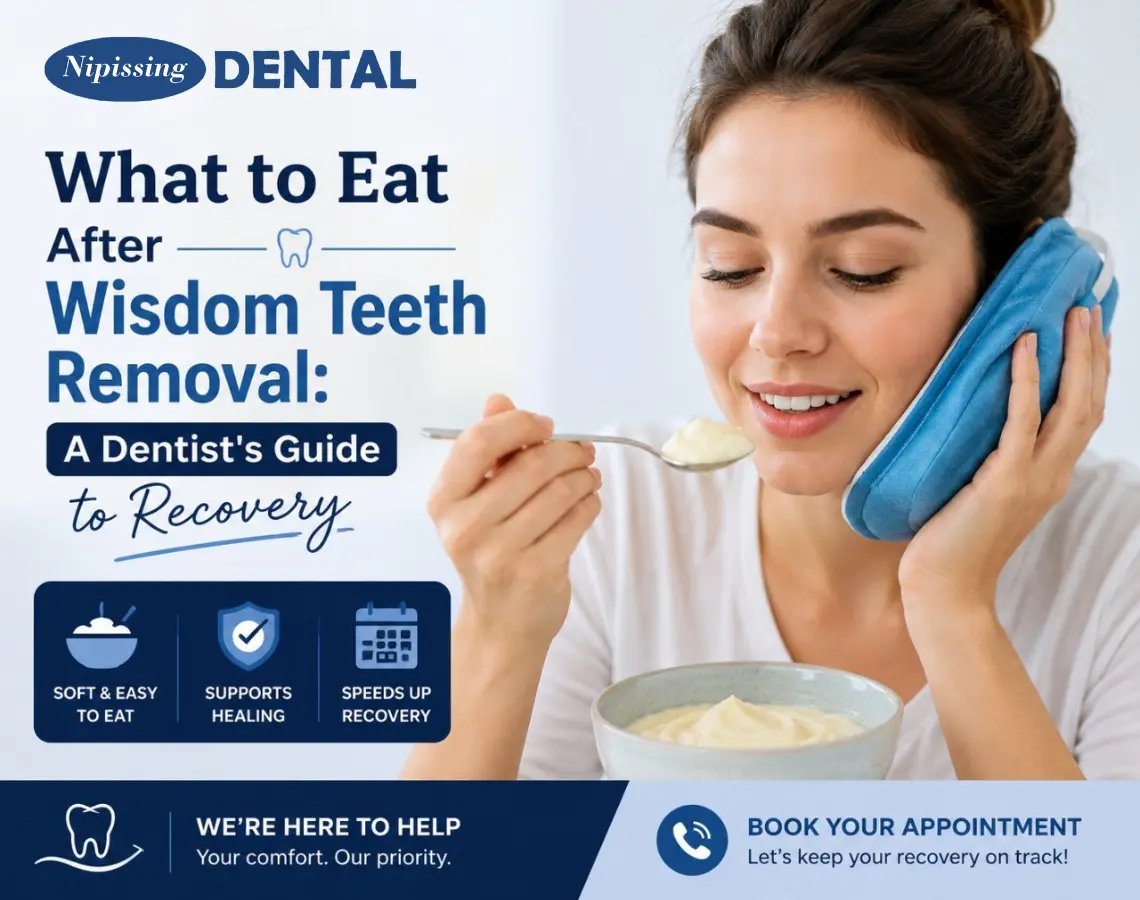
What to eat after wisdom teeth removal is one of the most common questions our patients ask at Nipissing Dental — and the answer matters more than most people expect. Recovery feels different for everyone: some people bounce back in a few days, while others spend a week wondering why chewing toast suddenly feels like a dangerous life decision. One thing stays consistent, though — your diet plays a major role in healing.
Choosing the right foods after oral surgery helps protect the extraction site, reduce discomfort, and lower the risk of complications like dry socket. If you recently had wisdom tooth surgery or you are preparing for it, knowing what to eat after wisdom teeth removal can make recovery smoother and far less stressful.
At Nipissing Dental in Milton, ON, we guide patients through every stage of wisdom teeth recovery — including what to eat, what to avoid, and how to heal comfortably at home. Our extractions and wisdom teeth removal team in Milton provides personalised aftercare guidance for every patient.
This guide covers:
- Best soft foods after wisdom teeth removal
- What to eat day by day (Days 1, 2, and 3)
- Foods to avoid after wisdom teeth extraction
- Wisdom teeth recovery timeline and healing stages
- How to speed up wisdom teeth recovery
- Dry socket prevention tips
- When you can safely eat solid food again
- FAQs on pain, healing, and post-surgery care
Why Food Choices Matter After Wisdom Teeth Extraction
After wisdom teeth extraction, your body forms a blood clot over the surgical site. This clot is essential — it protects the underlying bone and nerve endings while the surrounding gum tissue heals and regenerates.
Hard, crunchy, spicy, or sticky foods can irritate the healing tissue or dislodge the clot. When the clot is disrupted too early, a painful complication called dry socket develops. According to the American Dental Association (ADA), following proper post-extraction care — including a carefully chosen soft diet — is one of the most effective ways to support recovery and avoid complications.
Soft foods after wisdom teeth removal help because they:
- Require minimal to no chewing
- Reduce pressure near the extraction site
- Lower the risk of irritation or infection
- Make eating comfortable during the early days of recovery
- Support oral surgery recovery without disrupting the healing blood clot
Your post-wisdom teeth removal food plan does not need to feel boring or overly restrictive. The goal is simply to choose foods that are gentle, nourishing, and easy to manage — and there are more good options than most people realise. If you have questions about your specific recovery plan, our family dentistry team in Milton is always available to help.
What to Eat After Wisdom Teeth Removal: Day-by-Day Guide
What to Eat After Wisdom Teeth Removal — Day 1
The first 24 hours after oral surgery are the most critical. The blood clot from wisdom teeth removal is still forming, swelling is beginning to set in, and your mouth may still feel numb or stiff from anaesthesia. This is not the time to test your jaw.
Stick exclusively with cool or lukewarm foods that require zero chewing. Cold foods, in particular, can be naturally soothing on day one, providing mild relief while helping to keep swelling manageable.
The first 24 hours after oral surgery are the most critical. The blood clot from wisdom teeth removal is still forming, swelling is beginning to set in, and your mouth may still feel numb or stiff from anaesthesia. This is not the time to test your jaw.
Best foods to eat after wisdom teeth removal on Day 1:
- Plain yogurt (smooth, no fruit chunks or seeds)
- Applesauce
- Smooth blended soups (lukewarm — never hot)
- Mashed potatoes (no skins or lumps)
- Pudding or custard
- Protein shakes or meal replacement drinks
- Cottage cheese
- Smoothies eaten with a spoon
- Ice cream in moderation (avoid cones)
- Jell-O or soft gelatin
What to avoid on Day 1:
- Hot foods and hot beverages (they can dissolve the clot)
- Crunchy foods of any kind
- Spicy meals
- Carbonated drinks
- Alcohol
- Straws — this is critical
Using a straw creates negative suction pressure inside the mouth, which can pull the blood clot away from the extraction site and trigger dry socket. The Mayo Clinic specifically recommends avoiding straws after tooth extraction as one of the primary strategies for dry socket prevention.
What to Eat After Wisdom Teeth Removal — Day 2
Swelling typically peaks around the second day after wisdom tooth surgery. Your jaw will likely feel sore and stiff, but many patients can begin introducing slightly thicker soft foods at this stage — as long as no real chewing is required.
Good post wisdom teeth removal food for Day 2:
- Scrambled eggs (soft, not overcooked)
- Well-cooked oatmeal
- Macaroni and cheese
- Mashed or sliced soft avocado
- Banana mash
- Blended soups with soft ingredients
- Soft pasta with smooth sauce
- Hummus with no seeds or chunky additions
- Soft pancakes (no granola or nut toppings)
Protein-rich foods are particularly valuable on Day 2 because they actively support tissue repair after wisdom teeth surgery. Staying properly hydrated is equally important — drink water consistently throughout the day and avoid waiting until you feel thirsty.
What to Eat After Wisdom Teeth Removal — Day 3
Many patients report feeling noticeably more comfortable by day three. Jaw stiffness tends to ease, and the area around the extraction site becomes less acutely sensitive. At this point, what to eat after wisdom teeth removal expands significantly — soft solid foods often become manageable.
Foods to try on Day 3:
- Rice (rinsed gently afterward if recommended by your dentist)
- Soft noodles and pasta
- Finely shredded soft chicken
- Salmon or other flaky, soft fish
- Tofu
- Well-cooked soft vegetables (zucchini, squash, carrots)
- Soft sandwiches on fresh, untoasted bread
- Soft fruits — ripe peaches, melon, banana
- Soft scrambled or poached eggs
Can I eat rice after wisdom teeth removal?
Yes — but timing matters. Wait until the extraction site feels less sensitive, typically around Day 3 or later. Small grains can occasionally become trapped near the socket, so follow any gentle rinsing guidance your dentist provides after meals.
Can you eat pasta after wisdom teeth extraction?
Pasta is one of the best options during recovery when cooked soft enough. Avoid thick, chewy pasta shapes and opt for smoother varieties with light sauces — no heavy chunks of meat or vegetables until you are further along in healing.
Best Soft Foods After Wisdom Teeth Removal: Complete Reference List
If you are unsure which foods are safest during your wisdom teeth soft diet, use this guide as a reference throughout recovery:
| Food | Why It Helps During Recovery |
|---|---|
| Yogurt | Cool, soothing, and rich in protein |
| Mashed potatoes | Soft, filling, and easy to prepare |
| Scrambled eggs | Gentle protein source with no chewing required |
| Applesauce | Smooth texture, naturally sweet |
| Smooth soups | Hydrating, nutritious, and gentle on the site |
| Oatmeal | Soft and comforting when cooked well |
| Soft pasta | Easy to eat when cooked thoroughly |
| Cottage cheese | High in protein and naturally soft |
| Banana mash | No chewing required, easy to swallow |
| Salmon | Soft, flaky texture with anti-inflammatory omega-3 fatty acids |
| Avocado | Smooth, nutrient-dense, no preparation needed |
| Tofu | Soft protein source that requires no chewing |
| Blended soups | Hydrating and fully customisable |
| Hummus | Smooth and protein-rich |
| Ice cream | Soothing on Day 1 in moderation |
These soft foods to eat after mouth surgery support wisdom teeth removal recovery without putting unnecessary stress on the healing area. Keeping this list on hand makes your dietary decisions during recovery much easier throughout the first week.
Foods to Avoid After Wisdom Teeth Extraction
Just as important as knowing what to eat after wisdom teeth removal is knowing what to avoid. Certain foods significantly increase the risk of irritation, dislodge the blood clot, or get trapped in the extraction socket — causing pain, infection, or delayed healing. Avoid these throughout the early recovery period:
- Popcorn — kernels consistently find the exact spot your tongue keeps checking
- Chips and crackers — sharp edges can cut healing tissue
- Nuts and seeds — easily trapped in the socket
- Crunchy or crusty bread — puts pressure on the extraction site
- Sticky candies and chewy sweets — can pull at the clot
- Spicy foods — cause irritation and inflammation
- Acidic foods and citrus — delay tissue healing
- Hard raw vegetables — require heavy chewing
- Tough or chewy meats — create too much jaw strain
- Hot beverages — can dissolve the protective blood clot
- Alcohol — interferes with healing and interacts with pain medications
When Can I Eat Solid Food After Tooth Extraction?
This is one of the most common questions patients ask during wisdom teeth surgery recovery — and the honest answer is that it depends on several individual factors:
- How many teeth were removed
- Whether the teeth were impacted (and how deeply)
- The complexity of the procedure
- Your overall health and immune response
- How closely you follow post-extraction care instructions
Most patients can start introducing softer solid foods within approximately one week of surgery. Truly hard, crunchy, or chewy foods — like raw vegetables, tough meats, or crusty bread — may need to wait until the second week or beyond.
According to the Cleveland Clinic, many patients recover from wisdom teeth surgery within one to two weeks, though complete healing of the tissue underneath the gums continues for several weeks afterward.
If chewing ever causes noticeable pain or pressure near the extraction site, that is a clear signal to return to softer foods and allow more time before trying again. If you are ever unsure about your recovery progress, our comprehensive dental exam team in Milton can assess your healing and advise accordingly.
Wisdom Teeth Recovery Timeline: Healing Stages Explained
Understanding the healing stages after wisdom teeth extraction helps reduce anxiety and makes it easier to plan your meals and activities effectively.
Days 1–3: Initial Recovery Phase
- Swelling and soreness are at their peak — this is normal
- Blood clot formation is actively occurring and must be protected
- Soft, liquid-based foods only
- Rest is essential; avoid strenuous activity
- Apply ice packs during the first 24 hours (20 minutes on, 20 minutes off)
Days 4–7: Gradual Improvement Phase
- Swelling begins to visibly improve
- Jaw stiffness and soreness decrease day by day
- Soft solid foods become manageable for most patients
- Energy levels return and light activity is typically fine
Week 2: Near-Normal Recovery
- Most discomfort has resolved
- Normal daily activities and eating begin to feel possible again
- Underlying gum tissue continues healing even when symptoms are gone
- Continue avoiding extremely hard or sticky foods as a precaution
How long does wisdom teeth recovery take overall? Most patients feel functionally recovered within 1–2 weeks. However, complete healing of the extraction site — including the bone and deep tissue — can take up to 6 weeks. This is why ongoing gentle care matters even after symptoms disappear.
How to Speed Up Wisdom Teeth Recovery
People frequently search for ways to heal faster after oral surgery. While the body follows its own biological timeline, the following evidence-based habits — combined with a smart soft diet — meaningfully support the recovery process.
1. Follow Your Dentist’s Post-Extraction Care Instructions
Every patient’s situation is slightly different. Your dental team’s specific aftercare guidance is the single most reliable reference for your recovery — follow it precisely.
2. Eat Nutritious Soft Foods Consistently
Your body needs protein, vitamins, and minerals to repair tissue after wisdom tooth surgery. Well-chosen soft foods provide the fuel healing requires. Skipping meals or relying on empty-calorie foods will slow recovery.
3. Stay Properly Hydrated
Dehydration impairs healing at a cellular level. Drink water consistently throughout the day. Avoid alcohol and caffeinated beverages, which contribute to dehydration.
4. Rest During the First 48–72 Hours
Intense physical activity raises blood pressure and can disrupt clot formation. Light walking is fine, but avoid strenuous workouts until swelling and soreness have meaningfully improved.
5. Keep the Area Gently Clean
After the first 24 hours, gentle saltwater rinses can help prevent bacterial buildup near the extraction site — but only if your dentist specifically recommends them for your situation. Never rinse aggressively.
6. Avoid Smoking Entirely
Both the Canadian Dental Association (CDA) and Health Canada identify smoking as one of the most significant risk factors for complications after tooth extraction. Smoking reduces blood flow to healing tissue, introduces bacteria, and dramatically increases the risk of dry socket. Avoid it entirely during the recovery period.
If you experience any concerns during recovery — such as a cracked temporary filling or dental pain — do not hesitate to reach out to our emergency dentist in Milton for prompt care.
What Is Dry Socket? Signs, Risks, and Prevention
Dry socket is the most common and painful complication of wisdom teeth extraction. It occurs when the protective blood clot becomes dislodged or dissolves prematurely, leaving the underlying bone and nerve endings directly exposed to air, food, and bacteria.
Signs of Dry Socket
- Severe, throbbing pain that intensifies rather than improving after Day 2
- Pain radiating toward the ear, jaw, or temple
- Bad breath or an unpleasant taste that persists
- Visible bone inside the socket when examined in a mirror
- A noticeable empty-looking hollow where the clot should be
The American Association of Oral and Maxillofacial Surgeons identifies dry socket as one of the most frequently reported complications following tooth extraction. If you suspect dry socket, contact our wisdom teeth removal team at Nipissing Dental promptly — treatment provides rapid relief.
How to Prevent Dry Socket
- Avoid straws for at least 72 hours, ideally for the first week
- Do not smoke or use any tobacco products during recovery
- Skip hard, crunchy, and sticky foods until healing is well established
- Avoid vigorous rinsing or spitting, especially in the first 24 hours
- Follow all post-operative instructions from your oral surgeon or dentist without exception
Does Wisdom Teeth Removal Hurt? What to Expect
This is the question most patients have before surgery — and the anxiety is completely understandable.
During the procedure: Dentists use local anaesthesia, sedation, or a combination of both to ensure patient comfort throughout the extraction. You may feel pressure or movement, but sharp pain should not occur during the procedure itself. If you do feel pain, you can always signal your dentist to pause and add more anaesthesia.
After the procedure: Some degree of soreness, swelling, and jaw stiffness is entirely normal for several days following wisdom tooth surgery. Prescribed or recommended over-the-counter pain medications help manage this effectively.
How long does the pain last after wisdom teeth extraction? For most patients, the sharpest discomfort occurs in the first 48–72 hours and gradually improves each day. By Day 5–7, many patients no longer need pain medication. If pain worsens after Day 3 rather than improving, this may signal a complication — contact your dentist promptly.
The good news is that recovery usually feels significantly more manageable than people anticipate, especially after reading worst-case stories online.
Can Wisdom Teeth Cause Headaches?
Yes. Impacted wisdom teeth — particularly those pushing against adjacent teeth or pressing on surrounding jawbone and nerves — can contribute to:
- Jaw pressure and tension
- Facial pain
- Recurring headaches (especially near the temples)
- Ear discomfort or a feeling of fullness in the ear
This happens because the trigeminal nerve, which runs through the jaw, connects to much of the face and head. Chronic pressure from impacted wisdom teeth can trigger referred pain throughout this nerve pathway.
If you experience persistent headaches alongside jaw pain, swelling, or difficulty opening your mouth fully, a dental evaluation can determine whether impacted wisdom teeth are a contributing factor. Our comprehensive dental exam team in Milton can assess bite, jaw, and nerve concerns during your appointment.
If wisdom-related jaw tension is affecting your sleep or causing teeth grinding, a custom night guard in Milton may provide added protection during recovery.
When Do Wisdom Teeth Grow In?
Wisdom teeth — the third set of molars — typically emerge between the ages of 17 and 25, though the timing varies from person to person. Some people develop all four; others develop fewer or none at all.
Does everyone have wisdom teeth? No. It is fairly common to have fewer than four, or to have wisdom teeth that never fully develop. This is a normal anatomical variation.
Many wisdom teeth become impacted — meaning they cannot fully emerge because the jaw does not have adequate space. Impacted wisdom teeth can lead to:
- Pain and swelling around the jaw
- Infection of the surrounding gum tissue
- Damage to adjacent teeth from pressure
- Increased difficulty maintaining proper oral hygiene
- Tooth crowding over time
Routine dental exams and periodic X-rays are the most reliable way to monitor wisdom tooth development from an early stage and make proactive decisions about treatment. Our children’s dentist in Milton monitors bite and wisdom tooth development during every regular checkup. Health Canada supports early dental intervention and supervised dental care when recommended by a dental professional.
Do You Have to Pull Wisdom Teeth Out?
Not always. Wisdom teeth extraction is only recommended when the teeth are actively causing problems or create a clear risk of future complications.
Dentists typically recommend extraction when wisdom teeth:
- Cause ongoing or recurrent pain
- Are impacted and unable to fully emerge
- Damage adjacent teeth through pressure
- Increase the risk of infection or gum disease
- Make thorough cleaning difficult or impossible
Some wisdom teeth erupt without any complications and can be maintained with normal brushing and flossing. Your dentist or oral surgeon will evaluate current symptoms, X-ray images, and your overall oral health before making any recommendation about wisdom teeth extraction. The Canadian Dental Association (CDA) supports evidence-based, individualised treatment decisions for all oral surgery needs.
What to Eat After Wisdom Teeth Removal: Aftercare Tips for Faster Healing
Consistent, careful aftercare is what separates a smooth recovery from a complicated one. Knowing what to eat after wisdom teeth removal is only one part of the picture — how you care for the area overall matters just as much.
Do:
- Drink plenty of water throughout the day
- Eat soft, nutritious foods at regular meal times
- Rest properly during the first 48–72 hours
- Apply ice packs during the first 24 hours to reduce swelling
- Take prescribed or recommended medications exactly as directed
- Attend any follow-up appointments your dentist schedules
- Sleep with your head slightly elevated the first night
Don’t:
- Smoke or use tobacco products in any form
- Use straws, even for thin liquids, during the first week
- Eat hard, crunchy, or sticky foods before the area has healed
- Touch or probe the extraction site with your tongue, fingers, or objects
- Rinse aggressively or spit forcefully during the first 24 hours
- Skip aftercare instructions even when symptoms improve faster than expected
Small, consistent habits make a meaningful difference in the outcome of wisdom teeth surgery recovery. Combined with knowing what to eat after wisdom teeth removal, these steps give your body the best possible environment to heal. If any teeth near the extraction site were damaged or weakened prior to surgery, our dental fillings team in Milton can assess and address any structural concerns to protect your smile long-term.
When Should You Contact Your Dentist?
Most wisdom tooth extraction recoveries proceed without serious complications. However, reach out to your dental provider promptly if you notice any of the following:
- Heavy or persistent bleeding beyond the first few hours after surgery
- Severe swelling that worsens rather than improving after Day 3
- Fever — a sign the body may be fighting infection
- Difficulty swallowing or opening your mouth fully
- Persistent numbness in the lips, chin, or tongue beyond the expected timeframe
- Severe pain that intensifies after the second day, which may indicate dry socket
Professional care helps catch and address complications early, keeping your recovery on track and preventing minor issues from becoming serious ones. Our emergency dentist in Milton is available to help whenever unexpected complications arise.
Wisdom Teeth Removal and Aftercare at Nipissing Dental, Milton, ON
At Nipissing Dental, our team provides personalised, patient-focused care throughout every stage of wisdom teeth removal recovery for patients across Milton, ON. From your initial consultation through post-surgical healing, we prioritise your comfort, clear communication, and long-term oral health outcomes.
Whether you need detailed guidance on what to eat after wisdom teeth removal, have questions about your healing process, or want a professional evaluation for impacted wisdom teeth, we are here to support you every step of the way.
Explore our related services:
- Extractions & Wisdom Teeth Removal in Milton — Expert, gentle surgical care from our experienced dental team
- Emergency Dentist in Milton — Prompt, compassionate care when unexpected dental issues arise
- Family Dentistry in Milton — Comprehensive dental care for patients of all ages
- Dental Cleanings in Milton — Routine hygiene appointments to support your oral health before and after surgery
- Dental Fillings in Milton — Restorative care for any structural concerns related to bite or extraction
- Night Guards in Milton — Custom protection for grinding or jaw tension during recovery
Final Thoughts
Knowing what to eat after wisdom teeth removal is one of the simplest, most effective things you can do to actively support your own recovery. A well-chosen soft diet after wisdom teeth removal protects the extraction site, reduces unnecessary discomfort, and gives your body the nutrition it needs to heal efficiently.
As healing progresses day by day, you can gradually reintroduce more variety into your meals — always guided by how the area feels and what your dental team recommends. If you experience unusual or worsening pain, swelling, or any signs of complications, professional dental care is always the safest path forward.
And if mashed potatoes become your emotional support food for a week — you are absolutely not alone.
References & Trusted Sources
This article was developed using expert dental knowledge and validated against the following trusted health and dental authorities:
- American Dental Association (ADA) — Guidelines on post-extraction care and soft diet recovery
- Canadian Dental Association (CDA) — Canadian clinical standards for oral surgery aftercare
- Health Canada — Guidance on oral health and dental care for Canadians
- Cleveland Clinic — Patient education on wisdom teeth recovery timelines
- Mayo Clinic — Patient guidance on dry socket prevention after tooth extraction
Frequently Asked Questions About What to Eat After Wisdom Teeth Removal
Need Guidance on What to Eat After Wisdom Teeth Removal? Book at Nipissing Dental, Milton
Recovering from wisdom tooth surgery does not have to feel overwhelming. At Nipissing Dental, our experienced team provides personalised aftercare guidance, post-surgical checkups, and everything you need for a smooth, comfortable recovery in Milton, ON.
Whether you are preparing for surgery, currently recovering, or dealing with an unexpected concern — we are here to help you heal with confidence.