Many patients who visit Nipissing Dental asking about a dental bridge in Milton are often surprised to learn how quickly a missing tooth can begin to impact their bite and oral health.
If you’re considering replacing one or more missing teeth, understanding your options can help you make a confident and informed decision. In this guide, we’ll walk you through the different types of dental bridges available, how each one works, and how to determine which option may be right for your long-term oral health.
What Is a Dental Bridge?
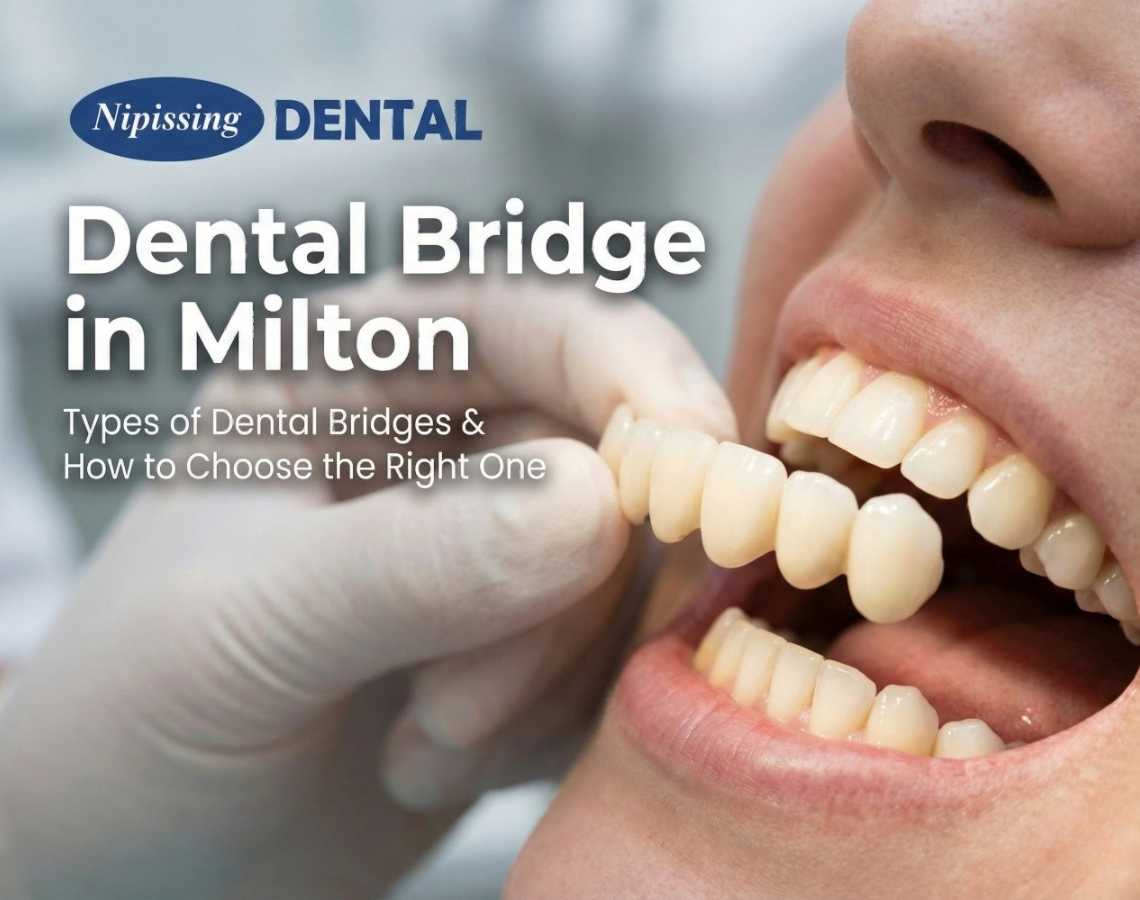
A dental bridge in Milton is a fixed dental restoration used to replace one or more missing teeth by anchoring an artificial tooth to the natural teeth or dental implants on either side of the gap. The supporting teeth are known as abutment teeth, while the replacement tooth is referred to as a pontic.
Replacing missing teeth with a dental bridge helps to:
- Restore chewing ability
- Maintain facial structure
- Prevent neighbouring teeth from shifting
- Improve speech clarity
- Support bite balance
Without timely replacement, gaps can lead to uneven pressure across your teeth, which may increase the risk of tooth wear or jaw discomfort over time.
Types of Dental Bridges Available
Choosing the right dental bridge in Milton depends on several factors, including the location of the missing tooth, the strength of adjacent teeth, and your overall gum health.
Traditional Dental Bridge
The most commonly recommended solution when healthy natural teeth are present on both sides of the missing space. This involves placing dental crowns over the supporting teeth and attaching an artificial tooth in between.
Cantilever Dental Bridge
Used when there is only one natural tooth available to support the restoration. Typically recommended for areas of the mouth that experience less bite pressure, such as front teeth.
Best suited for: Missing teeth in low-force biting areas.
Maryland Dental Bridge
Also known as a resin-bonded bridge, this option uses a metal or porcelain framework bonded to the back surfaces of adjacent teeth. It requires less enamel removal — a more conservative treatment option.
Best suited for: Younger patients or individuals replacing front teeth.
Implant-Supported Bridge
Anchored using dental implants instead of natural teeth. Recommended when multiple teeth are missing or when neighbouring teeth are not strong enough. This option can help maintain jawbone structure by stimulating the bone, similar to natural tooth roots.
Best suited for: Patients missing multiple adjacent teeth.
How to Choose the Right Dental Bridge
Selecting the right bridge is not a one-size-fits-all decision. At Nipissing Dental, we typically evaluate several factors before recommending the most suitable option:
- Gum health
- Jawbone density
- Position of the missing tooth
- Strength of adjacent teeth
- Bite alignment
- Long-term oral health goals
For example, a Maryland bridge may work well for replacing a front tooth, while an implant-supported bridge may be a better long-term solution for missing molars that handle greater chewing pressure.
What to Expect During the Procedure
Getting a dental bridge in Milton usually involves a few steps:
Abutment teeth are shaped to accommodate crowns, or implants are placed if needed.
Precise impressions ensure your bridge fits your bite perfectly.
Protects your teeth while the permanent bridge is crafted.
The permanent bridge is placed and cemented into position.
Mild sensitivity or gum tenderness after the procedure is normal and often improves within a few days.
Recovery and Long-Term Care
After receiving your dental bridge, maintaining good oral hygiene is key to long-term success. We generally recommend:
- Brushing twice daily with a soft-bristled toothbrush
- Cleaning under the bridge using floss threaders
- Avoiding very hard or sticky foods
- Scheduling regular dental check-ups
With proper care, many dental bridges can last several years before needing replacement.
What Happens If You Don’t Replace Missing Teeth?
Frequently Asked Questions
Ready to Restore Your Smile?
Choosing the right dental bridge involves more than replacing a missing tooth — it’s about preserving your bite, comfort, and overall oral health. Our team at Nipissing Dental is here to help.
Book a Consultation