
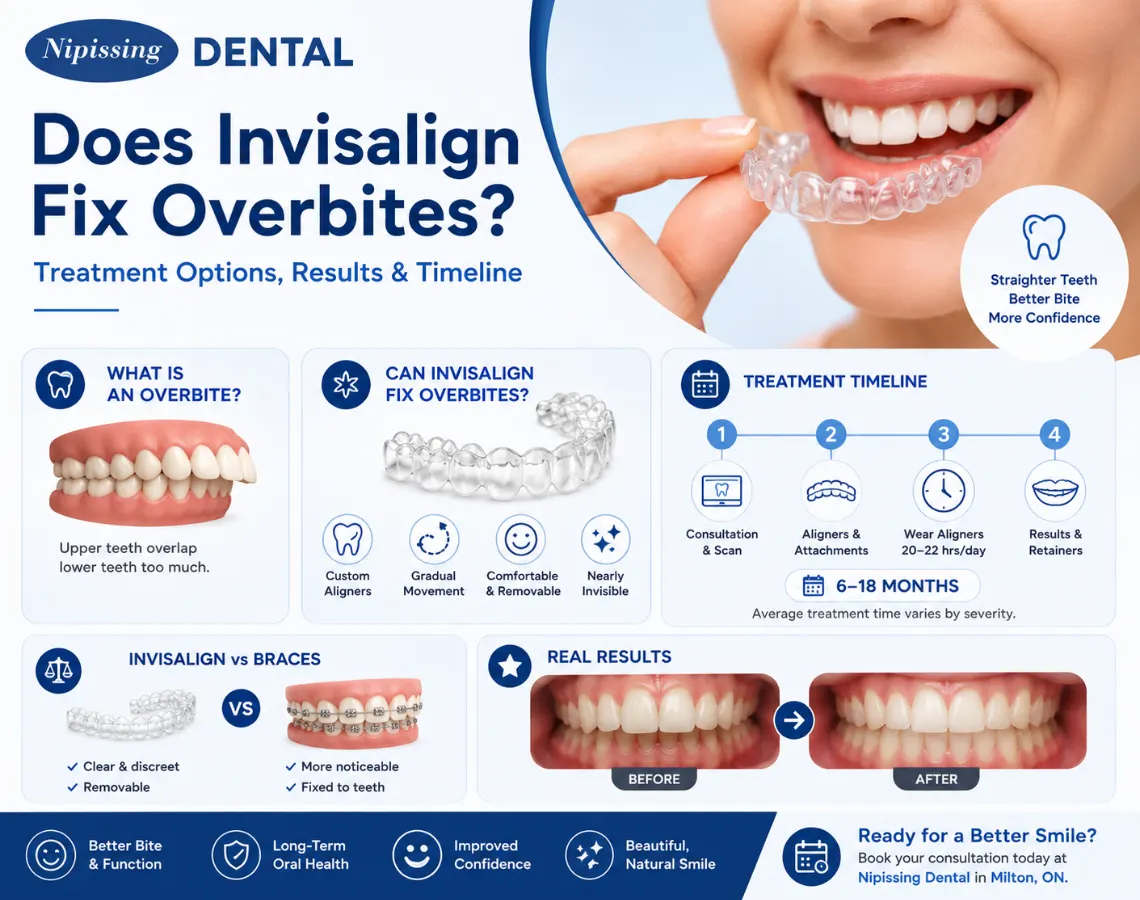
Does Invisalign fix overbites? This is one of the most common questions patients ask our orthodontic team in Milton — and the answer, for most people, is yes. An overbite can do more than change your smile. In some cases, it affects chewing, speech, jaw comfort, and long-term dental health.
Does Invisalign fix overbites in all cases? Invisalign can correct many mild to moderate overbites, and in some cases, even more complex bite issues. However, results depend on the severity of the overbite, jaw structure, treatment planning, and patient compliance.
This guide explains how Invisalign overbite treatment works, who qualifies, how long treatment takes, and when braces or surgery may become a better option. At Nipissing Dental in Milton, ON, our team provides comprehensive Invisalign clear aligners in Milton for patients seeking a discreet, effective path to a healthier bite.
According to the American Association of Orthodontists, untreated bite issues can increase tooth wear, jaw strain, and gum problems over time.
What Is an Overbite?
An overbite happens when the upper front teeth overlap the lower front teeth more than normal. A slight overlap is common and healthy. Dentists usually consider a normal overbite to be around 2–4 mm. When the overlap becomes too deep, dentists may call it a deep bite or excessive overbite.
Common Signs of an Overbite — and Why Patients Ask “Does Invisalign Fix Overbites?”
- Upper teeth cover most of the lower teeth
- Jaw discomfort or tension
- Difficulty biting food evenly
- Worn-down lower teeth
- Speech issues in some cases
- Teeth grinding
- Facial imbalance
Many people confuse an overbite with an overjet. They are different conditions:
| Condition | Description |
|---|---|
| Overbite | Vertical overlap of upper teeth over lower teeth |
| Overjet | Horizontal protrusion of upper teeth beyond lower teeth |
The Cleveland Clinic explains that severe overbites may contribute to enamel wear, gum irritation, and jaw pain if left untreated. If you suspect bite-related damage to your enamel, our dental fillings team in Milton can assess and address any structural concerns before they worsen.
Does Invisalign Fix Overbites? What the Evidence Shows
Yes, Invisalign does fix many overbite cases. Modern Invisalign treatment uses custom clear aligners that gradually move teeth into better positions. Orthodontists often combine aligners with small tooth-colored attachments and elastics to improve overbite correction.
Invisalign works especially well for:
- Mild overbite
- Moderate overbite
- Deep bite caused mainly by tooth positioning
- Adult overbite correction
- Teen orthodontic treatment
However, severe skeletal overbites sometimes require traditional braces or jaw surgery. The official Invisalign website confirms that clear aligners can treat several bite issues, including overbites, underbites, and crossbites. To find out if you qualify, book a consultation at Nipissing Dental in Milton for a personalised bite assessment.
How Invisalign Fixes an Overbite
Many people imagine aligners as simple plastic trays. In reality, Invisalign overbite treatment uses advanced 3D digital planning and controlled tooth movement. Here is how Invisalign overbite correction usually works.
1. Digital Scan and Treatment Planning
Your orthodontist scans your teeth using a digital scanner. The software then creates a detailed treatment roadmap, allowing patients to preview expected tooth movement before treatment begins. Our advanced dental technology in Milton ensures precise scanning for the most accurate treatment planning.
2. Gradual Tooth Movement
Each aligner tray applies controlled pressure to shift teeth slowly. For Invisalign overbite correction, the aligners may:
- Move upper front teeth backward
- Move lower teeth forward
- Intrude certain teeth vertically
- Improve overall bite alignment
3. Attachments and Elastics
Some patients need small attachments bonded to teeth to help aligners grip better. Rubber bands (elastics) may also help reposition the jaw and refine bite correction. Our Invisalign team in Milton will determine if attachments or elastics are appropriate for your specific overbite.
4. Retention Phase
After treatment, retainers help maintain the new bite position. Skipping retainers after treatment is like spending months working toward a goal and immediately abandoning all habits — teeth will drift back without proper retention. If you need a custom night guard or retainer in Milton, our team can provide a well-fitted appliance to protect your results.
Does Invisalign Fix Overbites That Are Severe?
The success of Invisalign for severe overbite depends largely on the cause of the problem.
Invisalign Often Works When:
- Teeth are misaligned rather than jaw structure
- The overbite is mild to moderate
- Jaw growth issues are limited
- The patient follows aligner-wear instructions carefully
Invisalign May Not Be Enough When:
- The jaw structure itself causes the overbite (skeletal overbite)
- The bite issue is extremely severe
- Teeth require major rotation or complex movement
- Surgical correction becomes necessary
In these cases, orthodontists may recommend traditional braces, jaw alignment treatment, orthognathic surgery, or a combination orthodontic approach. The Mayo Clinic notes that severe jaw-related bite issues sometimes require surgical correction alongside orthodontic treatment. Our experienced team will evaluate your imaging and examination results to recommend the most appropriate treatment path.
Invisalign vs. Braces for Overbite Correction
Patients often compare Invisalign vs. braces for overbite treatment. Both options can work well. The best choice depends on the complexity of the case, lifestyle preferences, and orthodontic goals.
| Feature | Invisalign | Braces |
|---|---|---|
| Appearance | Nearly invisible clear aligners | Metal brackets visible |
| Comfort | Smooth plastic aligners | Can irritate cheeks and lips |
| Removability | Yes — removable for eating and hygiene | No — fixed throughout treatment |
| Oral Hygiene | Easier brushing and flossing | More difficult cleaning required |
| Severe Cases | Limited in some complex cases | Excellent control over complex movement |
| Food Restrictions | Minimal — remove aligners to eat | Several restrictions apply |
| Discipline Required | High — must wear 20–22 hrs daily | Lower — fixed appliance |
Benefits of Invisalign for Adults With Overbite
Adults often choose Invisalign for overbite correction because it feels more discreet in professional and social settings. Many patients also prefer fewer office visits, easier cleaning, better comfort, and no food restrictions — meaning popcorn at movie night stays on the menu. Our cosmetic dentistry team in Milton works closely with adult patients to find the most appropriate treatment path that fits their lifestyle and smile goals.
Invisalign Overbite Before and After Results
Most patients notice gradual improvement throughout treatment. Common Invisalign overbite results include:
- Better smile symmetry
- Improved bite alignment and function
- Reduced tooth wear over time
- Easier chewing
- Enhanced facial balance
- More confidence in daily life
Before-and-after Invisalign transformations vary based on treatment complexity, patient consistency, age, jaw structure, and orthodontic expertise. Patients usually wear aligners 20–22 hours daily for optimal results. According to Invisalign, compliance plays a major role in treatment success.
If bite issues have already contributed to enamel wear or damaged teeth, our crowns and bridges service in Milton can address structural restoration alongside or after your orthodontic treatment.
How Long Does Invisalign Take for Overbite Correction?
Treatment timelines vary based on overbite severity and patient compliance.
| Overbite Severity | Estimated Timeline |
|---|---|
| Mild overbite | 6–12 months |
| Moderate overbite | 12–18 months |
| Severe overbite | 18–24+ months |
Several factors affect treatment duration: severity of the bite issue, consistency with aligner wear, patient age, tooth movement response, and use of elastics. Missing aligner wear slows progress significantly. Wearing Invisalign only during Zoom calls will not fool your orthodontist — they have seen everything.
Regular progress check-ins are important. Our comprehensive dental exams in Milton allow our team to monitor your bite correction and catch any concerns early so your timeline stays on track.
What Causes an Overbite?
Understanding the cause helps determine the right treatment approach. Common causes of overbite include:
- Genetics and hereditary jaw structure
- Jaw development issues during childhood
- Thumb sucking or prolonged pacifier use
- Tongue thrusting habits
- Teeth grinding (bruxism)
- Missing teeth causing bite shifts
- Poor oral habits over time
Some overbites develop naturally through skeletal growth patterns. The National Institutes of Health (NIH) discusses how genetics and oral habits contribute to malocclusion development. If teeth grinding is contributing to your overbite or causing jaw discomfort, our custom night guards in Milton can provide protection while your orthodontic treatment progresses.
Is Overbite Normal?
A small overbite is normal. Most people naturally have slight upper tooth overlap. Problems begin when the overlap becomes excessive.
| Overbite Type | Usually Harmful? |
|---|---|
| Slight overbite (2–4 mm) | Often normal and healthy |
| Moderate overbite | May require orthodontic treatment |
| Extreme overbite | Usually requires correction |
Severe overbites can contribute to tooth fractures, gum recession, jaw pain, TMJ problems, and uneven tooth wear. If you have experienced gum recession or tooth damage related to bite problems, our team offers restorative dental fillings in Milton to help manage any structural damage.
Can Invisalign Completely Fix an Overbite?
So does Invisalign fix overbites completely? In many mild and moderate cases, yes. However, no orthodontic treatment guarantees perfection for every patient. Your orthodontist evaluates tooth positioning, jaw alignment, facial structure, bite function, and bone support before making any recommendations. Realistic treatment planning matters more than marketing promises.
The American Dental Association (ADA) confirms that orthodontic treatment benefits both teens and adults with a wide range of bite issues. A thorough consultation at our Milton dental clinic will give you a clear, honest picture of what Invisalign can realistically achieve for your overbite.
Invisalign for Adults With Overbite
Adult Invisalign overbite treatment continues to grow worldwide. Many adults avoided braces earlier in life or experienced bite relapse after childhood treatment. Why adults choose Invisalign:
- Discreet appearance in professional and social settings
- Professional confidence maintained during treatment
- Comfortable smooth aligners
- Easier maintenance and oral hygiene
- Modern digital orthodontic technology
Adults often worry that treatment may not work later in life. Fortunately, healthy teeth can move successfully at almost any age under proper orthodontic supervision. The Canadian Dental Association (CDA) supports orthodontic treatment for adults as an effective way to improve bite function and long-term oral health. Our family dentistry team in Milton regularly provides orthodontic consultations for adult patients across all age groups.
Invisalign Pros and Cons
Every orthodontic option has strengths and limitations. Here is an honest overview:
Invisalign Advantages
- Nearly invisible clear aligners
- Removable trays for eating and brushing
- Easier brushing and flossing throughout treatment
- Fewer food restrictions compared to metal braces
- Comfortable smooth plastic material
- Advanced digital treatment planning and previews
Invisalign Disadvantages
- Requires high discipline — aligners must be worn 20–22 hours daily
- Not ideal for every severe overbite or jaw case
- Aligners can get lost or damaged if not stored properly
- Treatment may cost more than braces in some clinics
Many orthodontists believe patient compliance determines success more than the aligner itself. In simple terms: the aligners cannot straighten teeth while sitting beside your coffee cup.
Overbite Correction Without Surgery
Many patients hope to avoid surgery. Fortunately, non-surgical overbite correction works for many mild and moderate cases. Non-surgical treatment options include:
- Invisalign clear aligners
- Traditional metal braces
- Orthodontic elastics and rubber bands
- Retainers for mild relapse prevention
- Bite adjustment techniques
However, skeletal overbites involving jaw bone structure may require surgical intervention for full correction. Only an orthodontist can determine the right approach after thorough imaging and clinical examination. To find out whether non-surgical treatment is right for you, contact our Nipissing Dental team in Milton for a personalised evaluation.
How to Know If You Have an Overbite
You may have an overbite if your upper teeth heavily overlap your lower teeth, your lower teeth barely show when biting, you experience jaw discomfort, teeth appear crowded or worn, or your bite feels uneven. A dentist or orthodontist can confirm the diagnosis through clinical examination, digital scans, X-rays, and bite analysis.
Our comprehensive dental exams in Milton include bite assessment and digital imaging to identify overbite concerns early. If your child may be developing an overbite, our children’s dentist in Milton can monitor their bite during regular growth checkups. Health Canada supports early dental intervention and supervised orthodontic care when recommended by a dental professional.
How Much Does Invisalign Overbite Treatment Cost?
Costs vary based on complexity and location. Key Invisalign cost factors include:
- Severity of the overbite
- Total treatment duration
- Orthodontist experience and expertise
- Geographic location of the clinic
- Additional appliances such as elastics or attachments
In North America, Invisalign treatment often ranges between $**** and $****. Dental insurance may partially cover orthodontic treatment in some cases. Canadian dental insurance plans often include orthodontic benefits — our team can provide the necessary documentation to support your insurance claim. Our Nipissing Dental team in Milton will provide a clear, transparent cost breakdown during your initial appointment.
Tips for Successful Invisalign Overbite Treatment
Wear Aligners Consistently
Patients should wear aligners 20–22 hours daily. Removing them only for eating, drinking anything other than water, brushing, and flossing keeps treatment on schedule.
Change Trays on Schedule
Follow your orthodontist’s instructions carefully. Changing trays on the prescribed schedule ensures steady, controlled tooth movement.
Maintain Oral Hygiene
Brush and floss regularly to prevent plaque buildup under the aligners. Our dental cleaning team in Milton recommends maintaining your regular hygiene appointments throughout Invisalign treatment to keep teeth and gums healthy.
Attend Regular Checkups
Regular monitoring ensures treatment stays on track. Any bite issues or fit concerns can be caught early during your checkup appointments at Nipissing Dental.
Use Retainers After Treatment
Retention prevents relapse. After completing your Invisalign treatment, consistent retainer wear is essential to hold your corrected bite in place. A custom retainer or night guard in Milton provides the long-term protection your smile deserves.
When Braces May Be Better Than Invisalign
Braces may work better for severe overbite correction, complex jaw alignment issues, significant tooth rotation, and younger patients needing growth modification. Orthodontists sometimes recommend braces first and Invisalign later for finishing refinement. Treatment decisions should always prioritize function and long-term health, not trends. Our team will provide an honest recommendation based on your specific bite, jaw structure, and treatment goals.
Protecting Your Teeth During Overbite Treatment
During orthodontic treatment, protecting your overall oral health is just as important as moving your teeth. If you experience a dental emergency during your Invisalign treatment — a cracked tooth, sudden jaw pain, or an aligner issue — our emergency dentist in Milton is available to assess the situation promptly so your treatment timeline is not interrupted.
For patients who have experienced significant tooth wear due to an untreated overbite, our crowns and bridges team in Milton can restore damaged teeth and protect your smile during and after orthodontic correction. Additionally, if your overbite is linked to wisdom tooth pressure, our extractions and wisdom teeth removal service in Milton can address any crowding factors that may complicate your treatment.
Final Thoughts: Does Invisalign Fix Overbites?
Does Invisalign fix overbites? For the majority of patients with mild to moderate overbites, yes — and the results can be truly life-changing. Clear aligners continue to improve modern orthodontic treatment through advanced digital planning, better materials, and improved bite-control techniques.
Still, Invisalign is not a universal solution for every patient. Mild and moderate overbites usually respond well, while severe skeletal cases may require braces or surgery. The best next step involves a consultation with an experienced orthodontist who can evaluate your bite properly.
A healthy bite does more than improve appearance. It protects teeth, supports jaw function, and improves long-term oral health. And yes, smiling confidently in photos without rehearsing twelve different angles also counts as a benefit.
At Nipissing Dental in Milton, ON, our team provides personalised Invisalign clear aligner treatment in Milton tailored around your specific bite needs and smile goals. Book your consultation today — your healthiest bite is closer than you think.
References & Trusted Sources
This article was developed using expert dental knowledge and validated against the following trusted health and dental authorities:
- American Dental Association (ADA) — Guidelines on orthodontic treatment and bite correction
- Canadian Dental Association (CDA) — Canadian clinical standards for orthodontic care
- Health Canada — Guidance on oral health and dental care for children and adults
- Cleveland Clinic — Patient education on overbite and bite-related complications
- Mayo Clinic — Patient education on orthodontic treatment and jaw surgery
- National Institutes of Health (NIH) — Peer-reviewed research on malocclusion causes and orthodontic outcomes
- Invisalign Official Website — Treatment information and compliance guidance
Frequently Asked Questions About Invisalign Overbite Treatment
Does Invisalign fix overbites in all cases? For mild to moderate overbites, yes — Invisalign is highly effective. Results depend on overbite severity, jaw structure, treatment planning, and patient compliance. Severe skeletal overbites may require traditional braces or jaw surgery. The American Dental Association (ADA) confirms that orthodontic treatment — including clear aligners — is effective for a wide range of bite issues. Visit our Invisalign team in Milton for a personalised assessment.
Mild overbites typically take 6–12 months, moderate overbites 12–18 months, and severe overbites 18–24+ months. Wearing aligners 20–22 hours daily is critical for staying on schedule. Missing aligner wear slows progress significantly. Our monitoring appointments in Milton help ensure your treatment moves forward as planned.
Both options can work well. Invisalign is preferred for mild to moderate overbites, especially in adults seeking a discreet option. Traditional braces offer more control for severe or complex bite issues involving significant tooth rotation or jaw structure. Book a consultation at Nipissing Dental in Milton to explore your options.
Yes. Invisalign works well for deep bites caused mainly by tooth positioning. Tooth-colored attachments and elastics are often used alongside the aligners to enhance vertical correction. Skeletal deep bites that involve jaw structure may require additional intervention. Our Invisalign team in Milton can evaluate your bite and confirm whether clear aligners are appropriate for your case.
In North America, Invisalign treatment typically ranges between $3,000 and $8,000. Costs vary based on overbite severity, treatment duration, orthodontist experience, and location. The Canadian Dental Association (CDA) encourages patients to explore insurance benefits for orthodontic care. Our team at Nipissing Dental in Milton provides transparent cost breakdowns and insurance documentation support during your consultation.
Absolutely. Adult Invisalign overbite treatment is increasingly popular and highly effective for mild to moderate cases. Healthy teeth can move at almost any age under proper orthodontic supervision. Health Canada supports orthodontic intervention for adults when recommended by a dental professional. Our family dentistry team in Milton provides orthodontic consultations for patients of all ages.
Common causes in children include genetics, thumb sucking, prolonged pacifier use, tongue thrusting, and jaw development patterns. The National Institutes of Health (NIH) confirms that oral habits and hereditary factors both contribute to malocclusion. Our children’s dentist in Milton monitors bite development during regular checkups to catch issues before they become more complex.
Does Invisalign Fix Overbites? Find Out at Nipissing Dental — Book in Milton Today
An overbite is one of the most common bite concerns we see at Nipissing Dental — and one of the most treatable. Whether your overbite is mild, moderate, or more complex, our experienced team will evaluate your bite, explain your options clearly, and recommend the most appropriate treatment path for your goals and lifestyle.
If you are in Milton, ON, and you want to know whether Invisalign can fix your overbite — we are ready to help. A healthier bite protects your teeth, supports your jaw, and improves your confidence every day.
Don’t leave your bite unaddressed. Your smile and your oral health are worth the investment.