You just got your teeth whitened — and the difference is remarkable. But somewhere between admiring your smile in the mirror and that first morning coffee, a very reasonable question surfaces: how long does teeth whitening last, exactly? This guide covers everything: how long whitening results last by treatment type, what shortens them, how whitening actually works, what side effects to expect, and what you can do to protect your investment for as long as possible.
How Does Teeth Whitening Work?
Before we talk about how long results last, it helps to understand what’s actually happening to your teeth during the whitening process.
Most professional and over-the-counter whitening products use hydrogen peroxide or carbamide peroxide as the active bleaching agent. According to Health Canada, carbamide peroxide is the most common ingredient in dentist-dispensed products, while hydrogen peroxide is more typical in in-office treatments.
Here’s what happens at the tooth level: the peroxide compound penetrates the outer enamel layer and reaches the dentin layer below, where most staining compounds sit. An oxidation reaction then breaks apart the molecular chains that create discolouration — resulting in a lighter, more uniform tooth colour. Professional treatments use significantly higher concentrations than store-bought products, which is why the depth of whitening and the longevity of results differ so dramatically between the two.
How Long Does Teeth Whitening Last? (By Treatment Type)
Here’s how results compare across the main whitening options available in Milton:
| Treatment Type | Expected Duration | Notes |
|---|---|---|
| Professional In-Office | 1–3 years | Most dramatic and longest-lasting results |
| Professional Take-Home Kits | 6 months–2 years | Custom trays, even coverage |
| Over-the-Counter Strips & Kits | 3–6 months | Lower peroxide, shallower whitening |
| Whitening Toothpaste | Maintenance only | Removes surface staining only |
Professional in-office whitening uses prescription-strength peroxide gels (often 25–40% hydrogen peroxide), sometimes activated with a light or laser. Patients who maintain good oral hygiene and attend regular professional dental cleanings every six months often preserve their results toward the longer end of the range.
Professional take-home kits use custom-fitted trays made from a mould of your teeth, paired with a professional-grade whitening gel. The custom fit ensures even coverage and is more comfortable than one-size-fits-all strips. Initial whitening takes 1–2 weeks of daily wear.
Over-the-counter strips and kits are accessible and affordable, but the peroxide concentrations are lower. The whitening is shallower and fades faster. Look for products carrying the ADA Seal of Acceptance, which confirms safety and effectiveness.
Whitening toothpastes don’t bleach teeth — they use mild abrasives or low-dose hydrogen peroxide to remove surface staining. They’re an excellent maintenance tool after a whitening treatment, but should not be expected to replicate the results of a bleaching procedure.
What Affects How Long Your Teeth Whitening Results Last?
Diet and Beverages
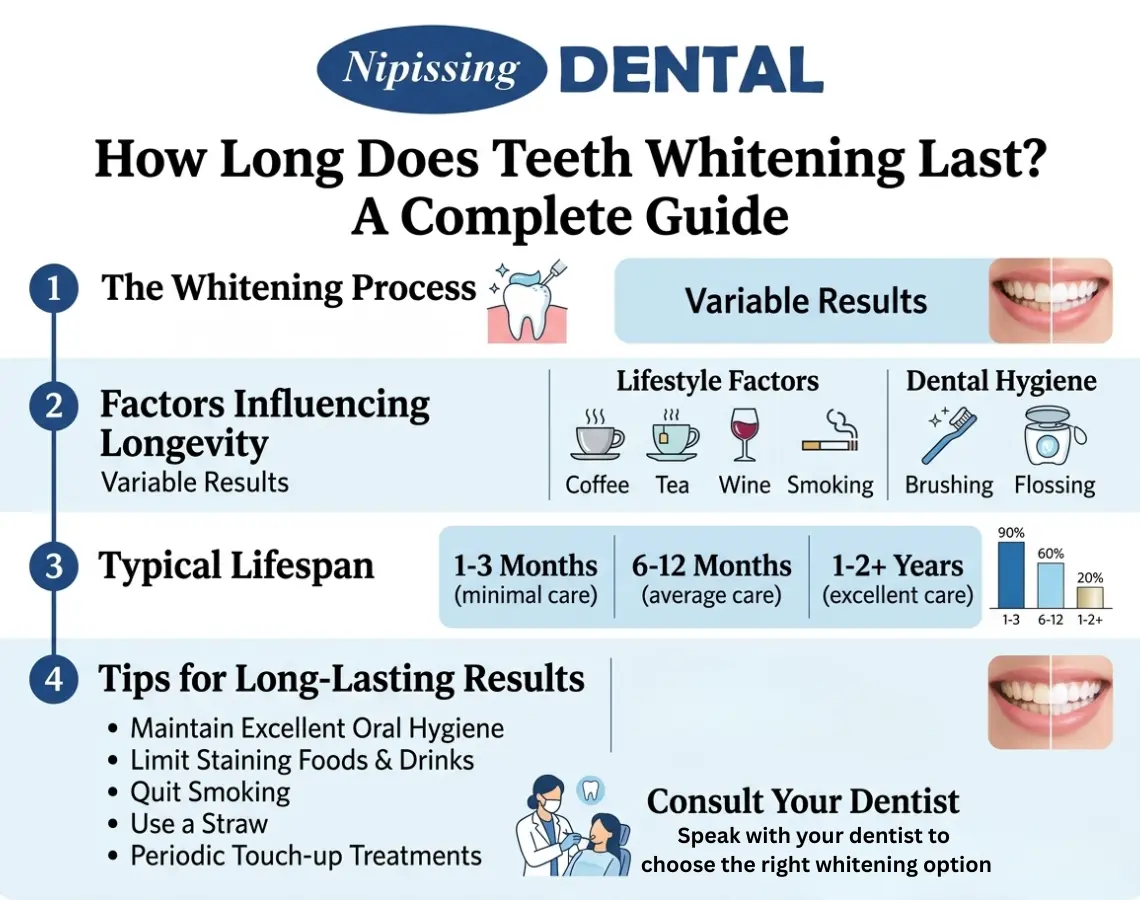
This is the single biggest factor. Coffee, black tea, red wine, dark berries, tomato-based sauces, and balsamic vinegar all contain chromogens — highly pigmented compounds that bind to tooth enamel and cause re-staining. Acidic drinks like citrus juice and sparkling water temporarily soften enamel, making it more porous and vulnerable to staining. Rinsing with water after consuming these drinks significantly reduces their impact.
Tobacco Use
Tobacco — whether smoked or chewed — deposits tar and nicotine compounds directly onto tooth surfaces. These stains are aggressive and fast-acting. Patients who smoke regularly often notice whitening results fading within 3 to 4 months, even after professional treatment.
Oral Hygiene Routine
Brushing twice daily with a fluoride toothpaste, flossing once a day, and staying on top of your professional teeth cleaning appointments are the most reliable ways to preserve your whitening results. Plaque accumulation accelerates surface staining significantly.
Your Natural Tooth Composition
Everyone’s enamel is slightly different in porosity and mineral content. Some people’s teeth re-stain faster than others — even with identical diets and hygiene routines. This is normal, and it’s one reason why a dental consultation before whitening is valuable.
Dental Restorations
Crowns, veneers, bonding, and fillings do not respond to whitening agents. If you have visible restorations on front teeth, whitening your natural teeth may create a colour mismatch. Your dentist should assess this before you begin any whitening treatment.
Maintenance Frequency
Patients who use take-home touch-up trays for a brief session every 3 to 6 months maintain significantly brighter results than those who treat whitening as a one-time event.
Is Teeth Whitening Safe?
Yes — when performed correctly under professional guidance, teeth whitening is safe for most healthy adults. The Canadian Dental Association confirms that clinical studies support the safety and effectiveness of professional bleaching systems when used appropriately.
You should consult your dentist before whitening if:
- You have untreated cavities, gum disease, or cracked teeth
- You are pregnant or breastfeeding (insufficient safety data exists for this group)
- You are under 16 years of age (enamel is still maturing)
- You have crowns, veneers, or significant restorations on front teeth
- You have a history of severe tooth sensitivity
What Are the Side Effects of Teeth Whitening?
Tooth sensitivity is the most common side effect. It’s caused by the peroxide temporarily increasing the porosity of enamel, allowing thermal stimuli to reach the nerve more easily. For most patients, sensitivity resolves within 24 to 72 hours. Using a potassium nitrate or stannous fluoride toothpaste (like Sensodyne) in the two weeks before your appointment significantly reduces discomfort. If sensitivity persists beyond one week, contact your dentist.
Gum irritation can occur when whitening gel contacts soft tissue. This is more common with poorly fitting trays or OTC strips. Custom trays prescribed by a dentist significantly reduce this risk because they’re designed to keep gel on the tooth surface, not the gums.
Temporary white spots on enamel are caused by temporary dehydration of the enamel and typically resolve within a few hours as the tooth rehydrates.
Common Myths About Teeth Whitening
Myth: Whitening permanently damages your enamel. When used as directed and under dental supervision, approved whitening products do not cause permanent enamel damage. Overuse or misuse of high-concentration products can cause problems — which is exactly why professional oversight matters.
Myth: All tooth discolouration responds to whitening. Whitening is highly effective on extrinsic stains (coffee, tea, wine, ageing). It is much less effective on intrinsic discolouration caused by tetracycline antibiotics, dental fluorosis, or trauma.
Myth: Natural remedies like charcoal or lemon juice are equally effective and safer. There is no reliable clinical evidence supporting activated charcoal as a whitening agent. Lemon juice and other acidic home remedies can cause permanent enamel erosion with repeated use.
Myth: Once you’ve whitened, you don’t need to repeat it. Teeth naturally re-stain over time. Whitening is not permanent — it’s a treatment with ongoing maintenance requirements.
Myth: Whitening works on crowns and veneers. Dental restorations are made from ceramic or composite materials that do not respond to peroxide. Whitening natural teeth with visible crowns or veneers can create a noticeable colour mismatch.
Tips to Make Your Whitening Results Last Longer
These habits genuinely extend the life of your treatment:
- Rinse immediately after coffee, tea, or red wine — water reduces surface staining by washing away pigment compounds before they bind
- Drink through a straw when consuming staining beverages
- Use a whitening toothpaste once daily (not twice — some formulas are mildly abrasive)
- Brush and floss consistently — plaque buildup accelerates staining
- Attend professional cleanings every 6 months; your hygienist polishes away surface stains before they accumulate
- Avoid tobacco entirely — no other single change extends whitening results more effectively
- Use touch-up trays for one or two nights every 3 to 6 months
Conclusion
With professional treatment and intentional daily habits, most patients enjoy noticeably brighter teeth for 1 to 3 years. With regular touch-ups and good hygiene, that timeline extends further. The key is starting with the right treatment for your specific teeth, managing the lifestyle factors that drive re-staining, and committing to the basic maintenance that preserves your results.
If you’re looking for professional teeth whitening in Milton, our team at Nipissing Dental is here to help — with a personalised consultation, honest cost information, and a treatment plan designed around your smile goals and oral health needs. Book your whitening consultation today.
References & Trusted Sources
- Canadian Dental Association — Teeth Whitening
- Health Canada — Safe Use of Home Tooth Whitening Kits
- Health Canada — Evidence of Safety Requirements for Tooth Whitening Products
Frequently Asked Questions
How long does teeth whitening last?
Professional in-office whitening lasts 1 to 3 years with proper maintenance. Professional take-home kits last 6 months to 2 years. OTC products typically last 3 to 6 months. Diet, tobacco use, and oral hygiene habits are the primary variables.
Is teeth whitening bad for your teeth?
No — when used correctly under dental guidance, whitening is safe. Overuse or unsupervised use of high-concentration agents can cause temporary sensitivity or, in rare cases, enamel damage. Always consult a dentist before beginning treatment.
How long does teeth sensitivity last after whitening?
24 to 72 hours for most patients. Using a sensitivity-formulated toothpaste before and after treatment significantly reduces discomfort. Contact your dentist if sensitivity lasts beyond one week.
What are the side effects of teeth whitening?
The most common side effects are temporary tooth sensitivity and mild gum irritation. Both typically resolve within 1 to 3 days. Temporary white spots on enamel from dehydration can also occur and resolve within hours.
Does teeth whitening work on crowns or veneers?
No. Whitening agents only affect natural tooth enamel. Crowns, veneers, fillings, and other restorations will not change colour with whitening treatment.
Ready to Feel at Ease at the Dentist?
Our team at Nipissing Dental is here to make every visit as comfortable and stress-free as possible. Take the first step toward better oral health today.