If you’re searching what does a dental cavity look like, you’re probably trying to decide whether a small mark on your tooth is harmless — or something that needs attention. The reality is that cavities rarely begin as obvious holes. Most start quietly, with small visual changes that are easy to dismiss.
This guide explains exactly how cavities appear in real life, how they change over time, and what signs suggest it’s time to schedule a dental exam in Milton.
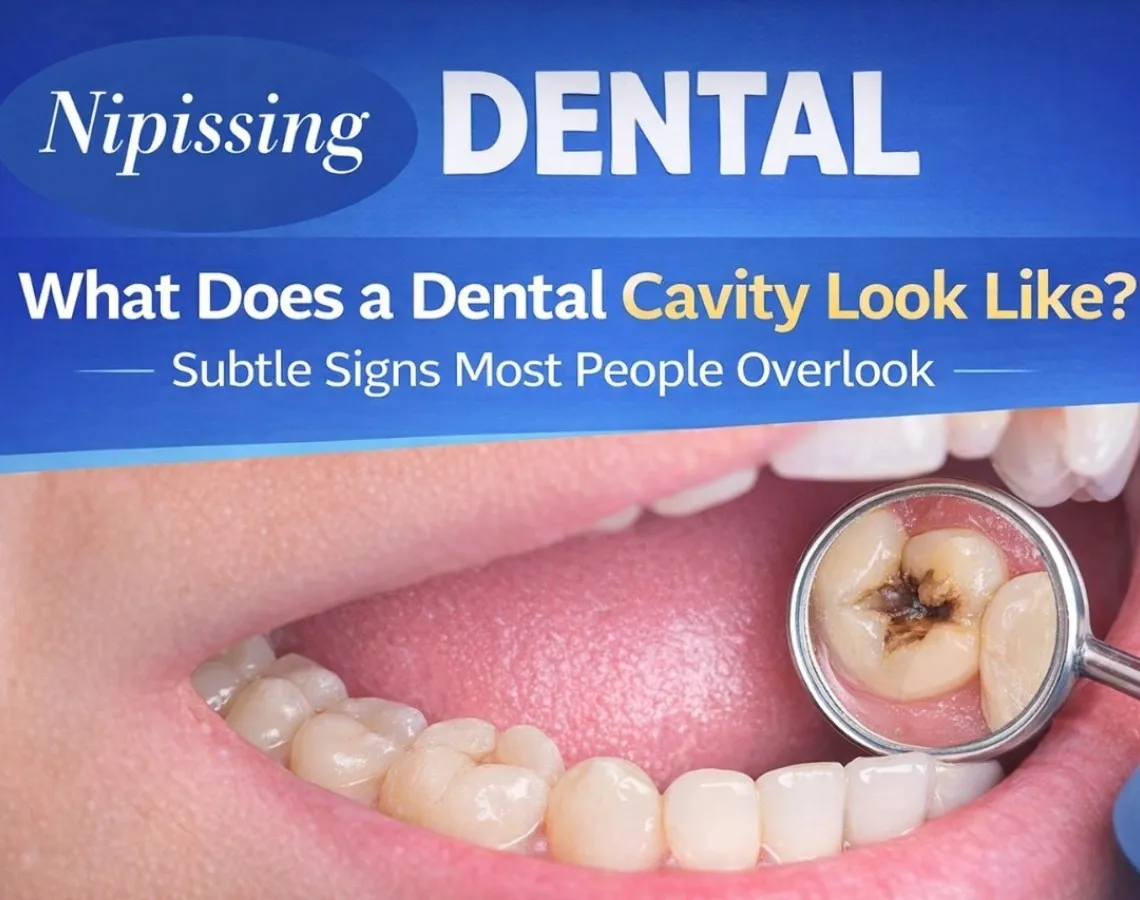
What Does a Dental Cavity Look Like?
A dental cavity may appear as:
- A faint white patch that looks chalky
- A pale brown or tan shadow on the enamel
- A tiny pit in a groove of a molar
- A darkened area that does not polish away
- A surface that feels slightly rough instead of smooth
In the earliest phase, discomfort is uncommon.
The Very First Visible Change: Loss of Shine
Healthy enamel reflects light and appears glossy. One of the earliest indicators of decay is a small section that looks dull or matte. This happens when minerals are drawn out of the enamel surface.
At this point:
- The tooth is intact
- No cavity “hole” exists yet
- Professional fluoride care may strengthen the area
Because this stage is subtle, many people only discover it during routine dental visits.
When Colour Begins to Shift
As enamel weakens, the affected area may deepen in colour. Instead of bright white, it can turn creamy, beige, or light brown.
Important distinctions:
- Stains usually sit on top of enamel
- Early decay alters enamel from within
If the spot slowly darkens over weeks or months, it deserves evaluation.
Formation of a Small Opening
Once enamel structure weakens enough, a tiny opening develops. This is the stage most people imagine when asking what does a dental cavity look like.
Common characteristics:
- A pinpoint indentation on the chewing surface
- A narrow line in a molar groove
- A space that catches floss repeatedly
- Food packing into one exact location
At this stage, mild sensitivity may begin — especially with sweets or cold drinks.
Deeper Structural Damage
If bacteria travel beyond enamel into dentin, changes become more obvious.
You might notice:
- A clearly defined brown or dark opening
- Discomfort when biting
- Lingering temperature sensitivity
- Gum tenderness near one tooth
Because dentin is softer than enamel, decay spreads faster once it reaches this layer.
Areas Where Cavities Hide
Not all cavities are visible in the mirror.
Between Teeth
Decay that forms where teeth touch often requires dental X-rays for confirmation. Visual signs are minimal.
Along the Gumline
Receding gums can expose root surfaces, which are more vulnerable to breakdown.
Under Existing Fillings
Older restorations can sometimes develop leakage, allowing decay underneath.
Comprehensive exams are essential for detecting these hidden areas.
How a Cavity Feels (Not Just How It Looks)
Visual clues matter — but sensation can also guide you.
Early sensations may include:
- A brief zing when drinking something cold
- Sensitivity to sugary foods
- A tooth that feels “slightly different” when chewing
- Floss tearing in one spot repeatedly
Pain is typically a later sign, not an early one.
Why Timing Matters
Small areas of decay usually require conservative treatment, such as a tooth-coloured filling. These procedures preserve natural tooth structure.
Waiting too long can result in:
- Larger restorations
- Dental crowns
- Root canal therapy
- Infection requiring urgent care
Early assessment protects both oral health and long-term costs.
Patients seeking preventive care in Milton often benefit from routine exams that identify concerns before symptoms escalate. At Nipissing Dental, the focus is on early detection and patient education so issues are addressed proactively.
What Contributes to Cavity Development?
Tooth decay develops when several factors overlap:
- Frequent exposure to fermentable carbohydrates
- Acidic beverages
- Incomplete plaque removal
- Reduced saliva flow
- Deep natural grooves in molars
- Irregular professional cleanings
Even individuals with good brushing habits can experience decay depending on diet and anatomy.
Steps That Support Stronger Enamel
Strengthening teeth involves consistent daily habits:
- Cleaning teeth thoroughly every morning and evening
- Removing plaque between teeth with floss or interdental cleaners
- Limiting grazing on sugary snacks
- Choosing water as the primary beverage
- Attending professional cleanings at recommended intervals
Preventive care significantly lowers the likelihood of structural damage.
Protecting Your Enamel Starts with Professional Care
Daily brushing and flossing are essential, but plaque can still accumulate in areas that are difficult to reach at home. Scheduling regular dental cleanings in Milton helps remove hardened buildup, reduce cavity-causing bacteria, and strengthen enamel before damage progresses.
If it has been several months since your last appointment, routine care plays a key role in preventing small enamel changes from turning into cavities.
When to Schedule an Evaluation
Consider booking an appointment if you notice:
- A new white, tan, or dark area on a tooth
- Ongoing sensitivity
- A visible indentation
- Food lodging repeatedly in the same place
- Gum irritation near one specific tooth
Even minor changes deserve professional assessment.
Frequently Asked Questions
What does a dental cavity look like at the earliest stage?
It often appears as a dull white patch where enamel has lost minerals, before any hole forms.
Yes. Early enamel breakdown commonly presents as a chalky white area.
No. Some discolouration is superficial staining. A dental exam determines the difference.
Some are, particularly on chewing surfaces. Others — especially between teeth — require X-rays.
Not in the beginning. Pain usually indicates deeper involvement.
The speed varies depending on diet, hygiene practices, and saliva quality.
Final Thoughts
So, what does a dental cavity look like? It may begin as a subtle loss of shine, shift into a faint colour change, and eventually form a small opening in the tooth. The key is recognizing that cavities often start quietly.
If you detect even minor changes — or it has been several months since your last checkup — arranging a professional dental evaluation can provide clarity and peace of mind. Early action preserves natural teeth and supports long-term oral wellness.