Tooth pain can disrupt daily life, making it difficult to eat, concentrate, or sleep comfortably. In many cases, severe tooth pain occurs when bacteria infect the inner portion of a tooth. When the infection reaches the pulp, root canal treatment is often the most effective way to remove the infection and preserve the natural tooth.
For individuals searching for root canal treatment in Milton, understanding the symptoms, procedure, and recovery process can help reduce uncertainty and encourage timely care. Modern dental techniques allow dentists to treat infected teeth effectively while maintaining comfort during the procedure.
What Is Root Canal Treatment?
Root canal treatment is a dental procedure used to remove infected or damaged pulp from inside a tooth. The pulp contains nerves, blood vessels, and connective tissue that help the tooth develop. When bacteria enter this area due to deep decay, cracks, or trauma, infection can occur.
During the treatment, the damaged pulp is carefully removed, the inner canals of the tooth are thoroughly cleaned and disinfected, and the area is sealed to help prevent bacteria from returning. This treatment allows the tooth to remain functional and prevents the need for extraction.
Saving the natural tooth is usually the preferred option because it helps maintain normal chewing function and prevents neighbouring teeth from shifting.
Signs You May Need Root Canal Treatment
Recognizing the early signs of a tooth infection can help patients seek treatment before the condition worsens. While a dentist must confirm the diagnosis, several symptoms may indicate that the pulp inside the tooth is infected.
Common symptoms include:
- Persistent tooth pain that does not improve
- Sensitivity to hot or cold temperatures
- Swelling or tenderness in the gums
- Pain while chewing or biting
- Darkening or discolouration of a tooth
- A small pimple-like bump on the gums
These symptoms can indicate that bacteria have reached the inner portion of the tooth and treatment may be necessary to remove the infection.
Common Causes of Tooth Infection
Tooth infections that require root canal therapy often develop due to untreated dental issues. Bacteria can reach the pulp when the protective layers of the tooth are compromised.
Common causes include:
- Deep cavities that reach the pulp
- Cracked or fractured teeth
- Repeated dental procedures on the same tooth
- Trauma or injury to the tooth
- Untreated gum disease
Routine dental checkups help detect these problems early, reducing the risk of infection.
How Root Canal Treatment Is Performed
Many patients feel more comfortable when they understand how root canal treatment is performed. The procedure typically follows several carefully planned steps to ensure the infection is fully removed.
1. Dental Examination
The dentist examines the affected tooth and may take digital X-rays to assess the extent of the infection and determine whether root canal therapy is necessary.
2. Local Anaesthesia
Local anaesthesia is applied to numb the surrounding area. This ensures that the procedure remains comfortable for the patient.
3. Accessing the Pulp
A small opening is created in the tooth to reach the infected pulp chamber.
4. Removing the Infection
Specialised dental instruments are used to remove the infected pulp tissue from inside the tooth.
5. Cleaning and Disinfecting
The empty canals are cleaned and disinfected to remove bacteria and debris.
6. Filling and Sealing
The cleaned canals are filled with a safe dental material and sealed to protect the tooth from future infection.
7. Restoring the Tooth
In many cases, a dental crown or filling is placed to restore the tooth’s strength and function.
Dental professionals at Nipissing Dental focus on using modern techniques to help patients receive effective and comfortable treatment when addressing infected teeth.
Teeth Filling vs Root Canal: Understanding the Difference
Many patients wonder whether their tooth can be treated with a filling or if a root canal is required. The appropriate treatment depends on how deeply the tooth is damaged.
| Treatment | Purpose | When It Is Used | Procedure Overview |
| Dental Filling | Repairs minor tooth decay | When decay affects only the outer layers of the tooth | Decay is removed and the tooth is filled with restorative material |
| Root Canal Treatment | Removes infection from inside the tooth | When bacteria reach the pulp or nerve of the tooth | Infected pulp is removed, canals are cleaned, sealed, and restored |
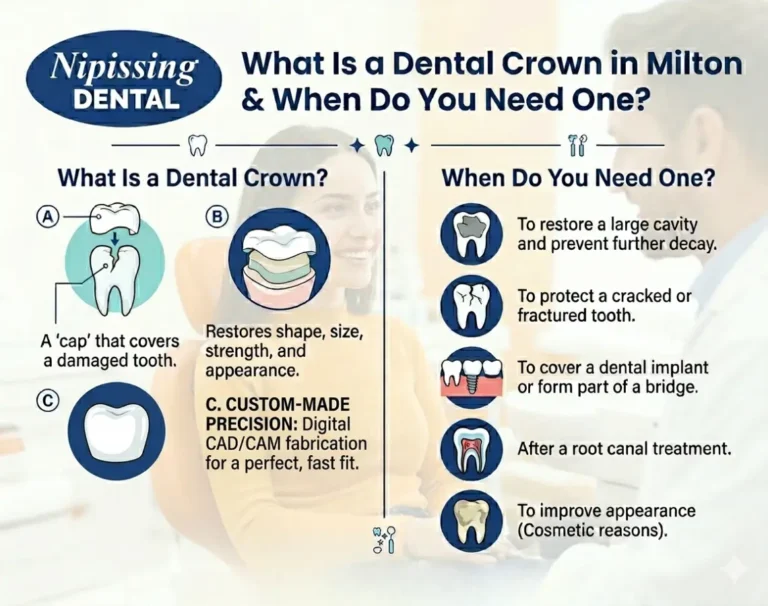
| Dental Crown | Strengthens a weakened tooth | Often placed after root canal treatment | A custom crown covers and protects the treated tooth |
When decay extends into the pulp, a filling alone cannot eliminate the infection. Root canal treatment is needed to eliminate infected tissue and help save the natural tooth.
Root Canal and Pain After Treatment
A common concern for patients is whether discomfort will occur after treatment. Root canal therapy is designed to relieve infection-related pain, but mild tenderness may occur during the healing process.
Is Pain Normal After a Root Canal?
Some sensitivity or mild discomfort is normal for a few days following the procedure. This occurs because the tissues surrounding the tooth need time to heal.
How Long Does Recovery Take?
Most patients return to normal daily activities within one or two days. The treated tooth may remain slightly sensitive for a short period, especially when chewing.
Over-the-counter pain relief medication and following your dentist’s instructions can help manage temporary discomfort.
If severe pain or swelling develops, patients should contact their dentist for evaluation.
Root Canal Recovery and Aftercare Tips
Proper care following treatment helps protect the tooth and supports healing. Patients can support recovery by following several simple steps.
Helpful aftercare tips include:
- Try not to chew on the treated tooth until the final restoration is completed.
- Brush and floss gently but consistently
- Choose soft foods for the first few days
- Avoid extremely hot or hard foods immediately after treatment
- Attend follow-up dental visits as recommended
With proper care, a tooth treated with root canal therapy can function normally for many years.
Emergency Root Canal Treatment in Milton
Sometimes a tooth infection can progress quickly and cause severe discomfort. Emergency dental care may be required when symptoms become intense.
The following symptoms may indicate the need for urgent dental attention:
- Severe or worsening tooth pain
- Facial swelling near the affected tooth
- A dental abscess or pus near the gums
- Fever associated with dental pain
Prompt treatment can relieve discomfort and prevent the infection from spreading.
Dental teams at Nipissing Dental help patients address tooth infections and dental pain promptly so that the natural tooth can be preserved whenever possible.
Preventing Tooth Infections
Although root canal treatment is effective, prevention remains the best approach to maintaining oral health.
Patients can reduce the risk of tooth infections by:
- Brushing teeth twice daily with fluoride toothpaste
- Flossing regularly to remove plaque between teeth
- Scheduling routine dental checkups and cleanings
- Treating cavities early before they worsen
- Wearing mouthguards during sports activities
Preventive dental care helps detect early signs of decay and reduces the risk of deeper infections that may require root canal therapy.
Frequently Asked Questions
What is root canal treatment?
A root canal is a dental treatment that eliminates infected tissue within a tooth, disinfects the inner canals, and seals them to protect the tooth from further infection.
Is root canal treatment painful?
Modern root canal procedures are performed with local anaesthesia, making them generally comfortable. Most patients report that the experience is similar to receiving a dental filling.
How long does root canal treatment take?
The procedure usually takes between 60 and 90 minutes depending on the complexity of the tooth and the number of root canals involved.
Can a root canal save my tooth?
Yes. Root canal therapy removes infection while preserving the natural tooth structure, allowing the tooth to function normally.
What may occur if a dental infection is ignored?
Most people benefit from dental checkups every six months, though your dentist may recommend a different schedule based on your oral health.
Ready to Feel at Ease at the Dentist?
Our team at Nipissing Dental is here to make every visit as comfortable and stress-free as possible. Take the first step toward better oral health today.